


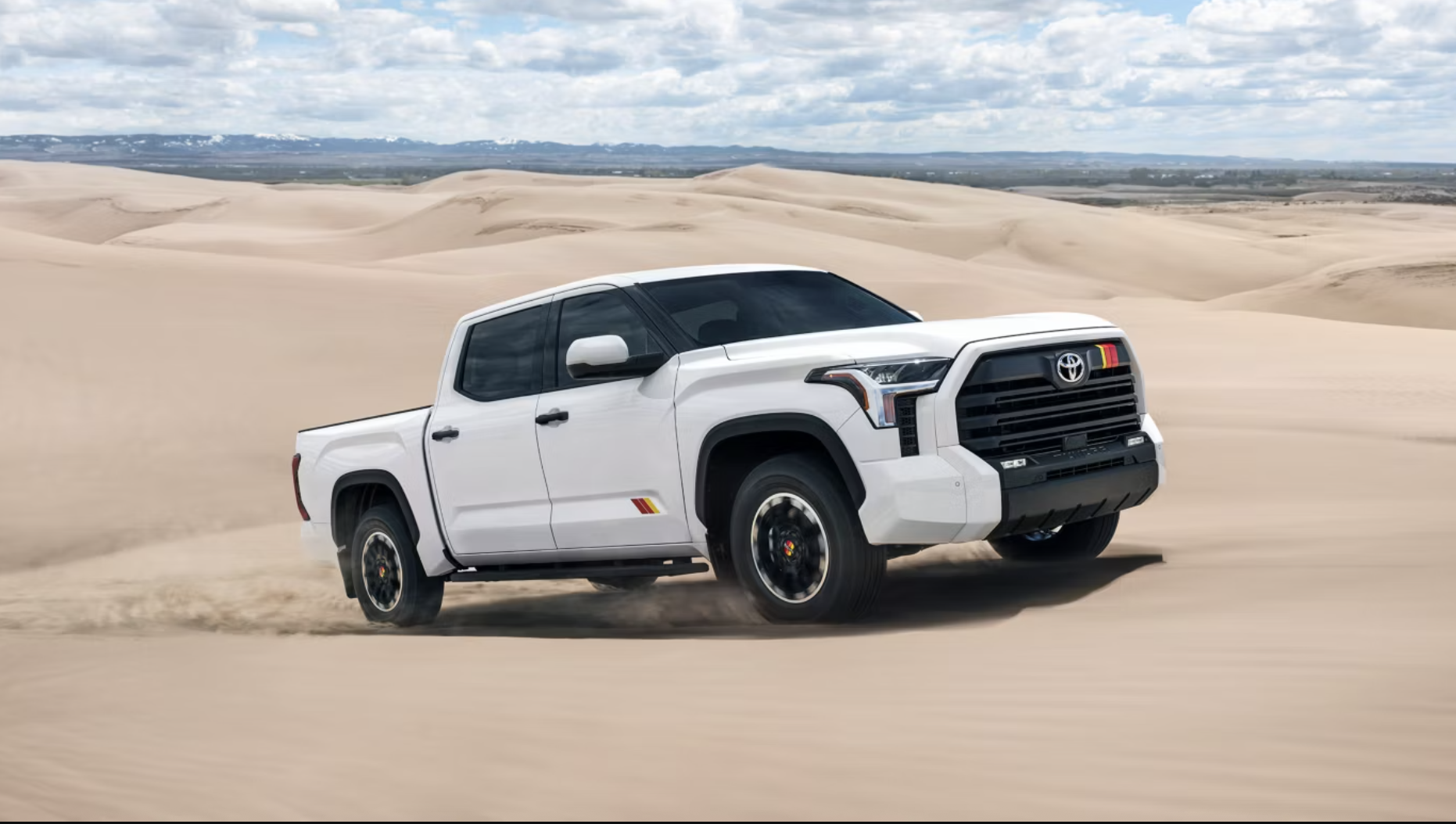
The 2027 Toyota Tundra is headed to Toyota of Orlando, and it’s bringing big changes to the table for the new model year. We’ll see a refreshed look, more off-road options, and an all-new Trailhunter package previously only see on the Toyota Tacoma and 4Runner. If you like to take things off the pavement but need something spacious enough for school runs, the 2027 Toyota Tundra is the truck for you!
Toyota’s North American teams and the CALTY design research team in Michigan worked to develop this new Toyota truck. What we got from it? A new design with a sharper front end, a more modern appearance, and vibe that’s all work, all play. Here’s what you can expect from the 2027 Toyota Tundra at Toyota of Orlando!
Executive Summary
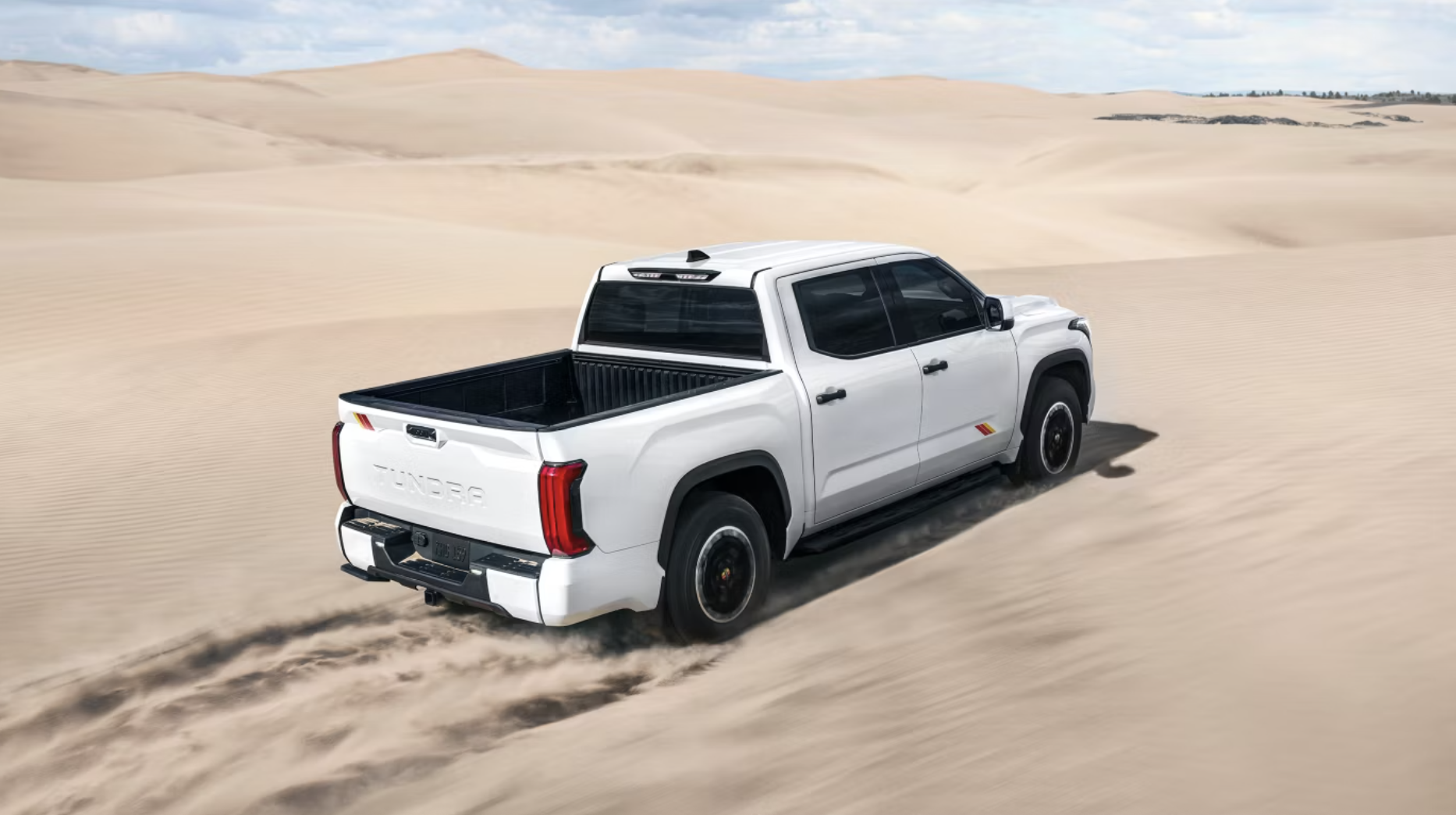
- The 2027 Toyota Tundra is getting a major refresh, bringing a sharper, more modern front end, updated grille options, integrated fog lights, and the same bold, planted stance we love.
- Trailhunter is joining the Tundra lineup as an available SR5 package, adding Old Man Emu suspension, all-terrain tires, underbody protection, CRAWL Control, Multi-Terrain Select, a locking rear differential, and more off-road goodies.
- The TRD Pro gets even more trail-ready with new adjustable FOX Q3S shocks, ISO-Dynamic front seats, red tow hooks, the new Honeycomb exterior color, and an available TRD Performance Package.
- Inside, Toyota is bringing the tech with a standard 14-inch touchscreen, next-generation Toyota Audio Multimedia, 5G connectivity, an improved Voice Assistant, Enhanced Digital Key, and a built-in Drive Recorder Dash Camera.
- Every 2027 Tundra will also come standard with Toyota Safety Sense 4.0, while seven available models and gas and hybrid powertrain options give Orlando truck shoppers plenty to choose from.
An All-New Trailhunter Package Is Up For Grabs
One of the biggest changes for the 2027 Toyota Tundra is the fact that you can now take it home with a Trailhunter package. Now, on the Toyota Tacoma and 4Runner, the Trailhunter is its own model. For the 2027 Toyota Tundra, it’s an optional package on the SR5 model that includes:
- Michelin LTX Trail 265/70R18 tires
- Upgraded Old Man Emu suspension
- Front recovery hooks
- Additional underbody protection
- Multi-Terrain Select
- Crawl Control
- Locking rear differential
- Unique bronze-colored wheels
- Exclusive Trailhunter badging
The fact that it’s a package and not a model makes it more affordable and accessible for drivers who want the best of both worlds. These features prep this Orlando Toyota truck for demanding terrain and trails off the beaten path.
- Multi-Terrain Select can help you take on different off-road surfaces, and CRAWL Control manages your throttle and braking at low speeds so you can focus on steering.
- Locking rear differential helps you maintain traction when you need it most.
- Special bronze alloy wheels and exclusive Trailhunter badging help you stand out on and off the road.
If you love camping, overlanding, and exploring but don’t have time to build a rig from scratch, the Orlando Toyota Tundra Trailhunter package is for you.
A Refreshed, Modern Design Hits the Road in 2027
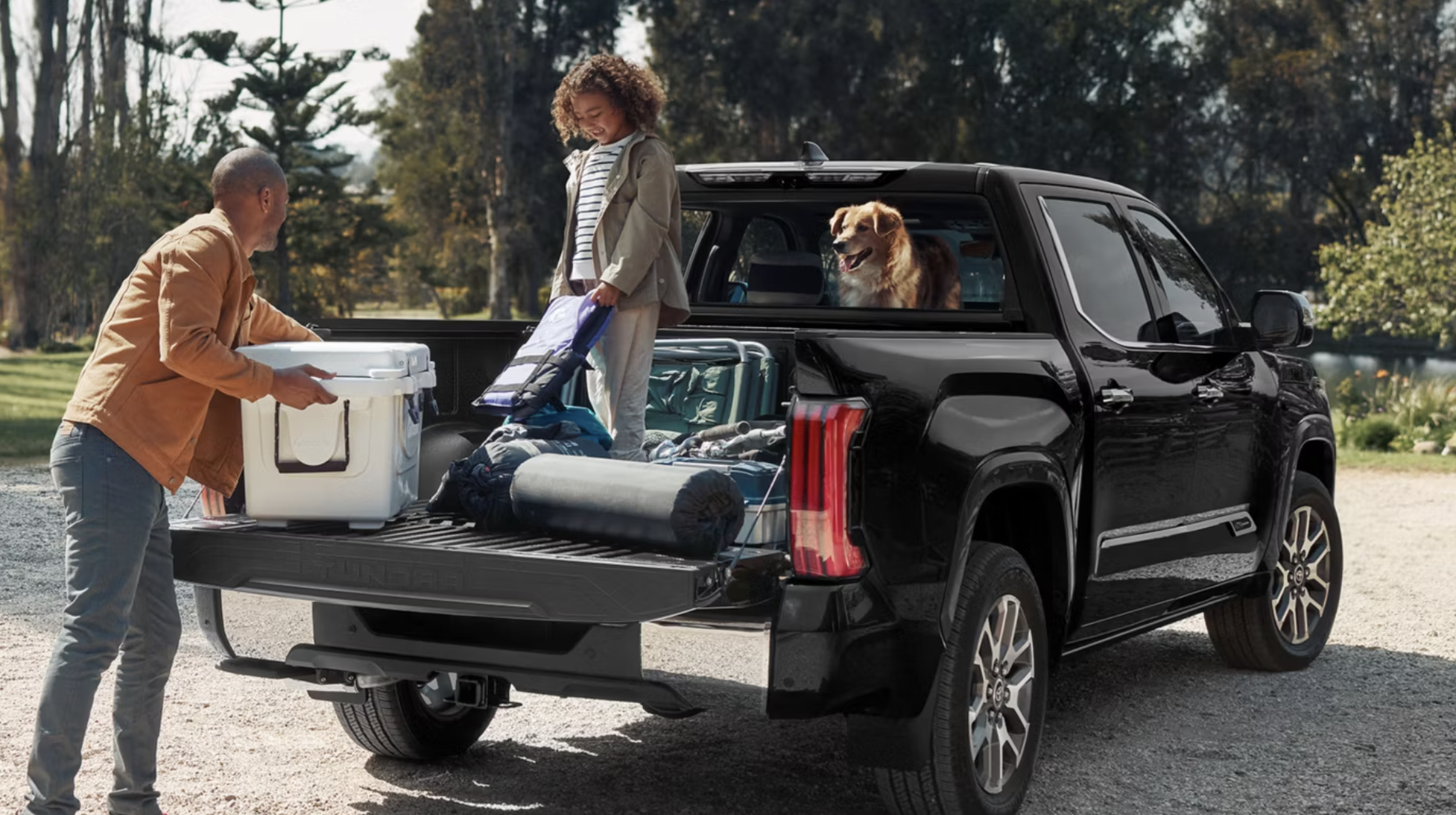
The last time the Orlando Toyota Tundra was redesigned was in 2022, so it’s due for a refresh. The 2027 Toyota Tundra was designed with strength, purpose, and capability in mind, and will sport updates including:
- A new front end that’s crisper and squarer – this lends to a vertically aligned appearance that gives strength and modernity to the overall style
- A wide, planted stance with a redesigned center lower bumper for major ruggedness
- Rectangular fog lights that are now integrated directly into the bumper
- A new grille with a sporty hexagonal theme, plus multiple grille options to choose from throughout the 2027 Toyota Tundra lineup
We were due for a refresh, and we wanted options… we got both with this year’s lineup.
New TRD Pro Upgrades on the 2027 Toyota Tundra
If you love off-roading, the 2027 Toyota Tundra’s updates will be pretty exciting to you. Here’s what you can expect in terms of performance on the trails this year:
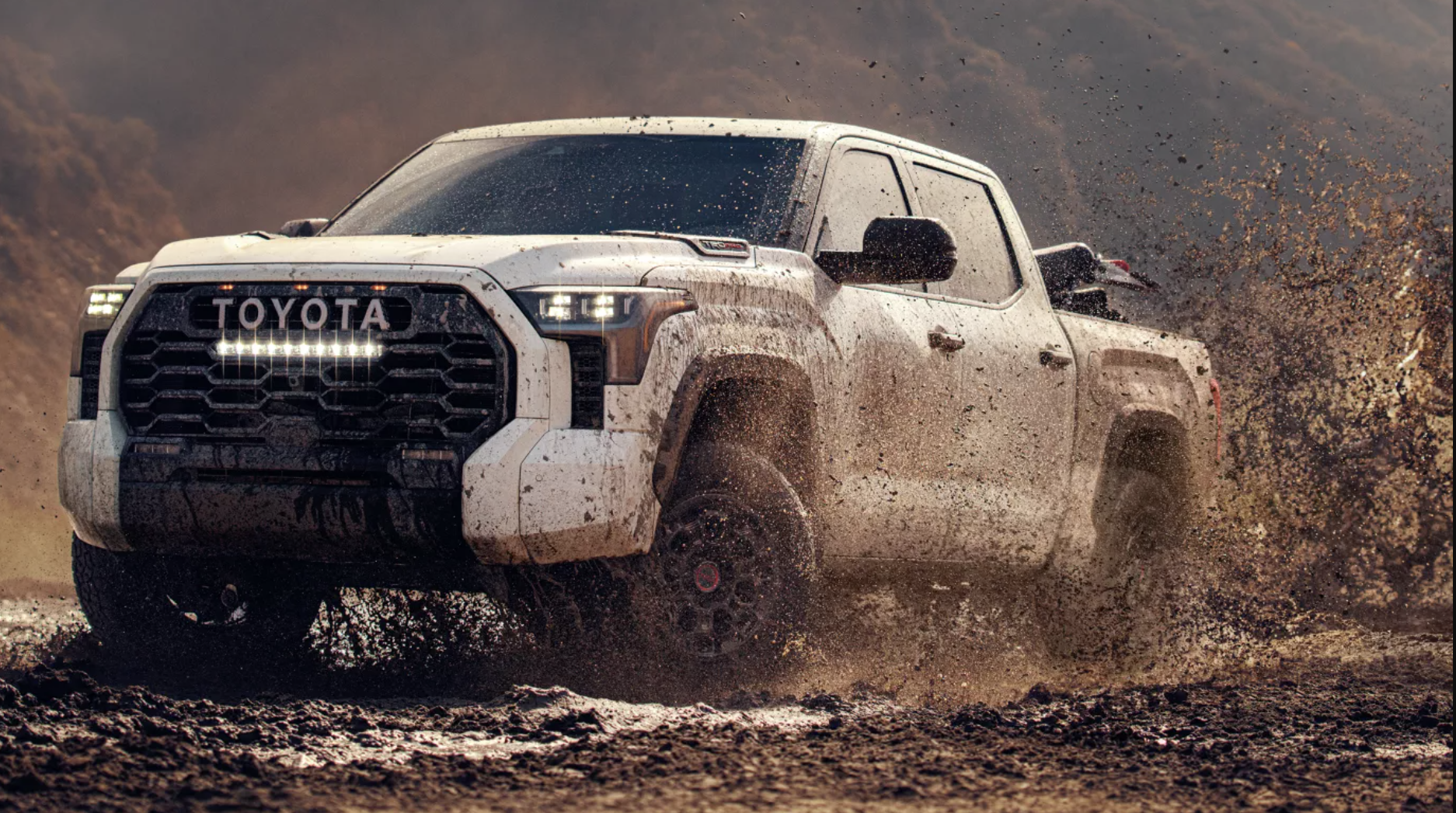
- New Fox enhanced Q3S shocks designed specifically for the Tundra. They’re adjustable, and they’re designed for better feel, stability, and adjustability on tough terrain.
- Standard red tow hooks for a functional and visual upgrade, and a new TRD paint color called Honeycomb to stand out unmistakably
- ISO-Dynamic front seats for a more comfortable ride when you’re off the pavement
- A new TRD Performance Package, which gives drivers an easy way to enhance their Tundra’s performance with new hardware and tuning
Get the Latest-Generation Toyota Audio Multimedia in this Truck
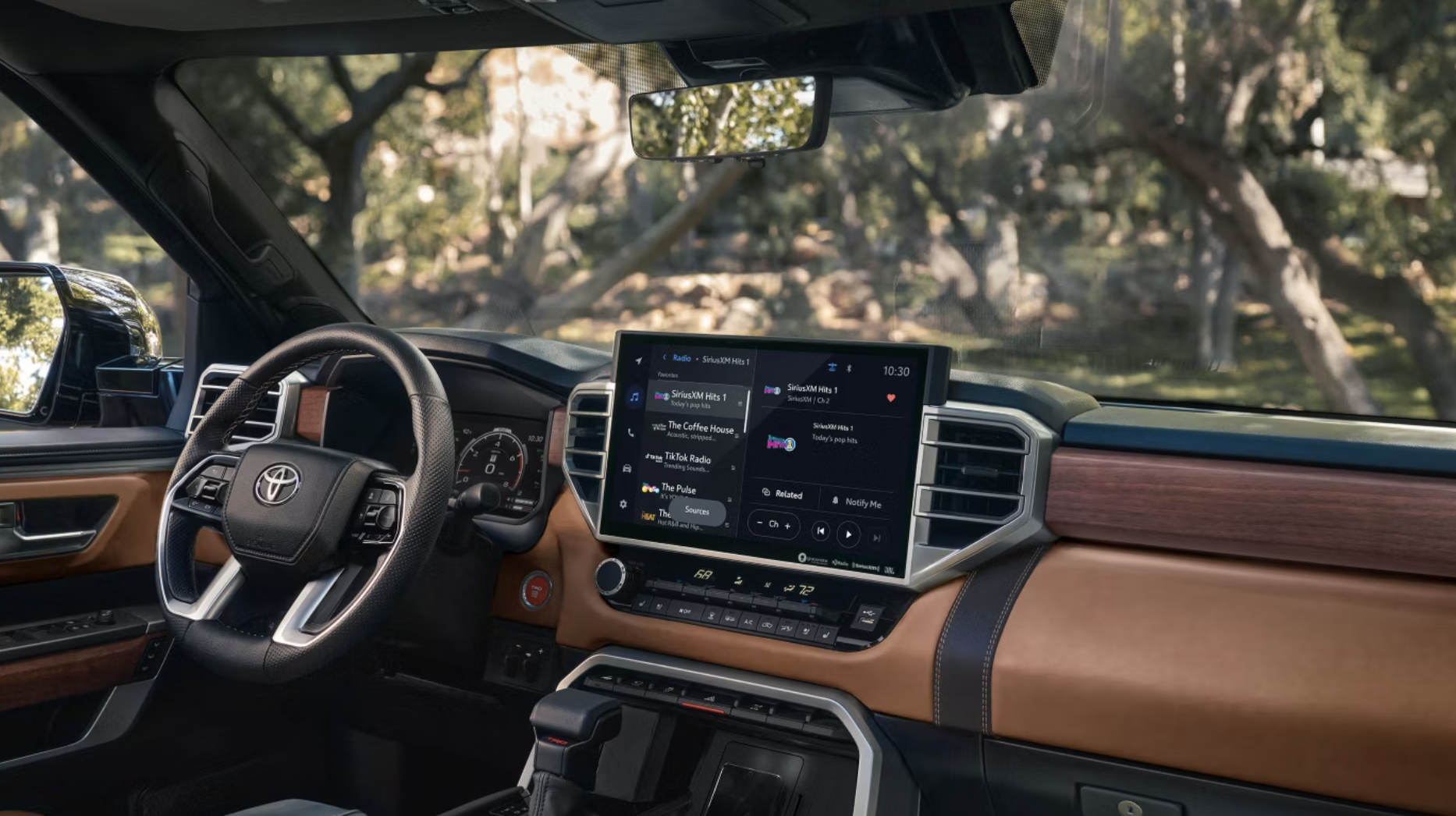
We may be getting a refreshed exterior style and new performance upgrades, but Toyota didn’t forget about the cabin. The 2027 Toyota Tundra interior sports upgrades like:
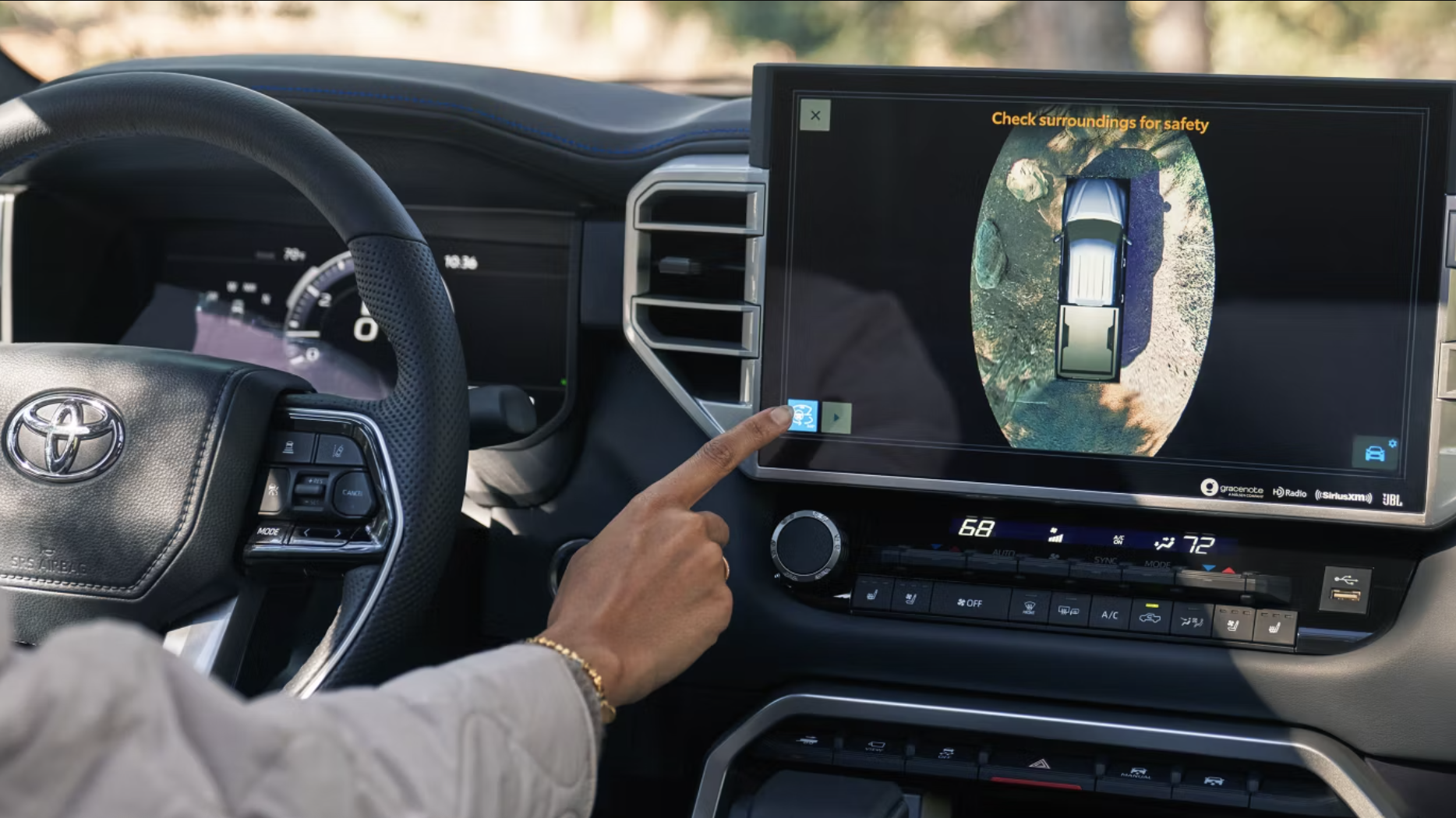
- The latest generation of the Toyota Audio Multimedia System – it also sports a 14-inch touchscreen interface standard on every model.
- AT&T 5G network connectivity and a smartphone-inspired interface to make it that much easier to use
- Customizable widgets for the home screen
- An improved Voice Assistant that responds more quickly to “Hey Toyota” voice commands
- A standard built-in Drive Recorder Dash Camera. When the system is enabled, the 2027 Toyota Tundra will use its exterior cameras to capture 20 second video clips during manually or automatically triggered events.
- An Enhanced Digital key that allows you to access your key through the Toyota app and your smartphone’s native digital wallet (slide it in there next to your health insurance and concert tickets)
On top of that, the 2027 Toyota Tundra i-FORCE MAX has a 2.4kW inverter. This means you have on-board electricity for things like tools, camping gear, and recreational equipment. Whether you’re camping in the woods or heading to a job site, you’re covered.
2027 Toyota Tundra Models: What You Can Drive Home
You’ve got options this year – there are seven different 2027 Toyota Tundra models to choose from. Explore everything from everyday trucks to luxury options to off-road-ready haulers. The 2027 lineup includes:
- SR
- SR5
- Limited
- Platinum
- 1794 Edition
- TRD Pro
- Capstone
Plus, don’t forget about the new 2027 Toyota Tundra Trailhunter package.
You can drive home this Orlando Toyota truck in both gas and hybrid powertrains this year, but we’re still waiting to get more info on the payload, towing, horsepower, torque, and MSRP.
Toyota Safety Sense 4.0 is Standard For This Orlando Toyota
Safety tech is getting an upgrade in the 2027 Toyota Tundra. Every single model will come with Toyota Safety Sense 4.0. which includes safety and driver-assistance technology like:
- Pre-Collision System with Pedestrian Detection
- Full-Speed Dynamic Radar Cruise Control
- Lane Departure Alert with Steering Assist
- Automatic High Beams
- Lane Tracing Assist
- Road Sign Assist
- Proactive Driving Assist
Get More Details at Toyota of Orlando
The 2027 Toyota Tundra is headed our way, so contact us today for more information! Toyota of Orlando is open seven days a week at (407) 298-4500 and you can also stop by and see us at 3575 Vineland Road, just off I-4 near the Mall at Millenia.
The 2026 Toyota Corolla Cross: What’s New This Year?
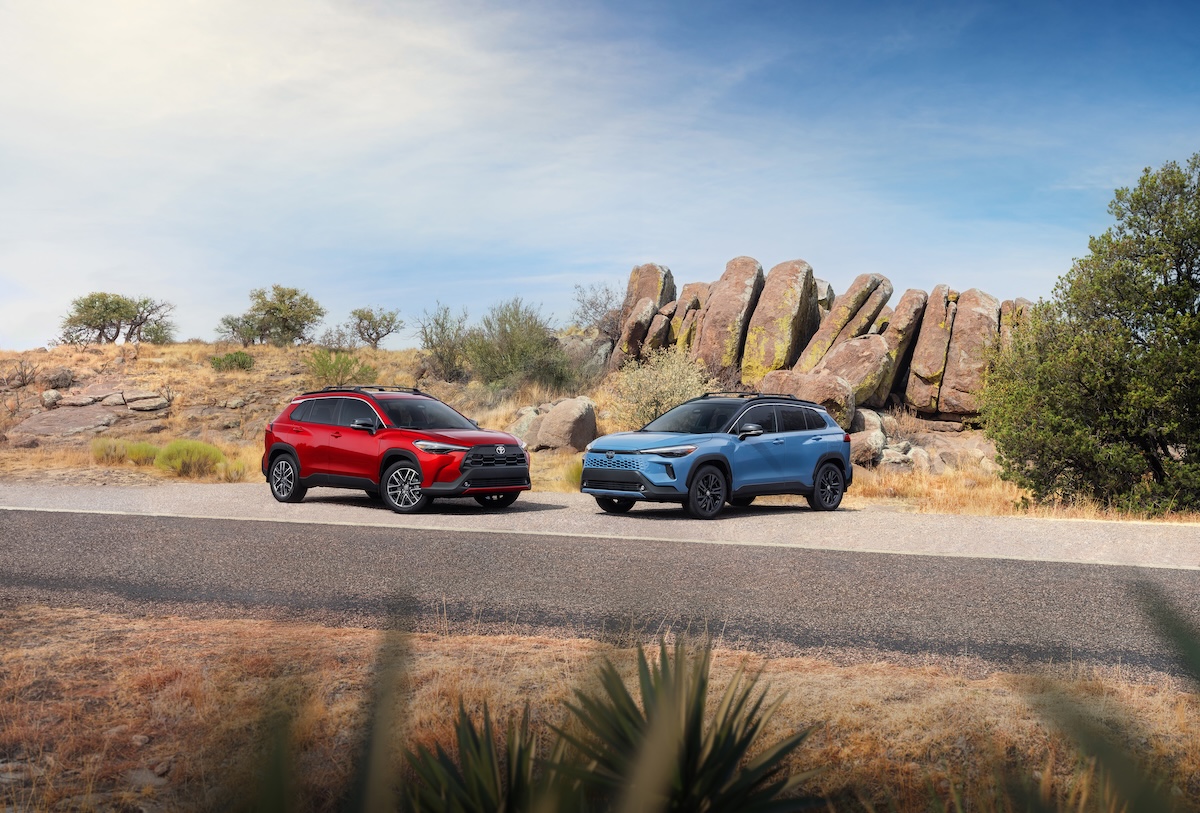
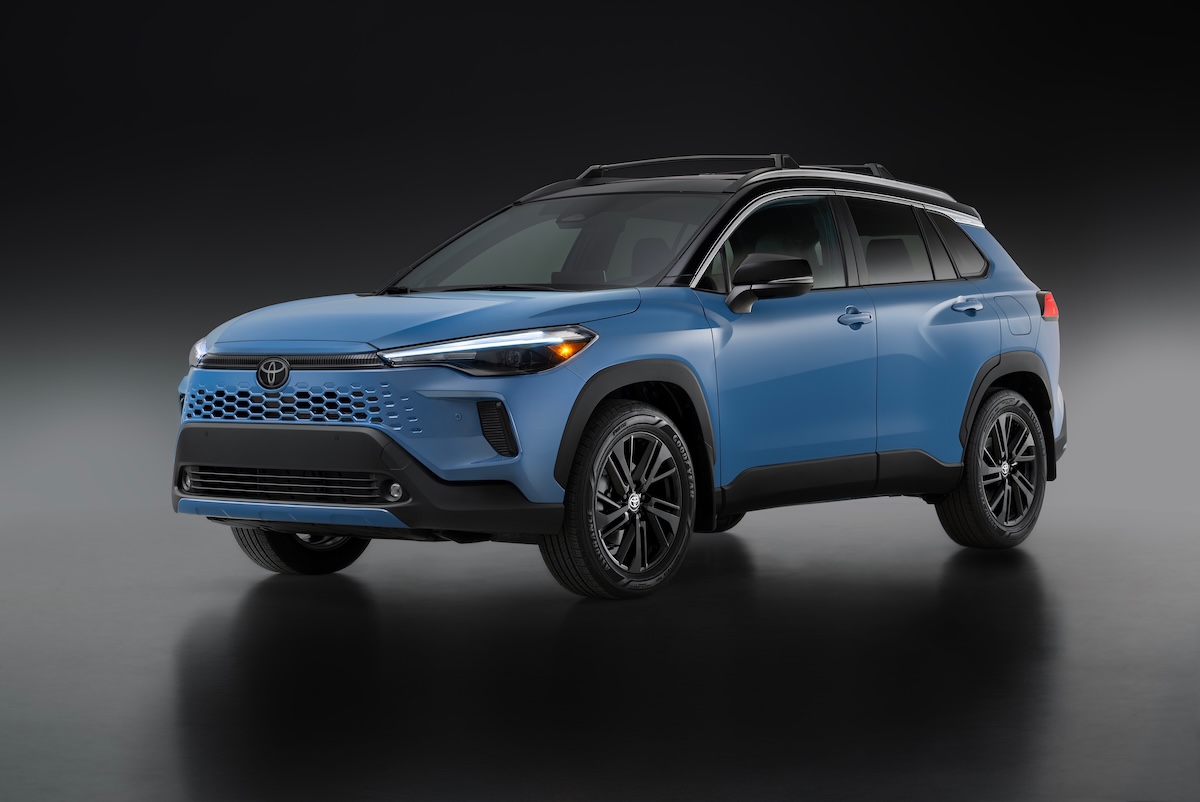
The 2026 Toyota Corolla Cross is a big step when it comes to SUVs – it’s got efficiency, value, reliability, and the affordability we know you want. This latest model is bringing updated style and technology, new safety features, and refined performance features that make it perfect for young families, professionals looking for a commuter car, and anyone who wants a stylish crossover that won’t break the bank. We’re breaking it down – let’s take a closer look at the 2026 Toyota Corolla Cross at Toyota of Orlando!
What to Expect on the 2026 Toyota Corolla Cross
The 2026 Toyota Corolla Cross got a refresh this year so it stands out from prior model years. Here are the highlights:
- It’s got two new front fascia designs – the hybrid and gas are now distinctly different and both bring fresh, modern style to the table
- There are new wheel options, including dark gray 18-inch alloys and new glossy black sport wheels
- Cavalry Blue – one of our favorites – has been added to the menu for paint colors, and you’ll find two-tone paint options up for grabs
- The console and storage areas inside the cabin have been redesigned for maximized space and usability
- A new 10.5-inch touchscreen and digital gauge cluster ensures your tech is always front and center
Updated Performance in this Orlando Toyota
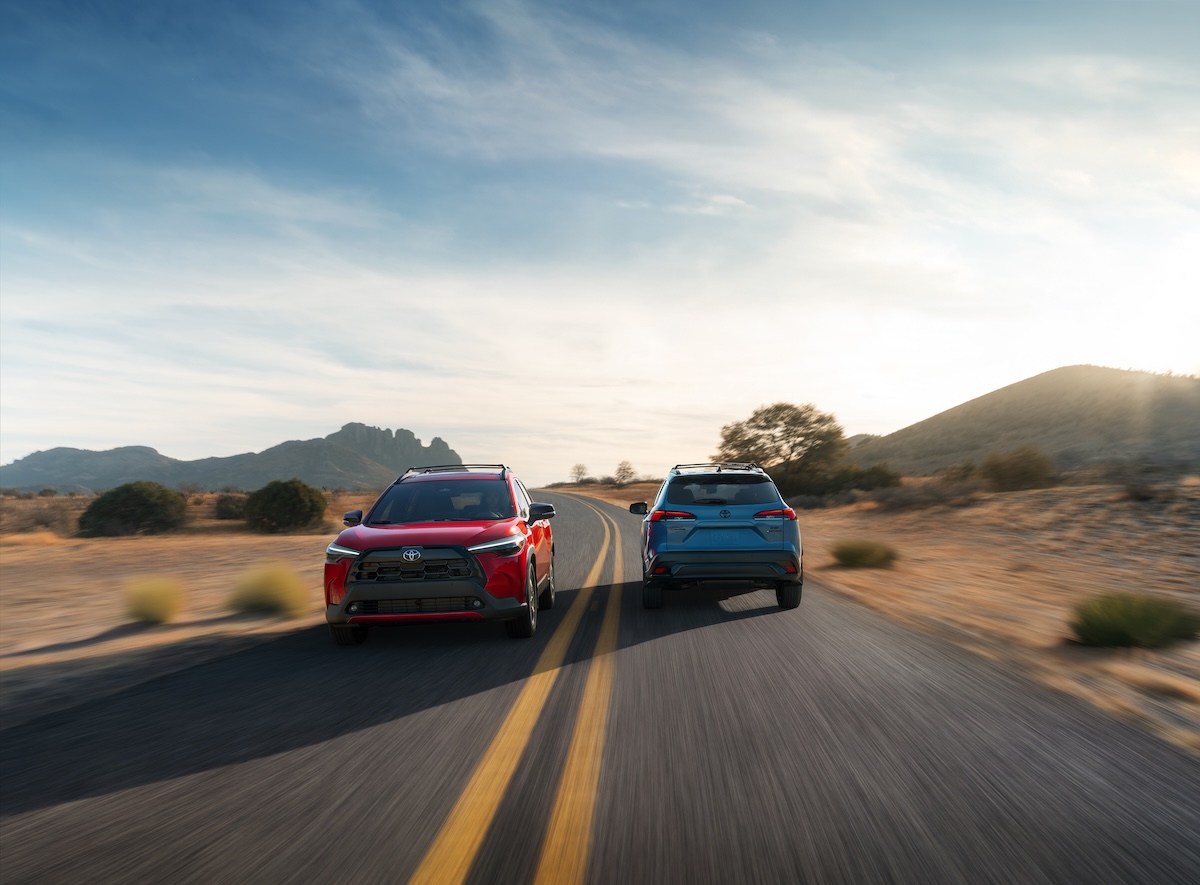
We’re loving the performance you get for the price on this 2026 Toyota. You’ve got both gas and hybrid powertrains to choose from – here are the details:
- The gas model keeps the reliable 2.0L four-cylinder engine with 169 horsepower, and you get the option of front- or all-wheel drive. Gas models of the 2026 Toyota Corolla Cross get from 0–60mph in 9.2 seconds, and give you up to 32mpg combined. To cap it off, it’s quiet at highway speeds and perfect for both daily commuting and long road trips.
- The hybrid model also has a 2.0L engine, but it also has three electric motors to result in 196 horsepower. It also comes with standard AWD, accelerates briskly, and hits 60mph in just 7.3 seconds. You’ll love the fuel economy – it gets up to 42mpg combined for major savings at the gas pump.
- Both the gas and hybrid models offer a towing capacity of 1,500lb, which is more than enough for lightweight trailers and recreational gear for those weekend getaways.
The 2026 Toyota Corolla Cross: Head-Turning Exterior Style
The Corolla Cross is the best of both worlds. You’ll get spacious, practical dimensions as well as fresh, sporty style. With the unique new front fascias, new paint options, and new wheel options, it’s a win. Toss in sharp LED lighting, new grille options, and clean, modern lines and you’re sure to stand out no matter where you are in Orlando.
What’s It Like Inside this Toyota Crossover?
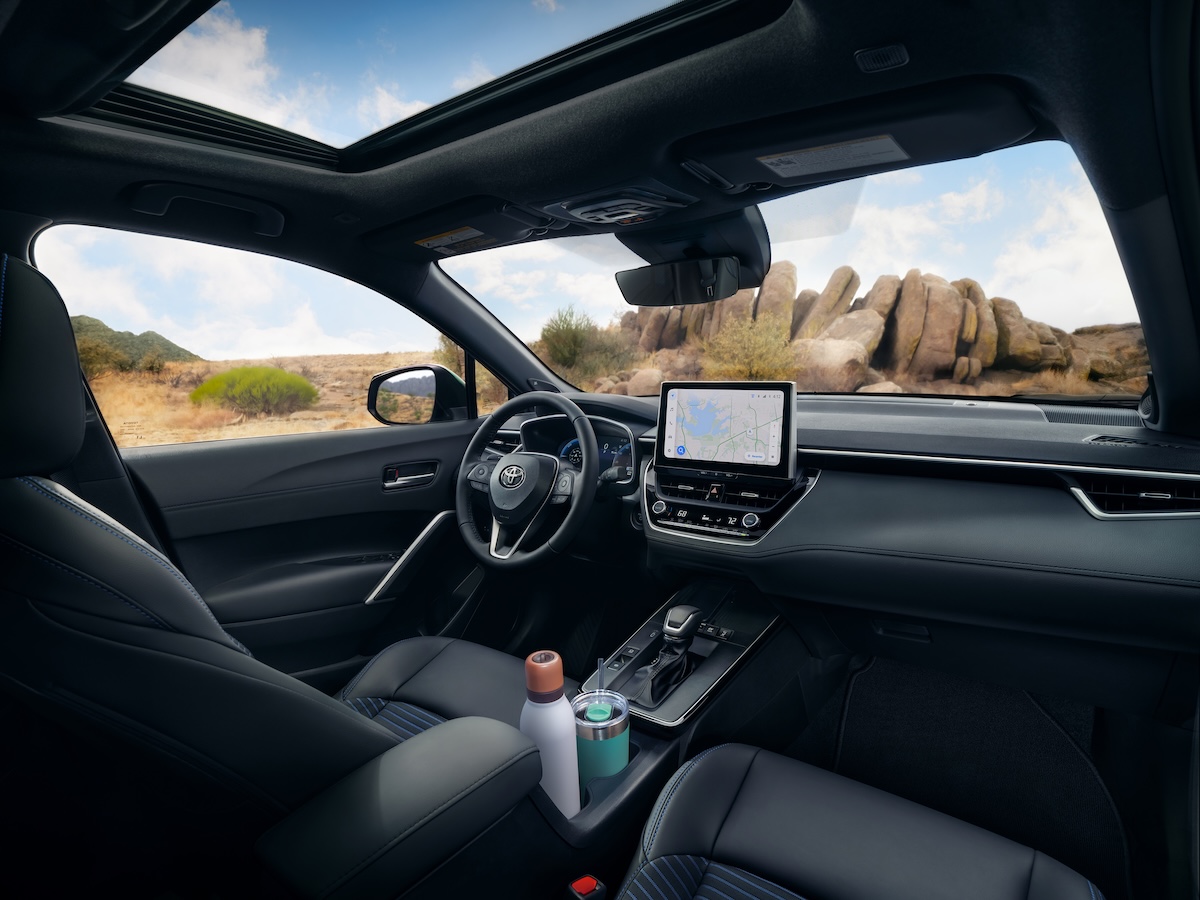
Inside the cabin of the 2026 Toyota Corolla Cross, there’s a major focus on comfort and functionality… but Toyota didn’t skimp on the sophistication. Here are some highlights:
- A redesigned front console to maximize storage
- New seat trims including Portobello
- Standout touches like SofTex seats, heated front seats, a sunroof, and ambient lighting
- There’s a rear center armrest for comfort, as well as plenty of legroom in both front and back.
- You’ve got over 22 cubic feet of cargo space in the back cargo area, plus an optional cargo tonneau cover
Stay Connected in the 2026 Toyota Corolla Cross
What’s new with tech and connectivity in the 2026 Toyota Corolla Cross? Here are some of our favorite upgrades and features from this year:
- There’s a new 10.5-inch touchscreen options for your Toyota Audio Multimedia system, as well as Apple CarPlay and Android Auto
- There’s Qi wireless charging as well as a JBL premium audio system, plus rear USB ports for charging and a fully digital gauge cluster
- You’ll also get Toyota Connected services – this means smartphone-based vehicle remote controls, safety alerts, and maintenance reminders for your ride.
Safety Features Come First in this Orlando Toyota
Safety is a tenet of Toyota, and the Corolla Cross is no exception to that rule. It has safety elements like:
- Toyota Safety Sense 3.0 standard, which includes adaptive cruise control, automated emergency braking with pedestrian detection, lane departure warning and steering assist, lane tracing assist, road sign assist, blind-spot monitor with rear cross-traffic alert, auto high beams, and proactive driving assist.
- You can also rely on solid crash test performance and a solid warranty, including two years complimentary maintenance.
Reliability and Resale Value You Can Count On
You can count on Toyota’s rep for durability and strong resale in the Corolla Cross. The hybrid battery has proven longevity, and estimated depreciation is just 32% after give years (which is awesome and means you’ll get more bang for your buck when you trade in). The standard warranty is three years/36,000mi, five years/60,000mi for the powertrain, and ten years/150,000mi for the hybrid components.
Why Buy the 2026 Toyota Corolla Cross?
The 2026 Toyota Corolla Cross is, to put it simply, one of the smartest buys in the small SUV class. Here’s why you should drive it home:
- Outstanding fuel economy (especially in the hybrid models)
- The latest technology
- Toyota reliability and low running costs
- Strong safety features and crash test reputation
- A modern, stylish design and spacious, comfortable cabin
- Excellent resale value
- All-wheel drive capabilities
Take this new Toyota for a Spin at Toyota of Orlando
Ready to get behind the wheel of the 2026 Toyota Corolla Cross? Come take it for a test drive at 3575 Vineland Road, just off I-4 near the Mall at Millenia. We’re open until 10pm every night!
BIG news on the SUV front – the 2026 Toyota RAV4 has been completely redesigned – we’re talking bumper to bumper – and is headed to Toyota of Orlando! This best-seller is coming into its sixth generation and show no signs of slowing down in terms of its best-selling status. It’s got a fresh look, new features, and offers gas, hybrid, and plug-in hybrids again this year to give you the options you need. Further, you’ll get the best of the best when it comes to safety and connectivity technology… get ready to get behind the wheel of this redesigned Orlando Toyota!
2026 Toyota RAV4 offers Seven Different Models
Three design themes span the lineup this year for the 2026 Toyota RAV4 – Core, Rugged, and Sport. And with seven different models, a return of the Woodland Edition, and an all-new GR Sport model, there’s something for everyone. We’re “Making It Simple™” at Toyota of Orlando and breaking these three design themes down for you.
- Core: The models in the Core lineup include LE, XLE, and Limited.
- You’ll get the sleek new redesign inside and out, as well as a stylish grille and Toyota’s new signature hammerhead front end.
- You’ll have the option of 17, 18, or 19” wheels, as well as a perfect balance of sophisticated style and utility.

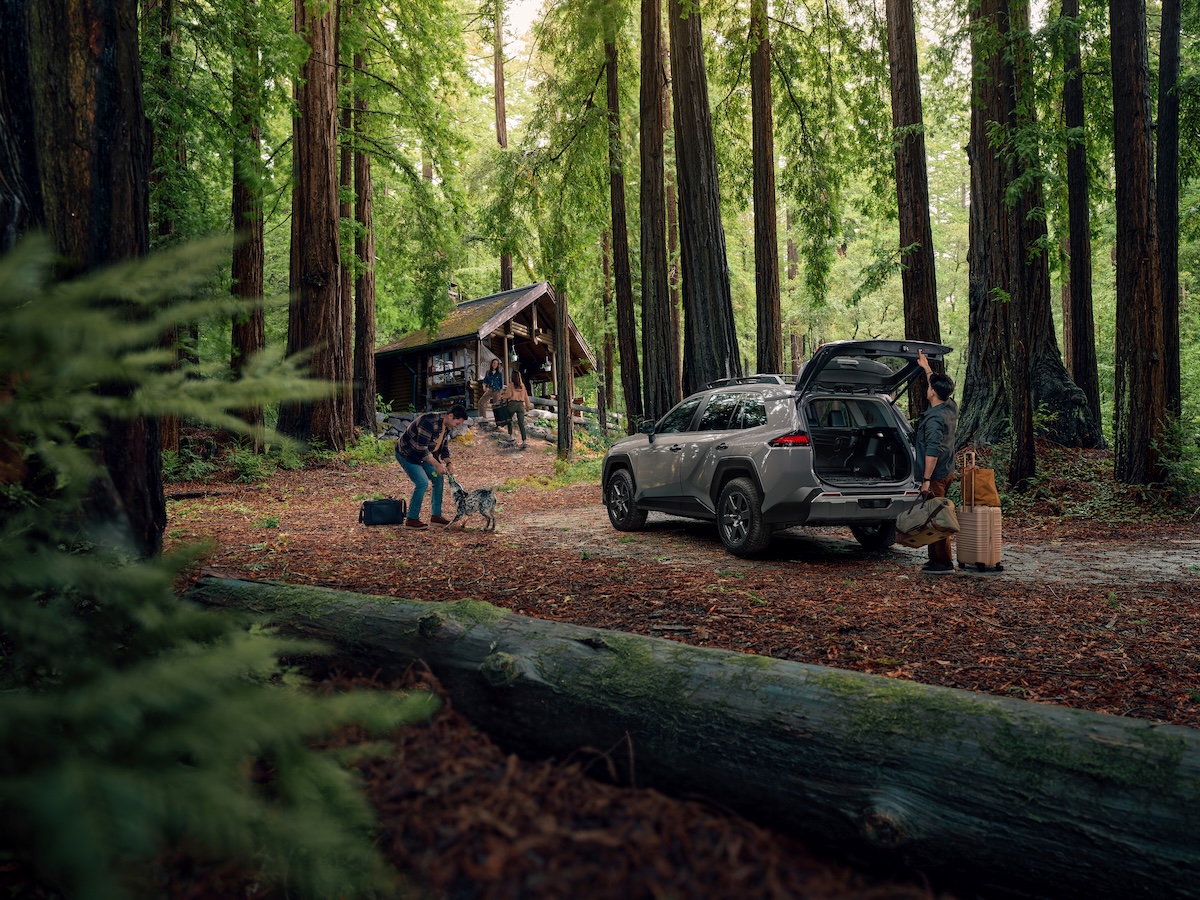
- Rugged: The Rugged design theme can be found on the Woodland model – it’s back again for the 2026 model year at Toyota of Orlando.
- This redesigned RAV4 is ready for outdoor adventure. It has a higher ground clearance, all-terrain tires, and roof rails, as well as a trailer hitch in the back.
- We love the split black grille with LED lighting and unique wheels, too.
- This model of the 2026 Toyota RAV4 comes with standard all-wheel drive and you can take it home in a hybrid or plug-in hybrid.
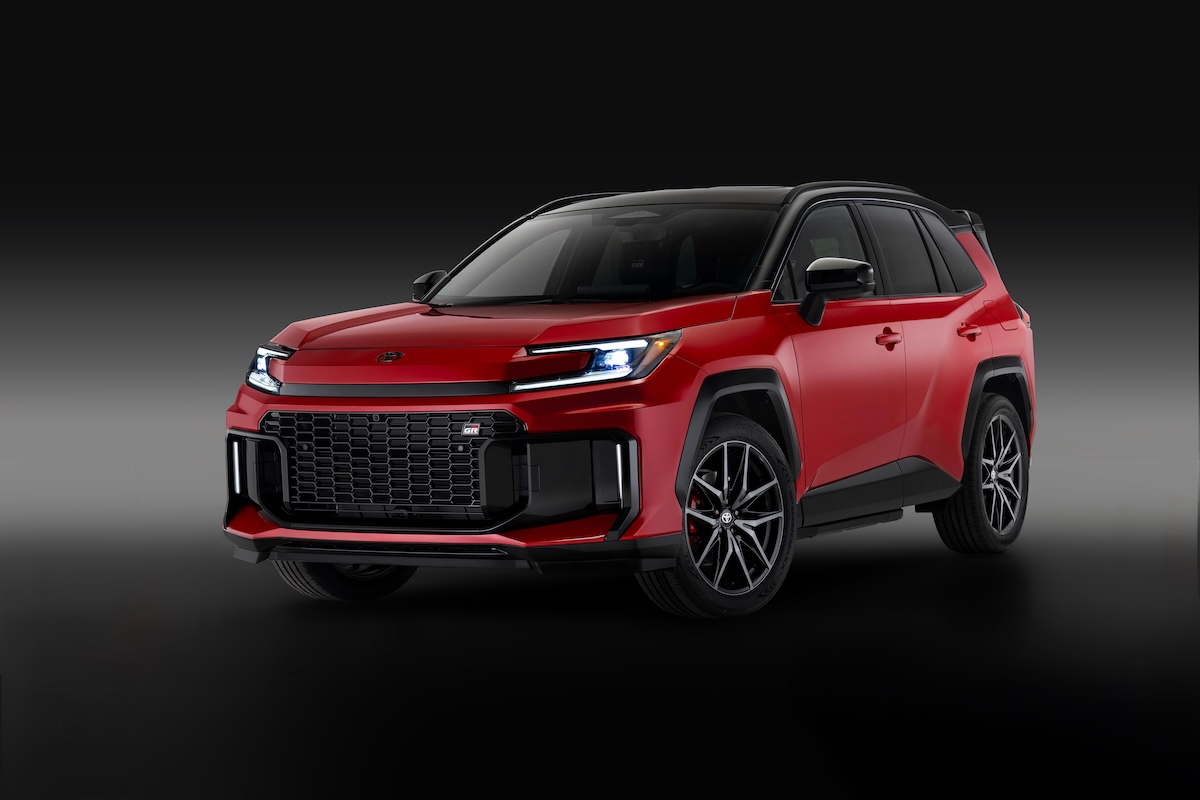
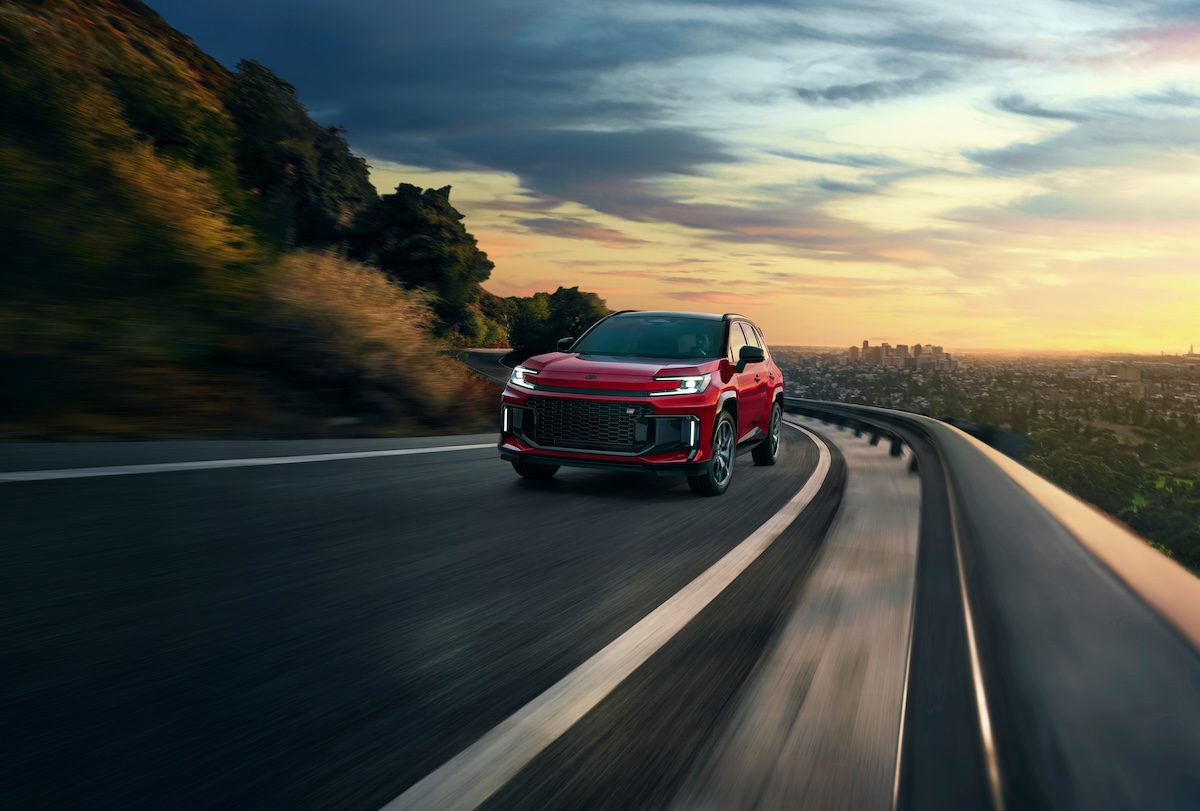
- Sport: Looking for something sporty and stylish? The Sport design line includes the all-new GR Sport model – it was designed with Gazoo Racing to deliver a model that’s got exciting performance features mixed with aggressive styling.
- You’ll have a special GR-tuned suspension, power steering, and increased body rigidity for superior handling.
- We also love the summer tires with 20” wheels and a unique GR functional MATRIX grille with wing-type spoilers.
- The GR Sport models will come only in plug-in hybrid and offer standard all-wheel drive.
- You’ll also find the SE and XSE models in the Sport lineup, giving you features like two-tone paint, blue interior stitching accents, and up to 20” wheel options.
The 2026 Toyota RAV4 Electrified Options: Hybrid and Plug-in Hybrid
Good news if you want to save big money on gas this year – the 2026 Toyota RAV4 is back again in hybrid AND plug-in hybrid powertrains (plus the original gas powertrain), so you’ve got options. Here’s what you should know before you take your test drive at Toyota of Orlando.
2026 Toyota RAV4 Hybrid: This new Toyota hybrid is powered by the fifth-generation hybrid system.
- You’ll have a 2.5L 4-cylinder engine, a hybrid transaxle, a power control unit, and a hybrid battery.
- The 2026 Toyota RAV4 hybrid offers up to 236 combined horsepower on the all-wheel drive models and 226 horsepower on the front-wheel drive models.
- These updates mean more fuel efficiency, responsiveness, and better driving dynamics!
2026 Toyota RAV4 Plug-In Hybrid: The powertrain for this particular Orlando Toyota is now in its sixth generation and offers more horsepower than its hybrid counterpart.
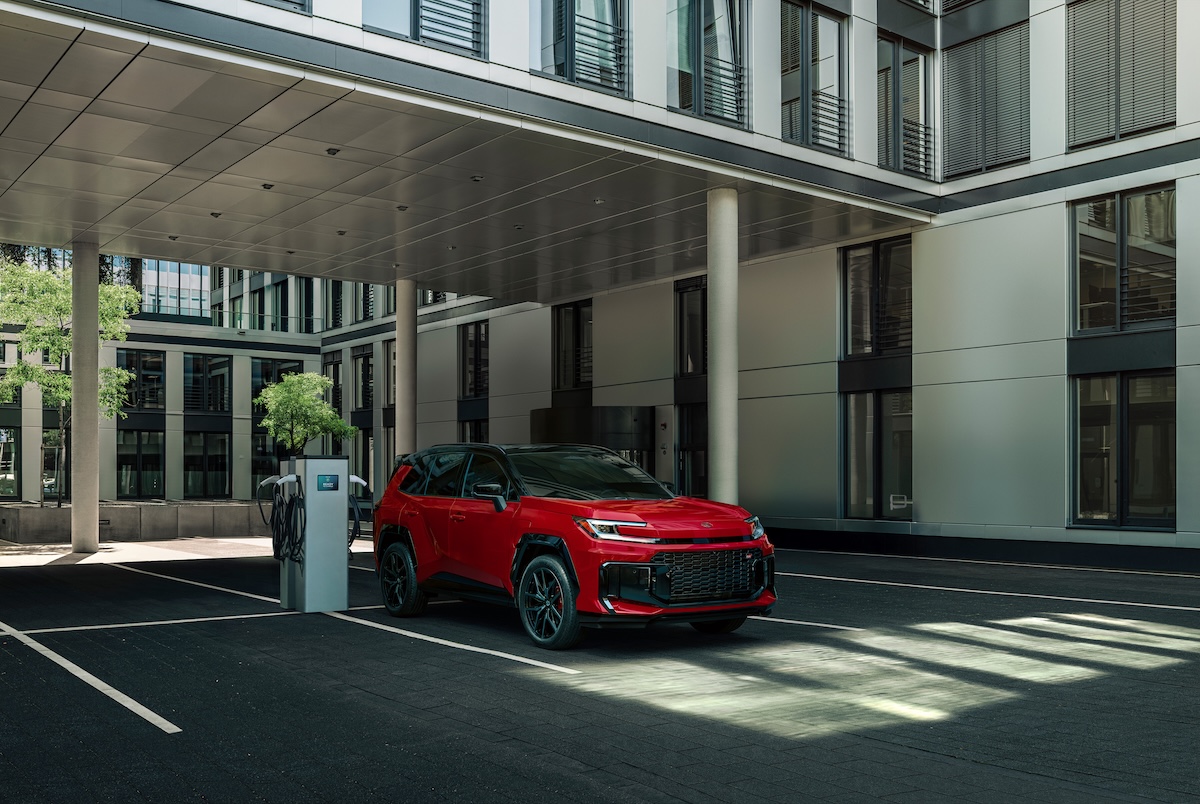
- You’ll get up to 320 combined horsepower, standard all-wheel drive, a high-capacity hybrid battery, and silicon carbide semiconductors that boost fuel efficiency.
- Here’s the even better news – you’ll get more fuel efficiency on this 2026 Toyota RAV4 powertrain! It has a 20% increase in terms of your range; you can now drive up to 50 miles on all-electric power.
- Higher models like the Woodland and XSE trims offer DC fast charging, which means it’ll only take 30 minutes to charge the battery from 10% to 80%.
Towing and Versatility in the Orlando Toyota RAV4 for 2026
You’re also getting more utility in the 2026 Toyota RAV4. Some of the AWD models (hybrid XLE, Woodland, SE, XSR, Limited, and all Plug-in Hybrid Models) can tow up to 3,500 pounds. This means you can easily pull boats, trailers, and other weekend adventure gear. All other models can pull up to 1,750 pounds.
The 2026 Toyota RAV4 Redesign: What to Know
The 2026 Toyota RAV4 is built on the new TNGA-K platform, which means it has reinforced frame joints and suspension mounts for better structural rigidity. What does this mean for you? When you take this Orlando Toyota out on the road, you’ll find better handling, more ride comfort, reduced vibrations inside the cabin, and a quieter driving experience.
What’s new on the outside?
- The 2026 Toyota RAV4 exterior has larger wheels with an elevated stance, as well as a super spacious cargo area.
- All models have the iconic hammerhead front-end design, chiseled body panels, and wide fender flares for an aggressive stance.
- LED lighting rounds out the exterior and visually widens the back end, making this Orlando Toyota bolder than ever before.

The interior cabin also got its fair share of updates.
- It balances comfort and function for the driver AND passengers.
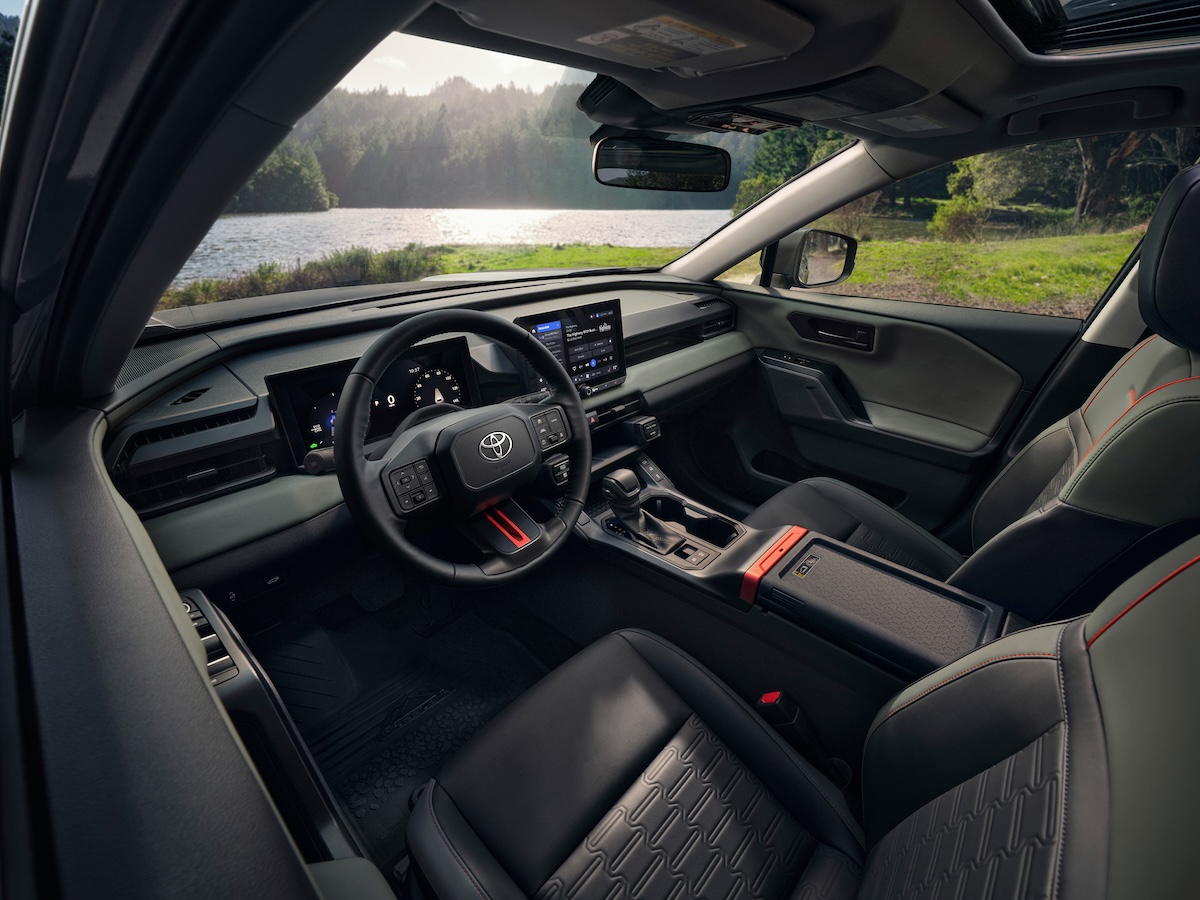
- The 2026 Toyota RAV4 offers a center stack that keeps all of your essential controls near your touchscreen display.
- The center console includes a two-way closure armrest and storage bin as well as a removable cupholder divider.
Interior Comfort and Style Options on this Orlando Toyota
The 2026 Toyota RAV4 offers a variety of seating materials and colors that are tailored to each trim. Here are some of the highlights you’ll find waiting for you:
- The Woodland model interiors have Mineral-colored SofTex seating, perforated soft-touch door and dash panels with unique patterns, red-orange accents, and branded all-weather floor and cargo mats.
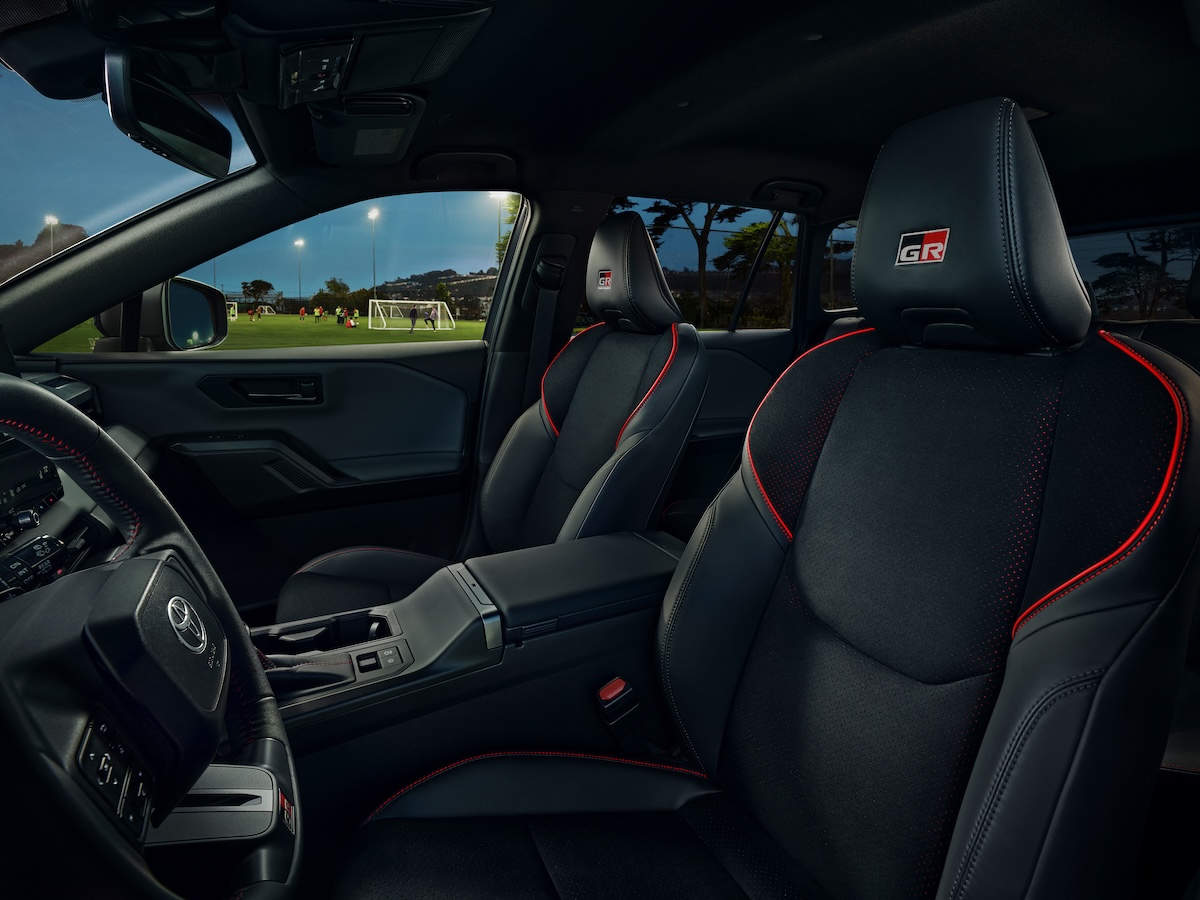
- The Sport trims offer BRIN•NAUB® microsuede and SofTex-trimmed seats with colorful accents, along with sporty touches like GR logos, paddle shifters, and aluminum sport pedals in the GR SPORT.
New exterior paint colors are up for grabs, too. You’ll love 2026 Toyota RAV4 hues like:
- Urban Rock
- Meteor Shower
- Everest
- Storm Cloud
- Ice Cap
- Wind Chill Pearl
- Midnight Black Metallic
- Ruby Flare Pearl
- Blueprint
Plus two-tone paint options on some models, which feature vibrant paint and a black roof.
What’s New with Tech on the 2026 Toyota RAV4?
Big updates are waiting for you at Toyota of Orlando when it comes to safety and technology. One of the biggest updates is the introduction of Toyota Arena. This software development platform offers a robust foundation for advanced safety and connectivity.
The 2026 Toyota RAV4 is debuting an all-new Toyota Audio Multimedia System built on Arena, and it offers:
- Wireless Apple CarPlay and Android Auto compatibility
- Simultaneous dual Bluetooth phone connections
- A persistent home button accessible in native mode and while using smartphone integration
- Improved native voice assistant with faster response times
- Native map and navigation integration directly in the digital gauge cluster
Speaking of the digital gauge cluster, all models of this Orlando Toyota get a vibrant, customizable 12.3-inch display, while the touchscreen infotainment is offered in a slim 10.5-inch standard or available 12.9-inch version for a modern cockpit feel. There are also new digital climate controls are integrated below the touchscreen for a clean interface.
Let’s talk about safety. The 2026 Toyota RAV4 is the FIRST Toyota to get Toyota Safety Sense 4.0! This new safety suite offers improved driver assistance and safety features. Additional details on TSS 4.0 will be shared closer to the RAV4’s full launch.
How Much Will the New 2026 Toyota RAV4 Cost?
We don’t have an EXACT arrival date of the 2026 Toyota RAV4 at Toyota of Orlando – we do know it’ll arrive sometime before the end of the year. We also don’t have pricing information (it should be released closer to when the SUVs actually arrive). Want more info on the 2026 Toyota RAV4? Follow Toyota of Orlando on social media for updates! You can also call us at (407) 298-4500.
Should you buy a used car or a new car?
It can be overwhelming when you’re shopping for a new ride. What make and model will suit you best? How are you going to pay for it? What features do you need to make your drive time easy and efficient? One of the biggest questions we get is whether someone should buy a used car or a new car. There’s no real right answer; it depends on your personal preferences and your ideal driving situation. Toyota of Orlando is here to explain the pros and cons of both sides to help you make a more educated decision when it comes to buying a new ride.
Buying a new car
Buying a new car definitely has its perks. Here are some of the highlights you’ll get when you purchase new from our Orlando Toyota dealership:
- The car is brand-new, so it hasn’t had any previous owners (or any previous repairs or accident damage). You know exactly where it’s coming from.
- You get excellent warranties from the factory to cover any issues that the car might have – these typically span the first 2 years or 24,000 miles, bumper to bumper.
- It’s sometimes easier to get financing on a new car, which can affect how much your monthly payment is.
- Most makes offer no-cost maintenance for the first 2 years/24,000 miles or so for routine auto service, saving you a pretty penny when it comes to car care.
And here are some of the possible cons of buying new over used:
- New cars sometimes have more expensive price tags attached to them, which can affect how much you pay overall as well as your monthly payment.
Buying a used car
Buying a used car also has its benefits. Here are some of the things you can look forward to if you shop pre-owned:
- Price tags are typically lower on used vehicles, meaning you’ll pay less overall and on a monthly basis.
- The car may have a history, but you can always request both a CarFax report and service records to ensure that it’s accident-free and has been well cared for over the course of its life.
- If you buy from a dealer, you may have the option of a warranty for the vehicle. This is especially true if you shop cars like our Toyota Certified Used inventory, all of which come with exceptional warranties to give you peace of mind.
- A used vehicle may be cheaper to insure than a new vehicle.
And here are some of the perceived cons of choosing a preowned option over a brand-new car:
- Used cars do have a history, which makes some drivers nervous when it comes to reliability.
- You have to pay for maintenance and the older the car is, the more likely it is that you’ll have larger services or repairs coming up.
Still confused as to which option is best for you? Let Toyota of Orlando help. We have a great selection of both new and used cars for sale right now and you can get behind the wheel of any and all of them. We’re open seven days a week at 3575 Vineland Road, just off I-4 near the Millenia Mall.
What Car Should I Buy? Choosing the Best Toyota

Are you asking yourself “what car should I buy” and not able to come up with a clear answer? Our Toyota of Orlando team is here to help. Check out this complete guide to choosing the best Toyota – we’ll help you find the perfect car to match your life, your budget, your comfort level behind the wheel. And on top of that, we’ll give you test drive tips to cement your choice. Let’s get started!
Step 1: Outline your needs
Kick off your process by writing down how you’re going to use your new Toyota. This can help narrow our big lineup into an easy-to-digest handful of vehicles. Here are some main questions to start with:
- How many people do you carry most days, and do you need a 3rd row? (The 2026 Toyota Corolla and Camry fit 4–5, while the 2026 Toyota Highlander, Grand Highlander, and Sequoia offer 3 rows.)
- Do you prioritize fuel savings or horsepower? Hybrid Toyotas like the Camry, RAV4 Hybrid, and Prius focus on efficiency, while trucks like the Tacoma and Tundra focus on towing and hauling.
- Do you spend a lot of time on Orlando city streets only, or do you need something that can handle towing and off‑road?
- If you’re mostly commuting around Orlando, the Camry, Corolla, Prius, and RAV4 are great options.
- If you have a big family and like road trips, consider the RAV4, Highlander, Sienna, and Grand Highlander.
- If you off-road or regularly tow and haul, consider the Tacoma, Tundra, 4Runner, Land Cruiser, or Sequoia.
- Also think about parking. If you routinely park in a tight parking garage or lot, compact models like the Corolla and Corolla Cross are perfect.
Make a short “must-have” list of all the qualities you need in your next ride, and then you can use it to cross-reference the Orlando Toyota possibilities.

Step 2: Pick your vehicle type
Now align your needs with the main Toyota categories to answer the “what car should I buy” conundrum. Here’s a quick guide to get you started from our expert team at Toyota of Orlando.
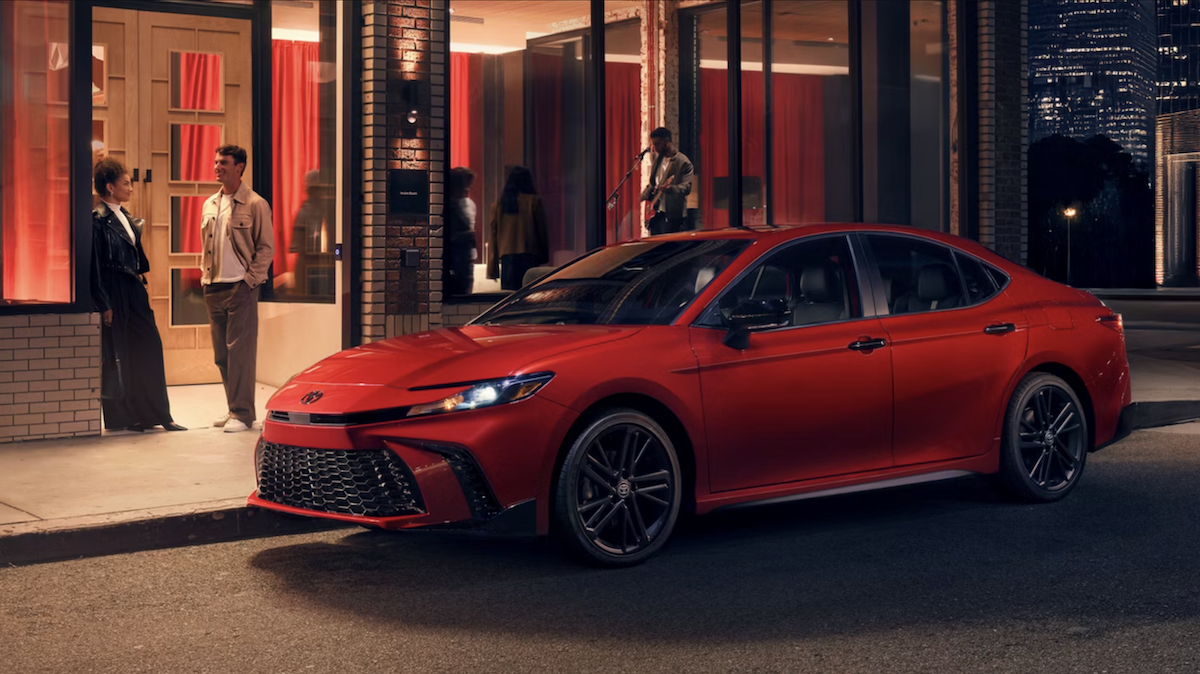
Sedans like the Corolla and Camry:
- Best for commuting, have good fuel economy, easier to park
- Both are available in hybrid
- Camry offers more space while Corolla is more compact
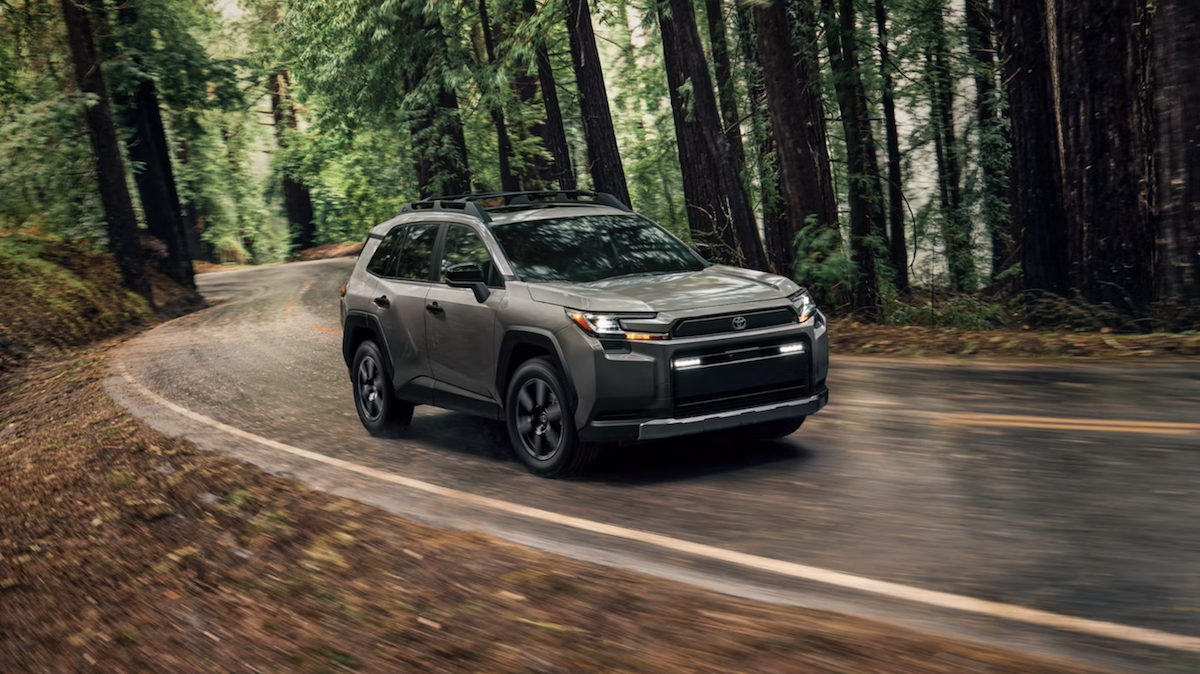
Compact SUVs/Crossovers like the RAV4, RAV4 Hybrid, Corolla Cross, and Crown Signia:
- Best for small families, road trips, and light outdoor use.
- More cargo space and higher seating than sedans, and the hybrid options save fuel.
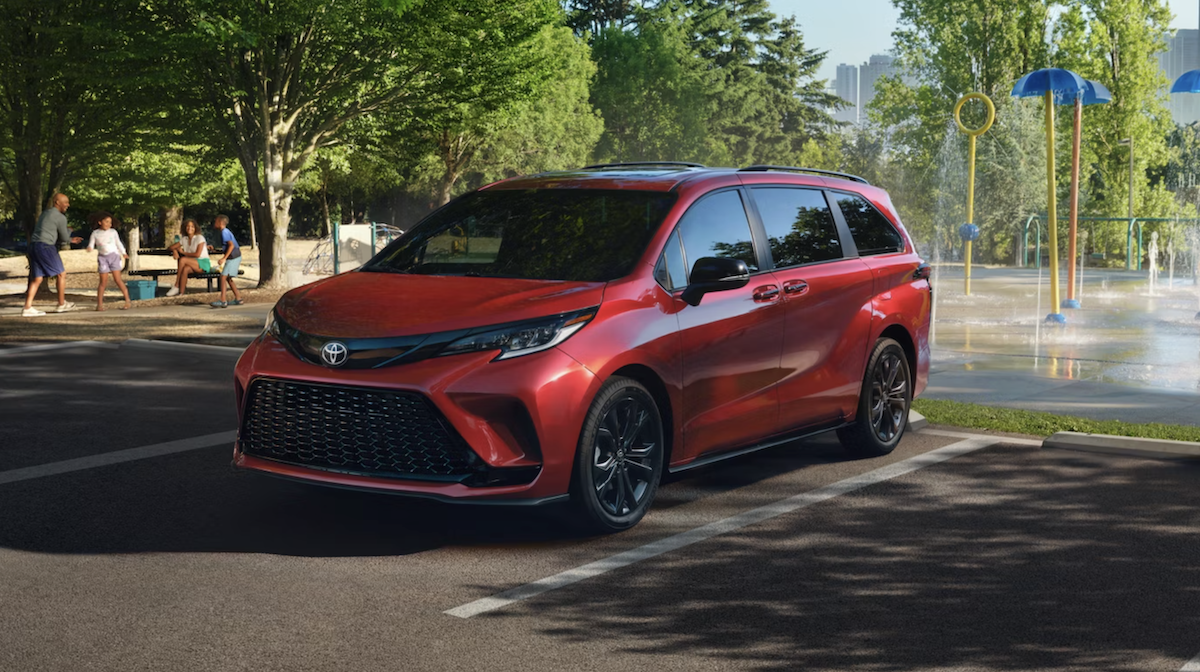
3‑Row SUVs & Minivan like the Highlander, Grand Highlander, Sequoia, and Sienna:
- Best for larger families or frequent passengers.
- The Grand Highlander and Sequoia offer more space and power, while the Sienna is hybrid-only and very family-focused.
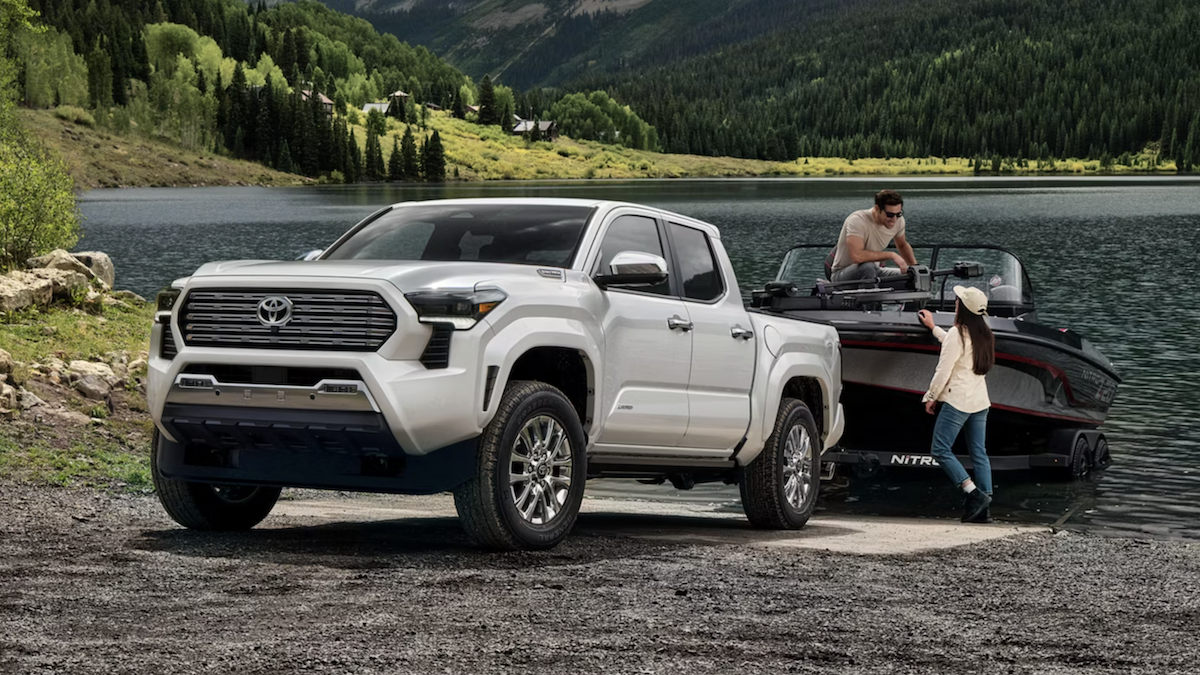
Trucks & Off‑road like the Tacoma, Tundra, 4Runner, and Land Cruiser:
- Best for towing boats/trailers, rough roads, and camping.
- The Tacoma and Tundra emphasize towing and payload, while the 4Runner and Land Cruiser are top picks for off‑road durability.
Try to narrow your options to one or two body styles (like compact SUV or sedan).
Step 3: Shortlist 2-3 Orlando Toyota models
Next, use our site to look at our model lineup. This will let you filter our inventory by size, price, and fuel efficiency. Use your “must haves” list and pick two to three models to consider.
Here are a few solid examples of good shortlists you could bring to Toyota of Orlando with you:
- Fuel-efficient commuter Toyota: Corolla Hybrid, Prius, Camry Hybrid.
- Small family in Florida: RAV4, RAV4 Hybrid, Highlander.
- Trailer or boat owner: Tacoma, Tundra, Sequoia.

Check basic details for each, including:
- The seating and cargo volume.
- The EPA fuel economy (MPG).
- The towing and hauling capacity.
- The starting prices and their typical trim levels (LE, XLE, Limited, etc.).
This gives you a much more focused list to bring with you when you want to explore options – our Toyota of Orlando team can easily work from a list like this to find the perfect solution.
Step 4: Understand key safety and tech
Almost all of our Orlando Toyotas – the new ones – come with a standard safety suite called Toyota Safety Sense. Getting familiar with the features before your test drive can help you ask better questions AND see if they meet your daily drivers needs. Here are the main TSS features you’ll be able to explore:
- Pre‑Collision System with Pedestrian Detection: Warns you of a possible forward crash and can help you brake, including for people and bikes.
- Lane Departure Alert / Lane Tracing Assist: Warns you and gently assists you if you drift. Also helps keep you centered in your lane.
- Dynamic Radar Cruise Control: Keeps your car a set distance from the car ahead on the highway.
- Automatic High Beams and Road Sign Assist: Helps you with nighttime visibility and recognizing certain road signs.
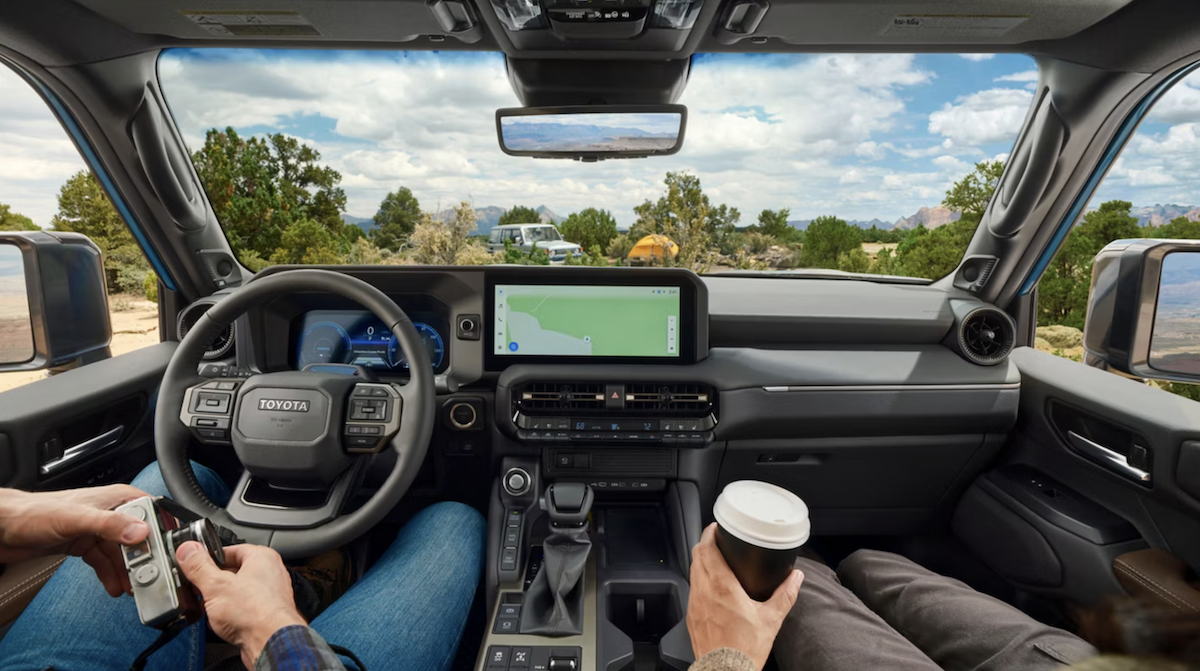
You should also think about entertainment and convenience tech. Explore Toyota features like:
- Smartphone integration: Apple CarPlay and Android Auto are widely available on our Orlando Toyotas, so decide if they’re important to you.
- Convenience: Consider features like power seats, heated seats, power liftgates, and sunroofs.
- Driver aid tech: Look at element like a blind spot monitor, rear cross-traffic alert, and advanced parking sensors.
Circle which of these features are “must-have” vs “nice to have” before going in for your test drive at Toyota of Orlando.
Step 5: Set a realistic budget
Before visiting any dealer, have a price or monthly payment range in mind as a guide. Think about things like:
- The current starting MSRPs for your shortlisted models on our site
- If you’re paying cash, financing (loan), or leasing
You can also use our online payment calculator to explore your payments with different down payments and terms.
Step 6: Prepare for the dealership visit
A little prep makes your visit to us smoother and less stressful. Here are some tips to get you rolling:
- Gather important documents: You’ll likely need your driver’s license and proof of insurance.
- Call or schedule online: Ask to drive specific models and trims (for example, “RAV4 XLE and RAV4 Hybrid XLE”) when you give our Orlando Toyota sales team a ring.
- Pick the right time: Choose a daylight test drive time and, if possible, avoid rush hour so you’re not stressed.
- Make a simple checklist for when you get behind the wheel:
- Space and comfort.
- Visibility.
- Ride quality and noise.
- Controls, buttons, and tech ease of use.
- Acceleration, braking, and steering feel.
Give our sales team a heads up that you’re comparing models and you want to test drive more than one to ensure you find the perfect fit.
Step 7: Inspect the Toyota before driving it
Before you pull away for your test drive, take 5–10 minutes to walk around and sit in the driver’s seat. Here’s what you should look for:
Outside the car:
- Walk around and look for obvious defects (like panel gaps, paint issues, tire condition), even on a new car. Better safe than sorry!
- Open the trunk or cargo area. Check the loading height and space for strollers, golf clubs, luggage, etc. – anything you know you’ll be loading in the back
- Open rear doors and sit in the backseat. This is your chance to check legroom, headroom, and how easy it is to get in and out.
Inside the car:
- Adjust your seat, the steering wheel, and the mirrors until you’re comfortable. make sure you can see clearly in all directions.
- Try the controls and buttons, including:
-
- The headlights, wipers, climate controls, parking brake, and shifter.
- Test the infotainment system, pairing your phone if you can (at least do this before you leave the dealership).
-
- Look around for blind spots created by pillars or headrests.
If anything feels cramped or your visibility is poor, note it. This may not be the right Orlando Toyota for you!
Step 8: What to do during your test drive
Starting the car up and low‑speed driving
- Listen when you start the car: The engine should sound smooth and free of odd knocking or grinding noises.
- Check the smoothness pulling away from a stop.
- Test the brake response (not too grabby or too soft).
- Examine the steering effort at low speeds and how easy it is to park.
Orlando streets
- Drive through normal stop‑and‑go traffic, turns, and lane changes.
- Notice things like:
- How the transmission shifts and how responsive the throttle feels.
- How the suspension handles bumps, speed humps, and rough patches in the road.
- Cabin noise from wind, tires, and traffic.
Also see how stable the car feels at speed and how much noise you hear.
Parking and tight maneuvering
- Practice a few parking situations, like parallel or backing into a spot.
- Evaluate the backup camera, parking sensors, and turning circle to ensure they’re easy to use.
You can also ask your Toyota of Orlando salesperson to demonstrate safety features that you’re unsure about. And finally, after your test drive sit in the driver’s seat and ask yourself “can I see myself driving this Toyota every day?” If you’re not sure, talk to your sales person about your doubts.
Schedule a test drive at Toyota of Orlando
Ready to get behind the wheel yourself? We’re ready to make it happen – schedule a test drive at Toyota of Orlando and answer the “what car should I buy” question with the most confidence possible. You can call us at (407) 298-4500 or swing by – we’re open until 10pm every night at 3575 Vineland Road, just off I-4 near the Mall at Millenia!
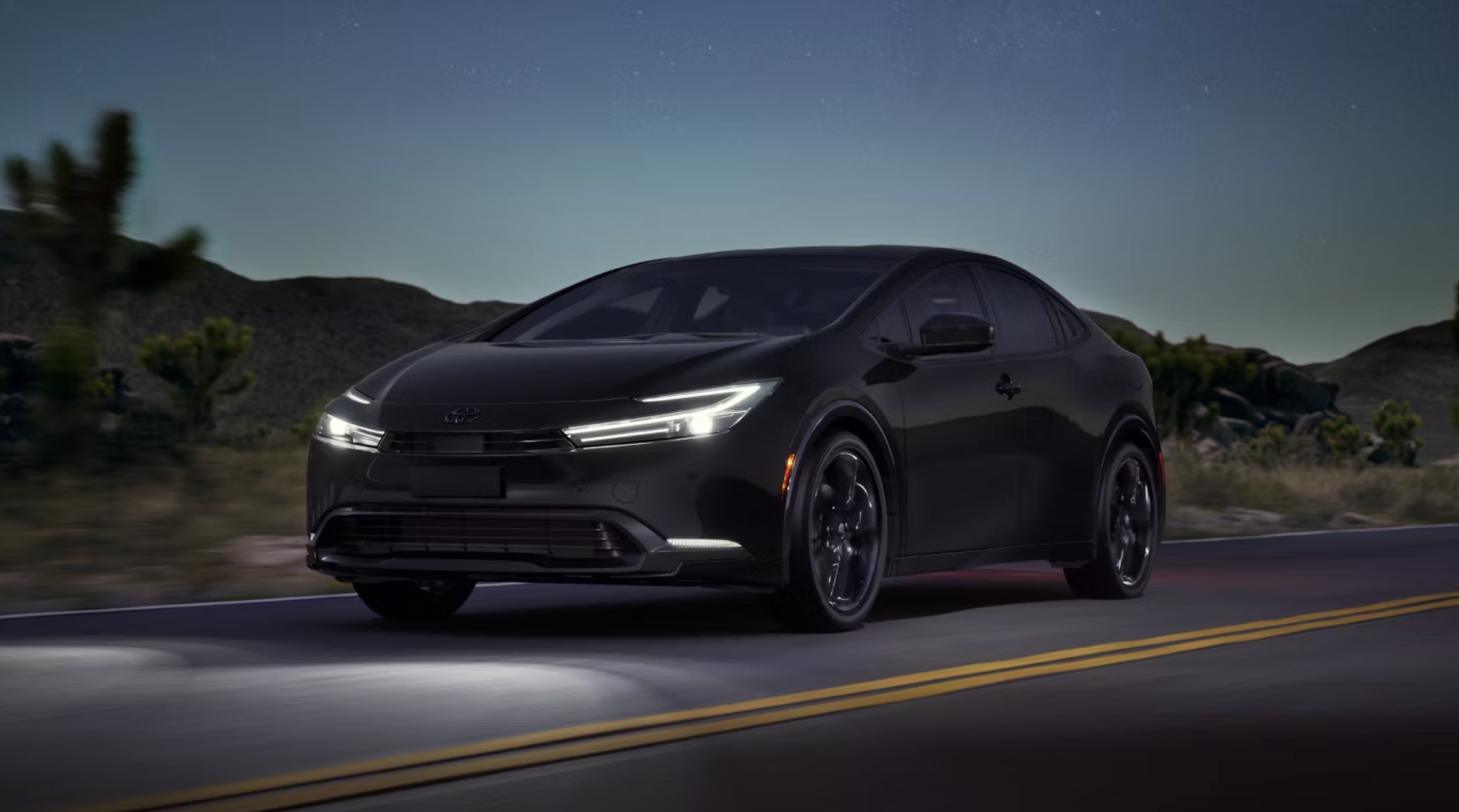
Are you looking for a new ride that gives you the perks of electric driving without the EV range anxiety that comes with an all-electric car? We hear you – and the 2027 Toyota Prius Plug-In Hybrid is waiting for you at Toyota of Orlando. You’ll have EV abilities, hybrid performance to fall back on, and a sleek, modern design to cap it all off. Let’s jump into it!
Executive Summary
- The 2027 Toyota Prius Plug-In Hybrid gives you the best of both worlds with up to 44 miles of all-electric driving range and Toyota hybrid power ready to jump in when you need it.
- You’ll have four grades to choose from – SE, XSE, Nightshade, and XSE Premium – plus fresh updates like the new Inked exterior color and standard Dual-Zone HVAC.
- Efficiency is the name of the game, with up to an EPA-estimated 51 mpg combined in Hybrid Mode, but you’re not giving up the fun… all four grades can go from 0–60 mph in an EPA-estimated 6.6 seconds.
- Tech is everywhere, from available 12.3-inch Toyota Audio Multimedia and JBL Premium Audio to wireless Apple CarPlay and Android Auto, plus premium features like Advanced Park, a Digital Rearview Mirror, and an available solar roof.
- Every model also comes standard with Toyota Safety Sense 3.0, Blind Spot Monitor with Rear Cross-Traffic Alert, and Safe Exit Alert to add extra confidence to your Orlando drives.
What’s New on the 2027 Toyota Prius Plug-In Hybrid?
So what’s new this year? Well, the 2027 Toyota Prius Plug-In Hybrid is bringing the same performance and efficiency that made previous model years stand out. However, there are a few new updates available when you test drive at Toyota of Orlando. This year we love:
- The new Inked black exterior color
- Standard Dual-Zone HVAC
- Four available grades: SE, XSE, Nightshade, and XSE Premium
- 220 net-combined horsepower
- EPA-estimated 0–60 mph time of 6.6 seconds
- Up to an EPA-estimated 44 miles of all-electric driving range
- EPA-estimated 51 MPG combined in Hybrid Mode on the SE
- 13.6-kWh lithium-ion battery
- Available 12.3-inch Toyota Audio Multimedia touchscreen
- Standard Toyota Safety Sense 3.0
This year’s exterior colors include Cutting Edge, Guardian Gray, Reservoir Blue, the new Inked, and Nightshade-exclusive Karashi. You can also opt for premium paint choices like Supersonic Red and Wind Chill Pearl. Regardless of which hue you settle on, they all perfectly complement the Prius Plug-In’s sleek, modern silhouette.
How Often Do You Need to Charge the 2027 Toyota Prius Plug-In Hybrid?
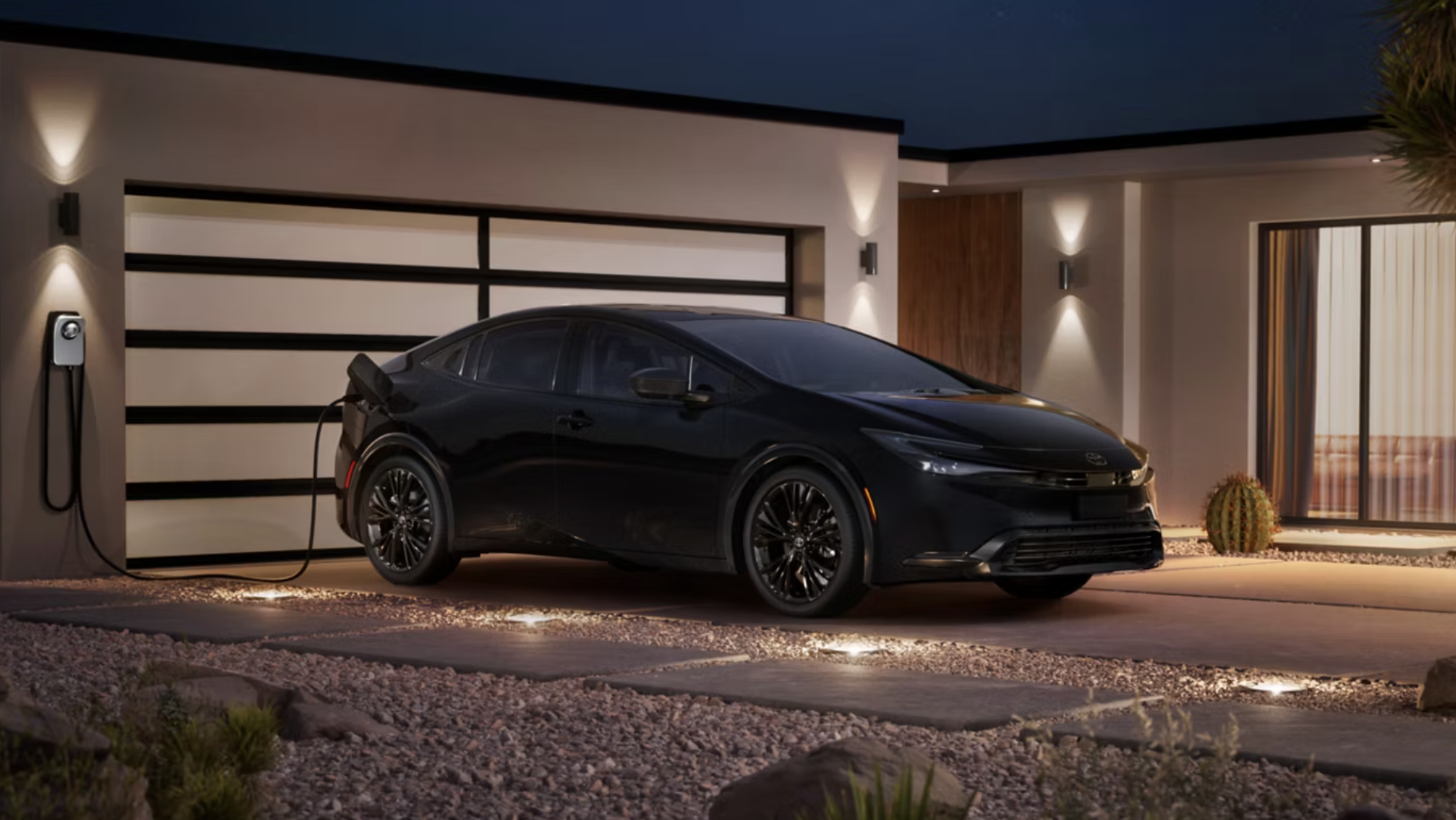
One of the biggest perks of the 2027 Toyota Prius Plug-In Hybrid is the fact that you can drive on EV power alone, but you also have the flexibility of a hybrid powertrain for longer drives.
This Orlando Toyota can handle shorter trips on only electric power – no need to use gas. And charging is easy; you can connect your ride to a standard household outlet using the dual-voltage charging cable that’s included. Charging takes around 11 hours with a standard 120V outlet, and if you use a level two charger, that time drops to around four hours.
But the best part? If you don’t have a change to charge up or know you’re going to be out on the road for a while, you have that renowned Toyota hybrid powertrain to fall back on. You can gas up and hit the road without worry.
Want the technical explanation? Here’s a breakdown of the three drive modes you’ll experience when you test drive the 2027 Toyota Prius Plug-In Hybrid at Toyota of Orlando.
EV MODE: When your battery is charged up, this efficient ride can use battery power alone without needing help from the gas engine (similar to a true EV like the 2027 Toyota bZ).
AUTO EV/HV MODE: This is when the 2027 Toyota Prius Plug-In Hybrid drives on battery power when able, but switches back over to hybrid mode when it needs a boost (like during high speed driving or climbing a steep hill).
HYBRID MODE: This is when your new Toyota hybrid automatically manages the switch between gasoline and electric power to make the most of your power and save gas.
At the end of the day, this setup means you don’t have to choose between electric power and hybrid versatility – you get both in this Orlando Toyota.
What to Expect from Toyota’s Hybrid System
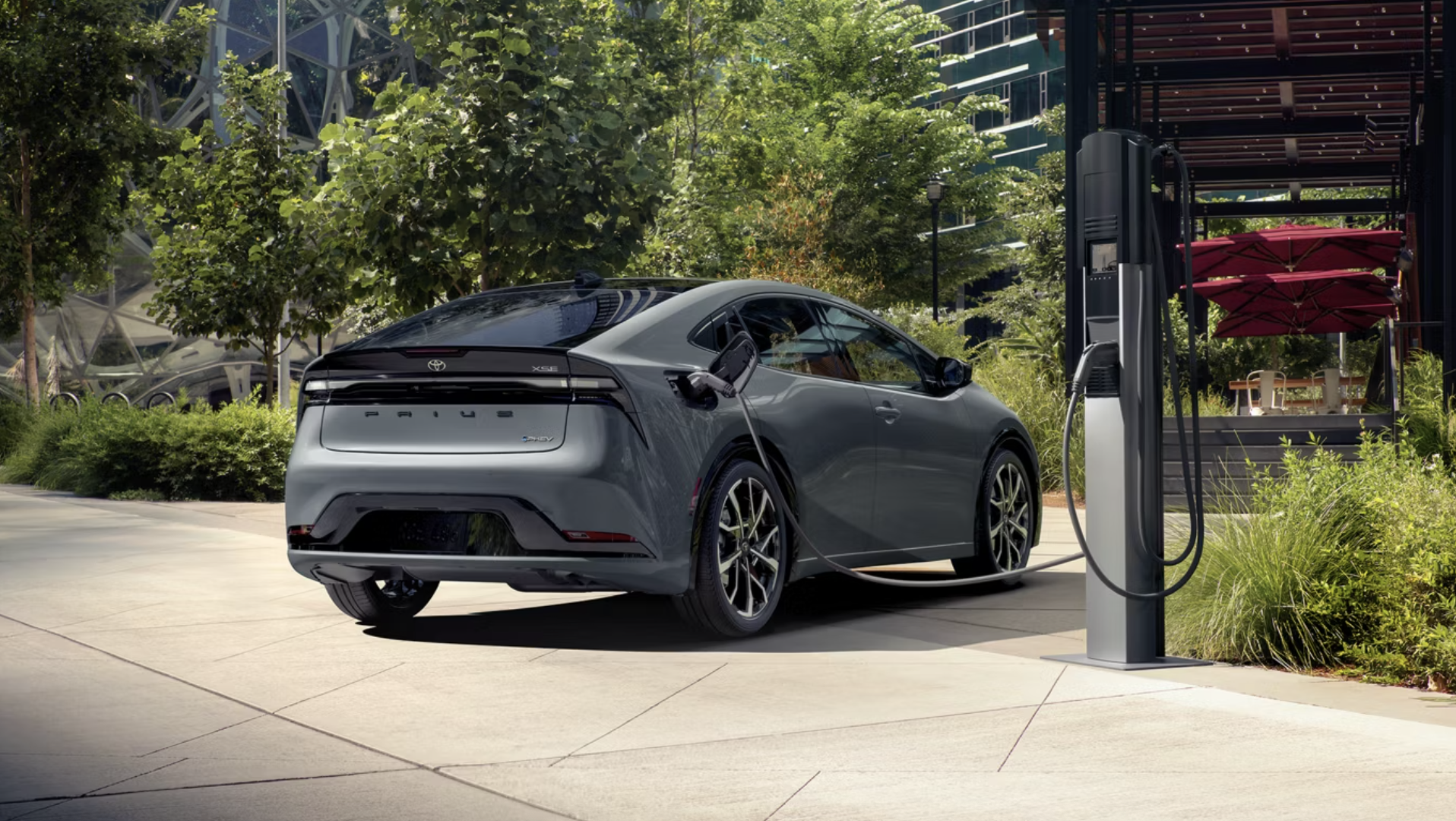
The 2027 Toyota Prius Plug-In uses Toyota’s fifth-generation Toyota Hybrid System. Here’s how it works:
- It pairs a 2.0L inline four-cylinder gas engine with two motor-generators (MG1 and MG2) and a continuously variable transmission.
- The gas engine and MG2 work together to give you fun acceleration, while both MG1 and MG2 help to recharge the hybrid system’s lithium-ion battery and give you the best fuel efficiency possible.
- Toyota uses a compact, high-output, low-loss drive motor with a six-magnet and electromagnetic steel plate configuration. This means that when your 2027 Toyota Prius Plug-In Hybrid is in Hybrid Mode, both the gas engine and battery can give you power during acceleration.
- This Orlando Toyota also supports its fuel efficiency with the electronically controlled brake system. This means the hydraulic braking and regenerative braking work together to stop your car AND send electrical energy back to the battery.
You can also customize your driving experience with three standard drive modes this year. Here’s the breakout:
- NORMAL Mode balances your fuel efficiency and acceleration for everyday driving.
- ECO Mode maximizes your hybrid efficiency by adjusting power output when you accelerate.
- SPORT Mode gives you a more responsive driving experience with an better acceleration and dynamic performance.
You’ll Love the Intuitive Multimedia and Connectivity in this Orlando Toyota
Tech has always been a part of the Prius’ identity, but never more so than in the 2027 Toyota Prius Plug-In Hybrid. You can count on major tech inside and out, besides what’s going on under the hood. Here’s what you can expect:
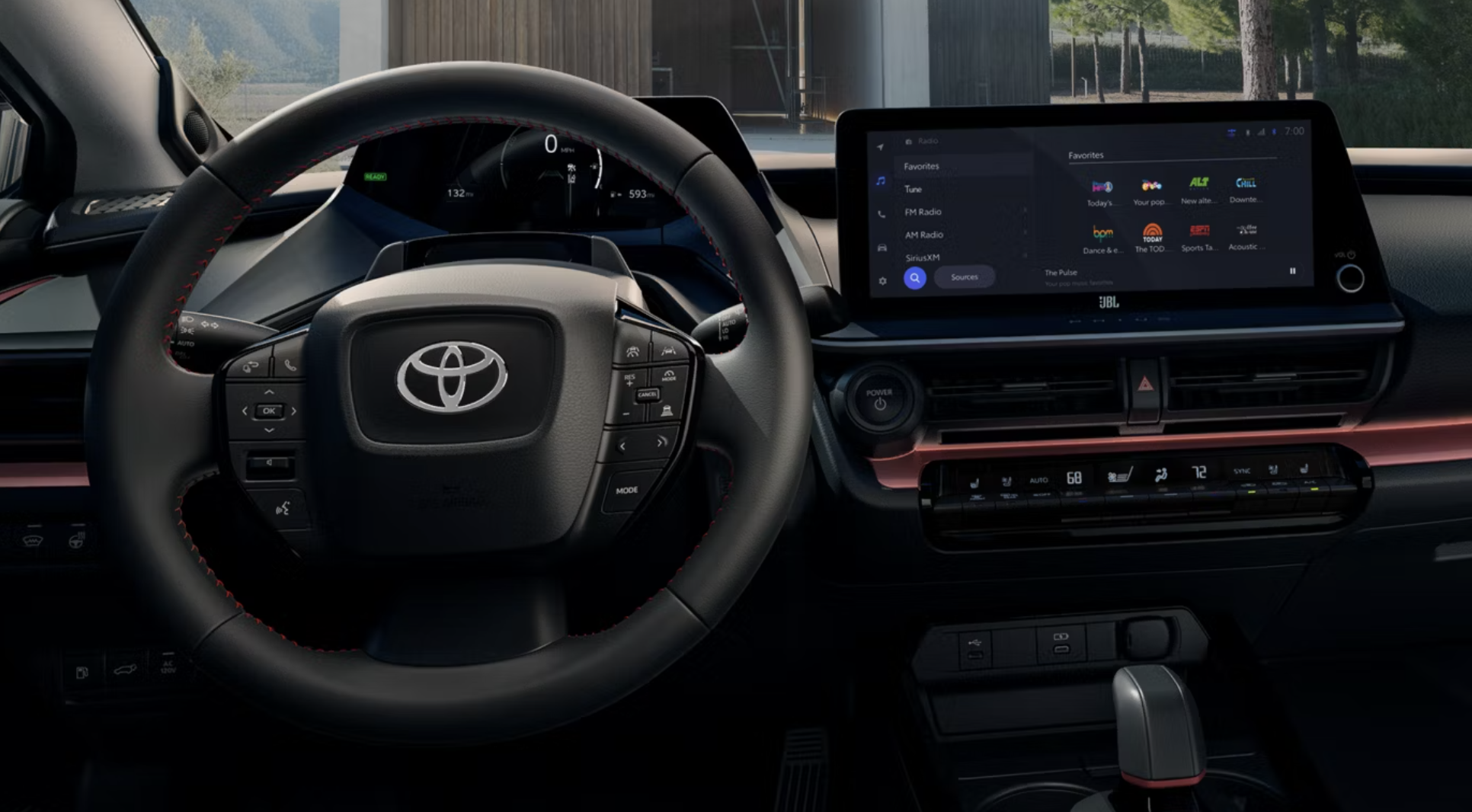
- The SE, XSE, and Nightshade Edition come standard with an 8-inch Toyota Audio Multimedia touchscreen.
- The XSE Premium upgrades to a standard 12.3-inch touchscreen (and the larger display is also available on the XSE and Nightshade grades for an upgrade).
- Toyota Audio Multimedia supports Over-the-Air updates, which means you can get system updates without having to actually visit the dealership. (But feel free to swing by and say hi.)
- A six-speaker audio system comes standard on SE, XSE, and Nightshade models.
- The XSE Premium steps things up with a standard JBL Premium Audio system featuring eight speakers and ClariFi technology.
- Connected Services trials include five years of Safety Connect, Service Connect, and Remote Connect.
- Toyota also includes a 30-day/3GB Wi-Fi Connect trial and a three-month Drive Connect trial.
What Models Does the 2027 Toyota Prius Plug-In Hybrid Come In?
The 2027 Toyota Prius Plug-In Hybrid comes in four models – this makes it easier to choose the perfect mix of tech, comfort, style, and convenience for your daily driver. Every single model comes standard with wireless Apple CarPlay and Android Auto compatibility, a 7-inch digital gauge cluster, and Toyota Safety Sense 3.0. Here’s a breakdown of what you can expect, model by model.
2027 Toyota Prius Plug-In Hybrid SE
- Dark gray 17-inch alloy wheels with wheel covers
- Six-way adjustable fabric-trimmed front seats in black with red trim
- Leather-trimmed heated steering wheel
- Smart Key System on the driver’s door
- Six USB-C ports
- Electronic Parking Brake
- Rain-sensing windshield wipers
- Toyota Audio Multimedia with an 8-inch touchscreen
- Available Front and Rear Parking Assist with Automatic Braking
- 44 miles of EV driving range
- 51 mpg combined when in hybrid mode
2027 Toyota Prius Plug-In Hybrid XSE
- Machine-finished 19-inch alloy wheels
- Eight-way adjustable heated power driver’s seat
- SofTex-trimmed seating
- Black interior with red trim
- Smart Key System on the front doors and rear liftback
- Qi-compatible wireless smartphone charging
- Front and Rear Parking Assist with Automatic Braking
- Available 12.3-inch Toyota Audio Multimedia touchscreen
- Available fixed glass roof
2027 Toyota Prius Plug-In Hybrid Nightshade
- 19-inch black-finished alloy wheels
- Black bumper trim
- Black shark-fin antenna
- Blackout badging
- Black doorsills
- Black eight-way adjustable SofTex-trimmed front seats with gray stitching
- Carbon-fiber-style dashboard detailing
- The exclusive Karashi exterior paint
2027 Toyota Prius Plug-In Hybrid XSE Premium
- JBL Premium Audio system with eight speakers
- Standard 12.3-inch Toyota Audio Multimedia touchscreen
- Fixed glass roof
- SofTex-trimmed heated and ventilated front seats
- Driver’s seat memory function
- Power rear liftback
- Panoramic View Monitor
- Digital Rearview Mirror
- Heated rear seats
- Advanced Park
- 185W solar roof to help charge the drive battery while you’re parked
Safety and Convenience in this Orlando Toyota Hybrid
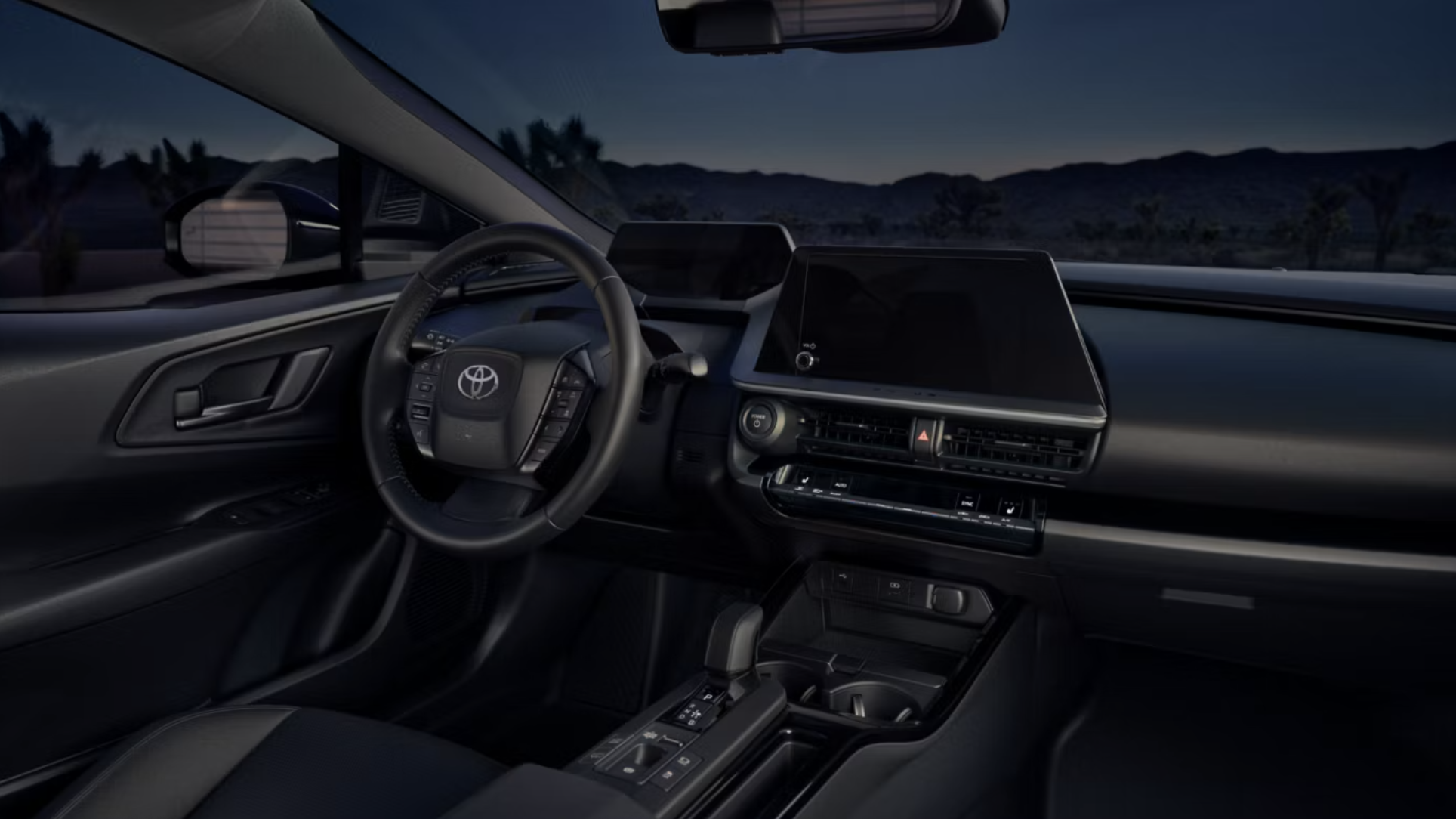
Every single 2027 Toyota Prius Plug-In Hybrid comes standard with Toyota Safety Sense 3.0. This is Toyota’s suite of active safety and driver-assistance technologies – you don’t want to leave home without them.
Toyota Safety Sense 3.0 includes:
- Pre-Collision System with Pedestrian Detection
- Full-Speed Range Dynamic Radar Cruise Control
- Lane Departure Alert with Steering Assist
- Lane Tracing Assist
- Road Sign Assist
- Automatic High Beams
- Proactive Driving Assist
The Blind Spot Monitor with Rear Cross-Traffic Alert also comes standard. This helps you keep track of cars that might be hard to see when you’re changing lanes or backing out of a parking space. Safe Exit Alert is another standard feature – we love this one. The system is designed to help alert you when certain approaching cars or bicycles are detected before you open your door.
Just How Efficient Is the 2027 Toyota Prius Plug-In Hybrid?
The fuel efficiency you get varies by grade. Here’s what you can expect from this new Toyota in Orlando.
- The SE has an EV driving range of 44 miles and gets up to 51 mpg combined.
- The XSE, Nightshade, and XSE Premium have an EV driving range of 39 miles and get up to 51 mpg combined.
But all that efficiency doesn’t mean you have to sacrifice exciting performance – all four models get from 0-60 mph in just 6.6 seconds!
2027 Toyota Prius Plug-In Hybrid Pricing
Curious how much the 2027 Toyota Prius Plug-In Hybrid might cost you? Here are the starting MSRPs this year at Toyota of Orlando:
- SE: $33,980
- XSE: $37,230
- Nightshade: $38,000
- XSE Premium: $40,675
Is the 2027 Toyota Prius Plug-In Hybrid Right for You? Find Out at Toyota of Orlando!
Come see it for yourself – test drive the 2027 Toyota Prius Plug-In Hybrid at Toyota of Orlando. We’re open seven days a week at 3575 Vineland Road and we’re just off I-4 near the Mall at Millenia!
FAQs
How far can the 2027 Toyota Prius Plug-In Hybrid drive on electric power?
The SE offers up to an EPA-estimated 44 miles of all-electric driving range. The XSE, Nightshade, and XSE Premium offer up to an EPA-estimated 39 miles, giving you plenty of EV power for shorter trips around Orlando.
How long does it take to charge the 2027 Toyota Prius Plug-In Hybrid?
Using a standard 120V household outlet, charging takes around 11 hours. With a Level 2 charger, you can cut that time down to around four hours. And if you can’t charge, you can simply keep driving using the hybrid system.
What are the 2027 Toyota Prius Plug-In Hybrid trim levels?
You can choose from four grades: SE, XSE, Nightshade, and XSE Premium. They range from the efficient, well-equipped SE to the loaded XSE Premium with features like a 12.3-inch touchscreen, ventilated front seats, Advanced Park, and a solar roof.
How much does the 2027 Toyota Prius Plug-In Hybrid cost?
Starting MSRP ranges from $33,980 for the SE to $40,675 for the XSE Premium. The XSE starts at $37,230, while the Nightshade starts at $38,000.
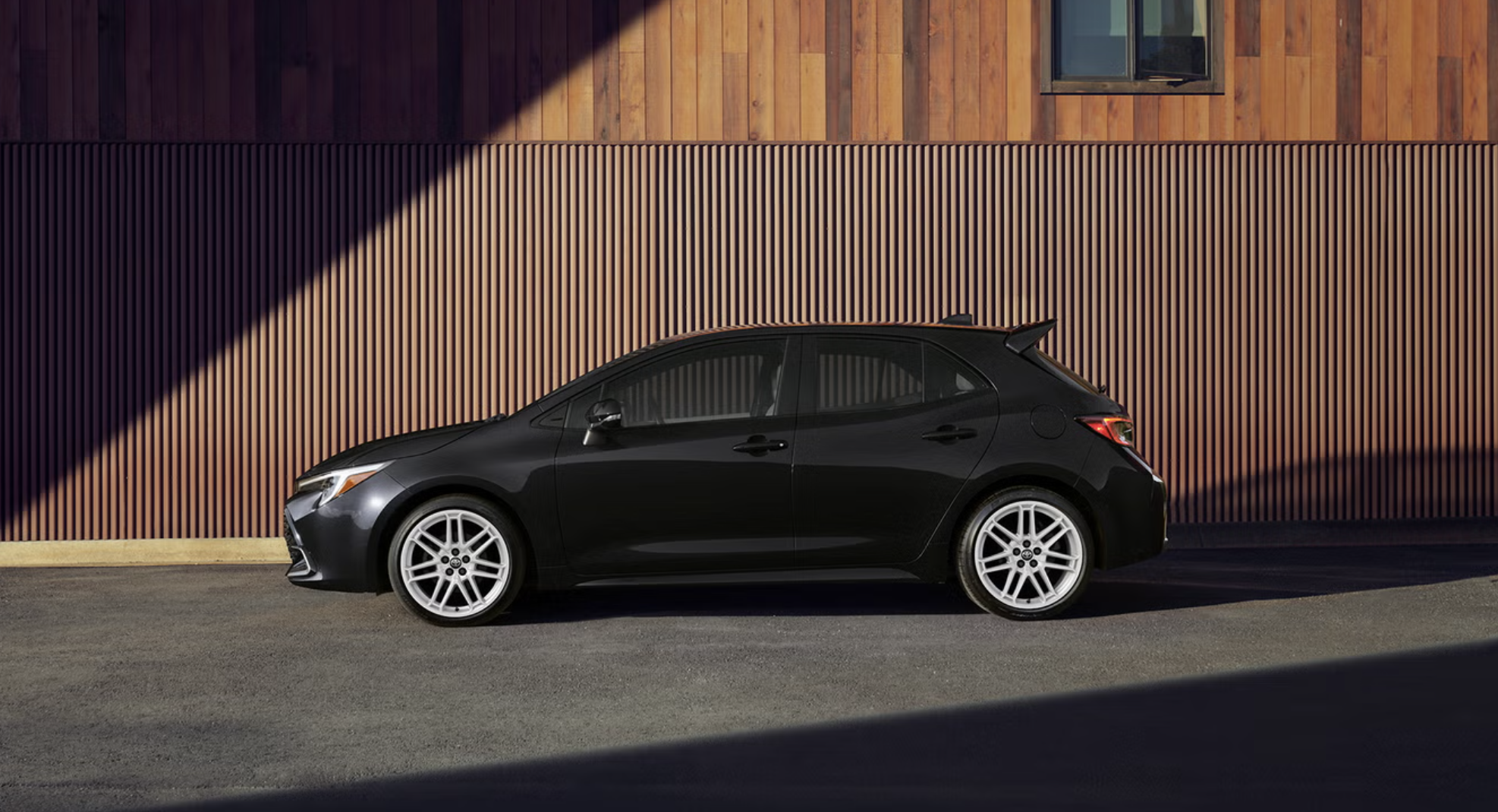
If you’re looking for a compact, affordable car that gives you sporty performance, great fuel efficiency, and the best technology out there, you found it. The 2027 Toyota Corolla Hatchback is waiting for you at Toyota of Orlando! Our team is here to explain why this sporty hatchback is a must-buy, and we’re also walking you through what’s new for the 2027 mode year. You’ll love the new digital displays, packages, wheel options, and more – get ready for the best blend of affordability and performance you’ve ever seen. Let’s dive into the 2027 Toyota Corolla Hatchback!
Executive Summary
- The 2027 Toyota Corolla Hatchback keeps things affordable and fun with sporty performance, impressive fuel efficiency, and upgraded technology across the lineup.
- Tech gets a big boost for 2027, including new 7-inch and 12.3-inch digital gauge clusters, an available 10.5-inch touchscreen, and the new SE Premium Package.
- Its 2.0-liter Dynamic Force four-cylinder engine delivers 169 horsepower, while paddle shifters, three drive modes, and a low center of gravity keep things exciting behind the wheel.
- Fuel efficiency is another major win, with up to 32 mpg city, 41 mpg highway, and 35 mpg combined.
- Starting at $24,780 for the SE and $27,875 for the XSE, the 2027 Toyota Corolla Hatchback packs plenty of technology, Toyota Safety Sense 3.0, and head-turning style into an affordable package.
What’s New on the 2027 Toyota Corolla Hatchback?
We saw the biggest gains in the technology department this year. Here’s what you can expect on the 2027 Toyota Corolla Hatchback.
- The SE now comes standard with a 7-inch digital gauge cluster, while the XSE has a larger 12.3-inch digital gauge cluster.
- You can also upgrade your SE with the SE Premium Package, which is all new for 2027 and brings that larger gauge cluster AND the 10.5-inch touchscreen audio into the picture.
- You’ll also have new wheel options – 2027 brings the chance to get 18-inch gloss white wheels on certain models for a retro vibe.
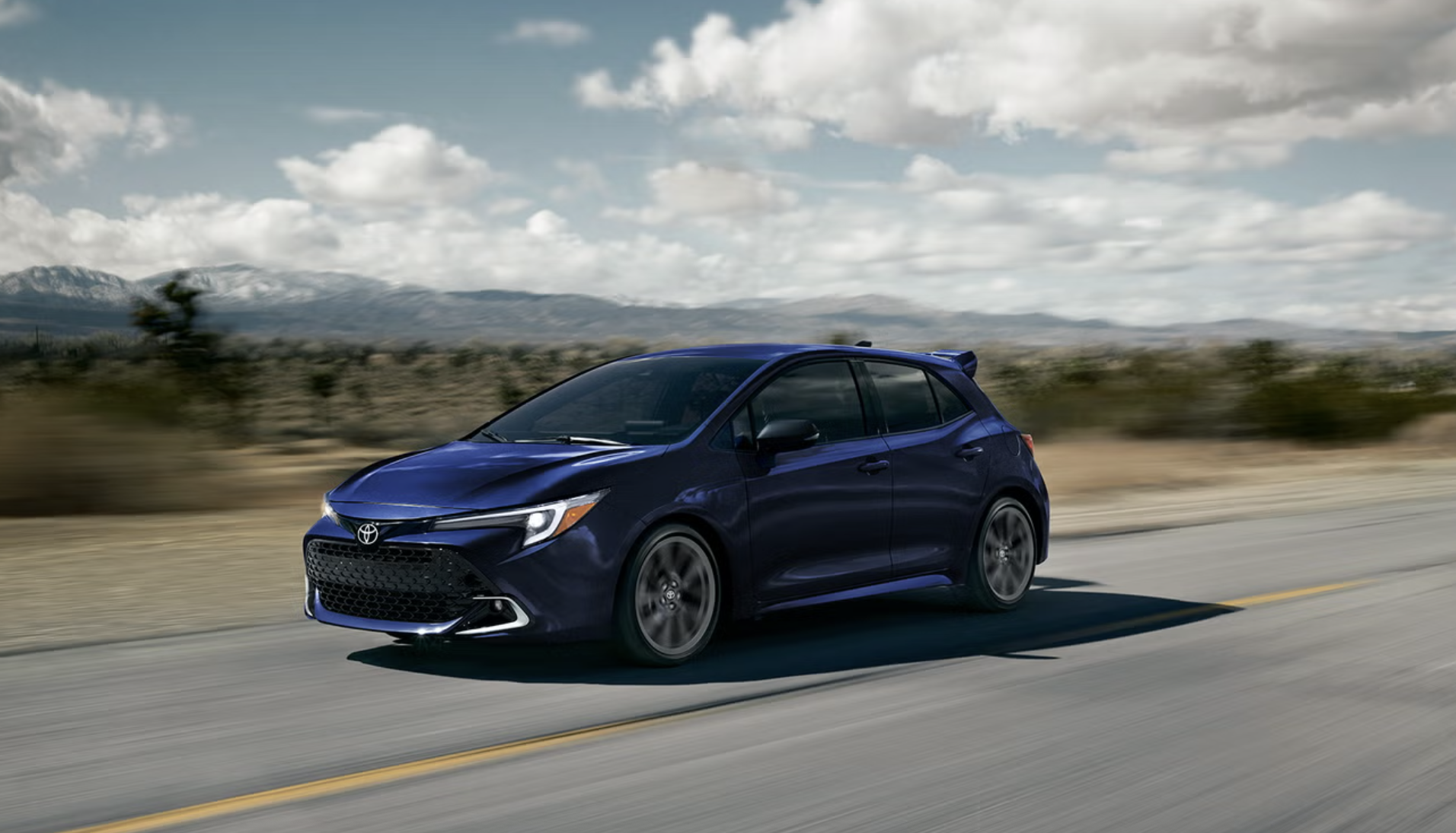
- New exterior color choices this year include Inked, Blueprint, and Blueprint with a Black roof.
2027 Toyota Corolla Hatchback Performance Updates
Just because it’s small doesn’t mean it’s boring. The 2027 Toyota Corolla Hatchback is powered by a 2.0-liter Dynamic Force four-cylinder engine that gets169 horsepower and 151 lb.-ft. of torque. Here are some other performance highlights for you to experience during your test drive at Toyota of Orlando:
- The engine is paired with a Dynamic Shift CVT – this has a physical launch gear to ensure responsive acceleration from the starting line.
- You’ll also have paddle shifters on your side, which means a sportier, more exciting driving experience.
- There are three drive modes up for grabs: Normal (balances acceleration and fuel efficiency), Eco (focuses on fuel efficiency), and Sport (adjust your throttle response for a little more pedal to the metal).
- The 2027 Toyota Corolla Hatchback sits on the TNGA-C platform – this means a low center of gravity
- That low center of gravity is paired with MacPherson strut front suspension and multilink rear suspension for incredible handling and also daily driver comfort.
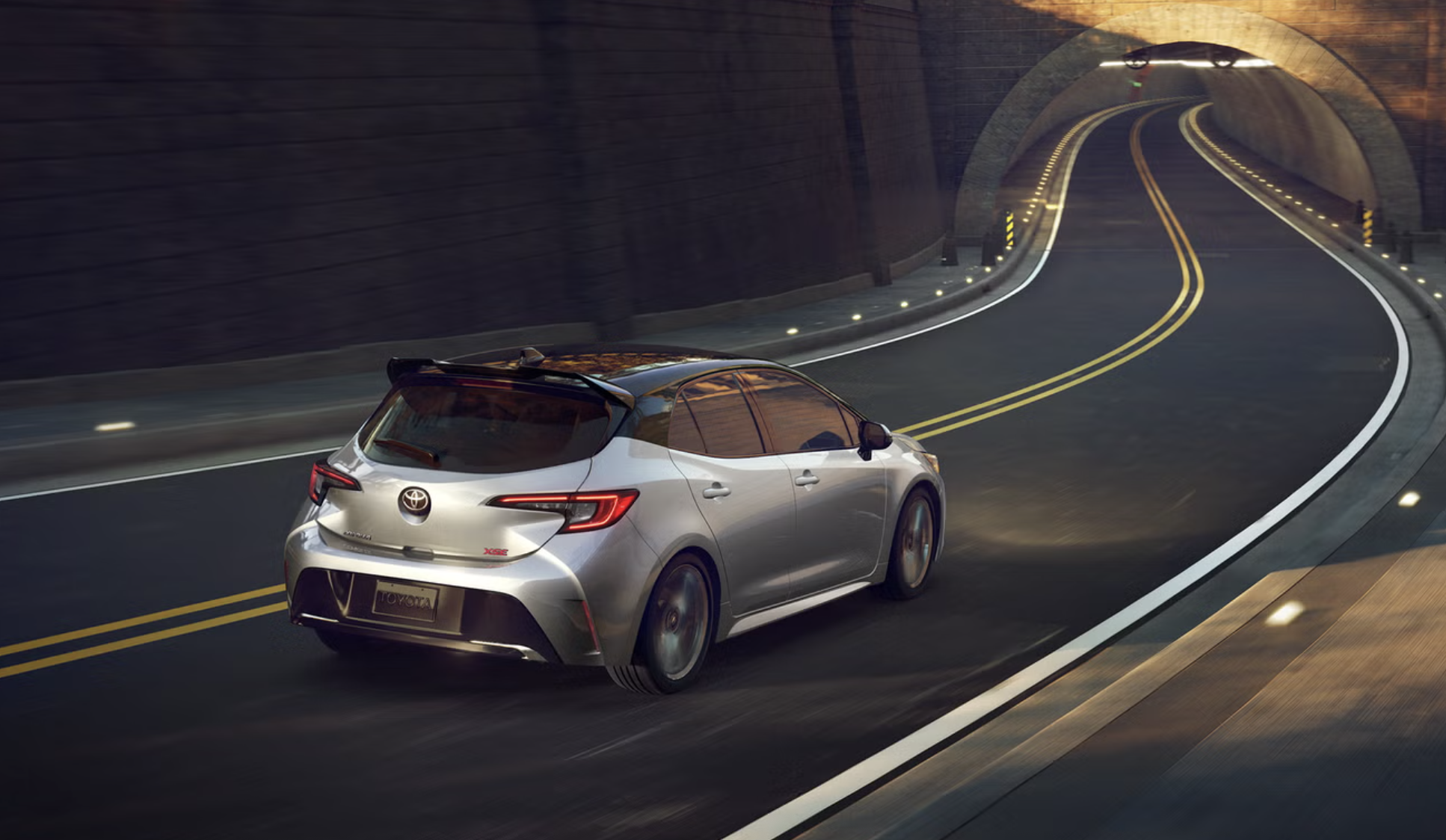
What Fuel Efficiency Will You Get In the 2027 Toyota Corolla Hatchback?
This sporty hatchback also promises major fuel efficiency. The 2027 Toyota Corolla hatchback gets 32 mpg in the city, 41 mpg on the highway, and 35 mpg combined for major savings. This means yes, it’s fun to drive and fun to look at, but it’s also going to save you big bucks at the gas pump.
Sporty Performance Meets Sporty Design in this Orlando Toyota
If you like to blend into the crowd, the 2027 Toyota Corolla Hatchback is not the ride for you. It has a sculpted, muscular exterior and a low stance (remember that low center of gravity). On top of that, you’ll love modern LED taillights and bright LED headlights that wrap into the front fenders. At Toyota of Orlando, we also love:
- The option of 16-inch or 18-inch alloy wheels, plus a special 18-inch gloss white wheel option
- Bright exterior paint options including Finish Line Red, Wind Chill Pearl, Inked, Blueprint, and Inferno… not to mention multiple two-toned options with black roofs
What Models Does the 2027 Toyota Corolla Hatchback Come In?
What are your options when it comes to putting it in the driveway? Here are the two trims up for grabs in 2027 at Toyota of Orlando.
2027 Toyota Corolla Hatchback SE
The 2027 toyota Corolla Hatchback SE is the entry point to this hatchback, but it’s anything but basic. It has features like:
- A standard 7-inch digital gauge cluster
- Six-way adjustable driver’s seat
- Fabric-trimmed interior
- An 8-inch Toyota Audio Multimedia System
- Wireless Apple CarPlay and Android Auto
2027 Toyota Corolla Hatchback XSE
The 2027 Toyota Corolla Hatchback XSE steps things up with other features including:
- A 12.3-inch digital gauge cluster and 10.5-inch Toyota Audio Multimedia System
- A SofTex trimmed interior
- An 8-way adjustable driver’s seat
- Heated front seats
- LED fog lights with chrome bezels
Upgraded Tech in the 2027 Corolla Hatchback
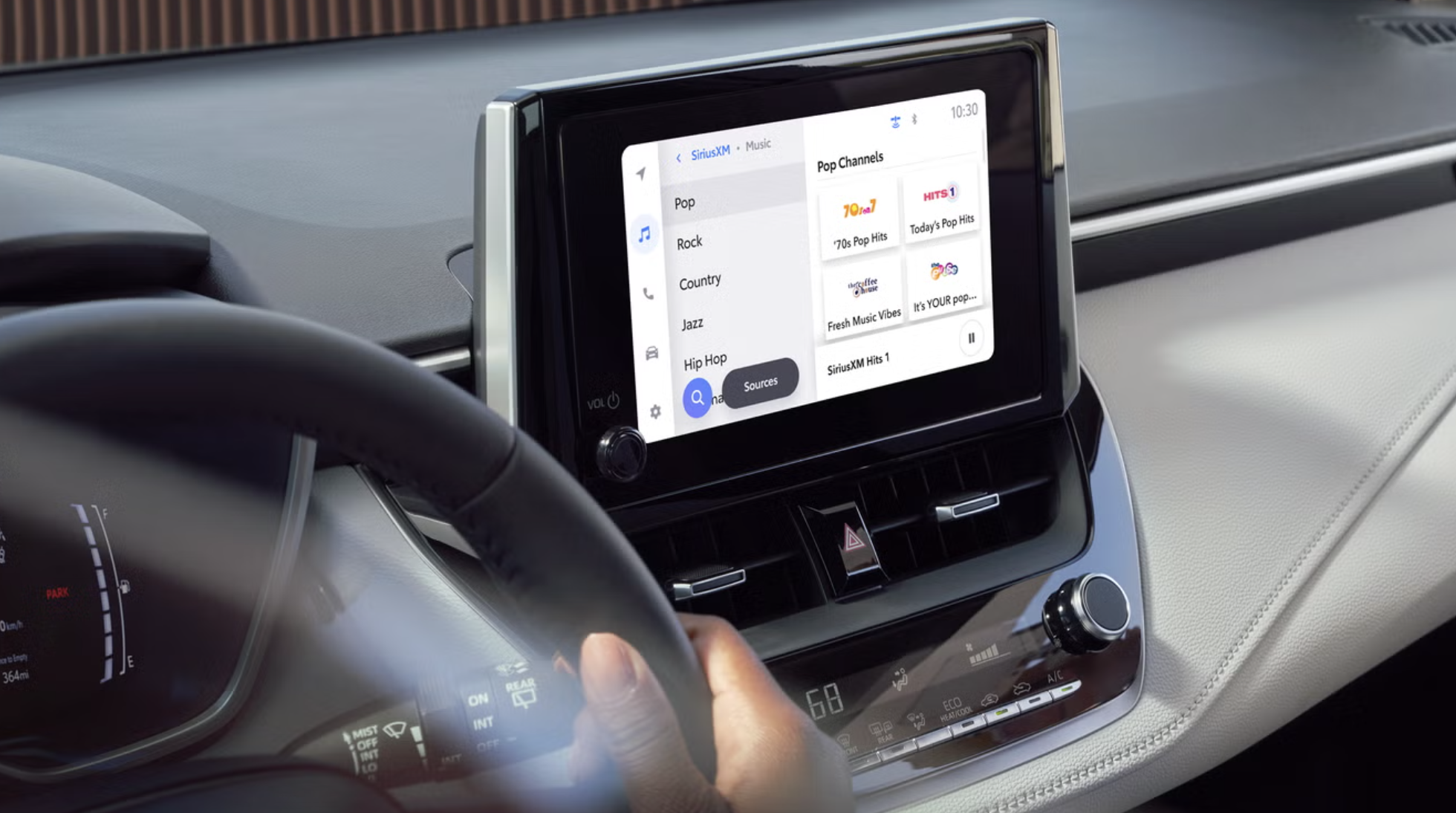
Get the tech you want at the price you can afford – here’s how the 2027 Toyota Corolla Hatchback delivers this year. On top of the aforementioned digital gauge clusters, Toyota Audio Multimedia Systems, and Apple CarPlay/Android Auto setup, you’ll get:
- A standard six-speaker audio system
- Five-year trials of Safety Connect, Service Connect, and Remote Connect
- A 30-day/3GB trial of WiFi Connect
And more.
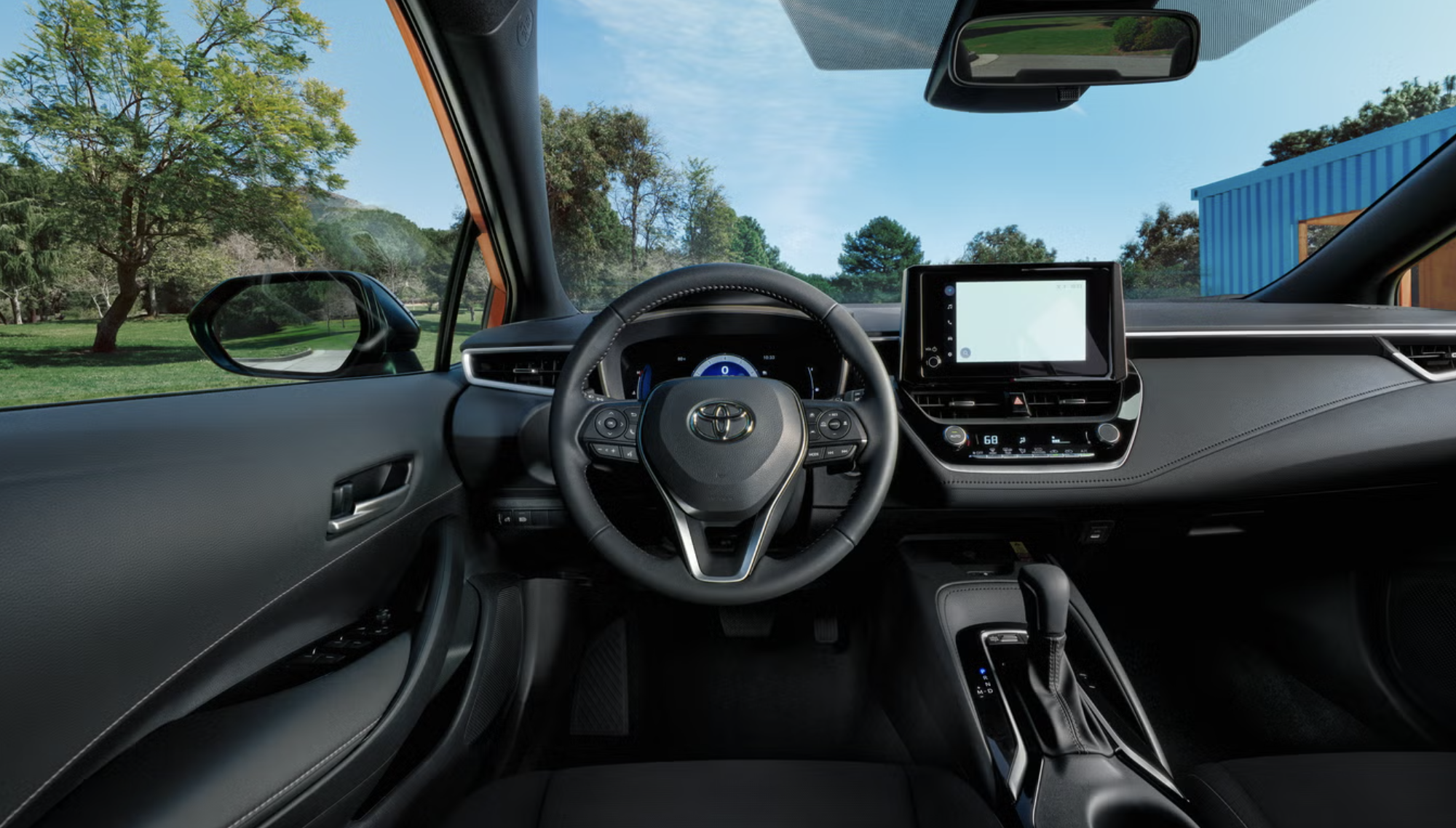
Toyota Safety Sense 3.0 Comes Standard on This Orlando Toyota
A cheaper starting MSRP doesn’t mean you should have to give up safety tech… and the 2027 Toyota Corolla Hatchback proves that. You’ll love standard features like:
- Pre-Collision System with Pedestrian Detection
- Full-Speed Range Dynamic Radar Cruise Control
- Lane Departure Alert with Steering Assist
- Lane Tracing Assist
- Road Sign Assist
- Automatic High Beams
- Proactive Driving Assist
- Blind Spot Monitor with Rear Cross-Traffic Alert
How Much Does the 2027 Toyota Corolla Hatchback Cost?
What will it run you to take the 2027 Toyota Corolla Hatchback home from Toyota of Orlando? Here’s the breakdown of starting MSRPs:
- 2027 Toyota Corolla Hatchback SE: $24,780
- 2027 Toyota Corolla Hatchback XSE: $27,875
Test Drive It at Toyota of Orlando
Take it for a spin to get the full experience… test drive the 2027 Toyota Corolla hatchback at Toyota of Orlando! We’re open seven days a week at 3575 Vineland Road, just off I-4 near the Mall at Millenia.
FAQs
What’s new on the 2027 Toyota Corolla Hatchback?
The biggest updates are inside the cabin, including new digital gauge clusters and the available 10.5-inch Toyota Audio Multimedia touchscreen. You’ll also find the new SE Premium Package, new wheel options, and fresh exterior colors like Inked and Blueprint.
How fuel-efficient is the 2027 Toyota Corolla Hatchback?
The 2027 Toyota Corolla Hatchback gets an estimated 32 mpg city, 41 mpg highway, and 35 mpg combined. That makes it a great pick if you want something sporty without constantly stopping at the gas pump.
What’s the difference between the Corolla Hatchback SE and XSE?
The SE starts things off with features like a 7-inch digital gauge cluster, fabric-trimmed seats, and an 8-inch touchscreen. The XSE upgrades the experience with a 12.3-inch digital gauge cluster, 10.5-inch touchscreen, SofTex-trimmed interior, heated front seats, and more.
How much does the 2027 Toyota Corolla Hatchback cost?
The 2027 Toyota Corolla Hatchback SE starts at $24,780, while the XSE starts at $27,875. Both trims come standard with Toyota Safety Sense 3.0 and plenty of everyday technology.
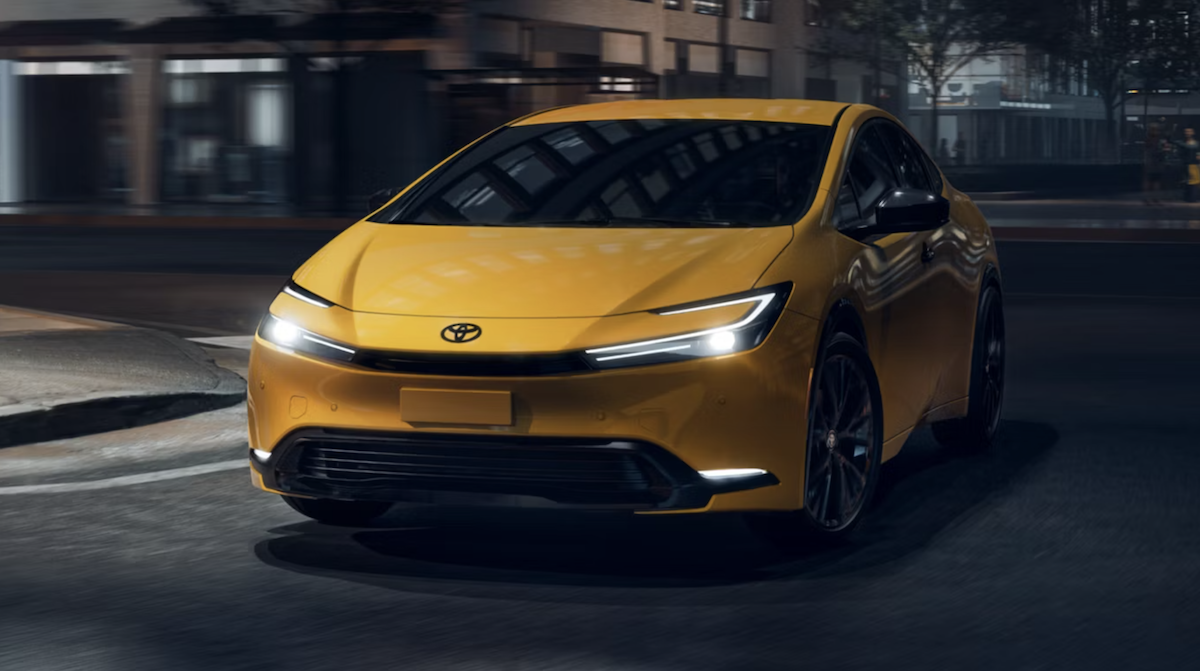
If you haven’t heard of the iconic Toyota Prius by now, we don’t know here you’ve been for the past 26 years. That’s how long this reliable, efficient, stylish Toyota hybrid has been on the market, bringing its fuel economy, advanced tech, and unforgettable style to drivers all over the world.
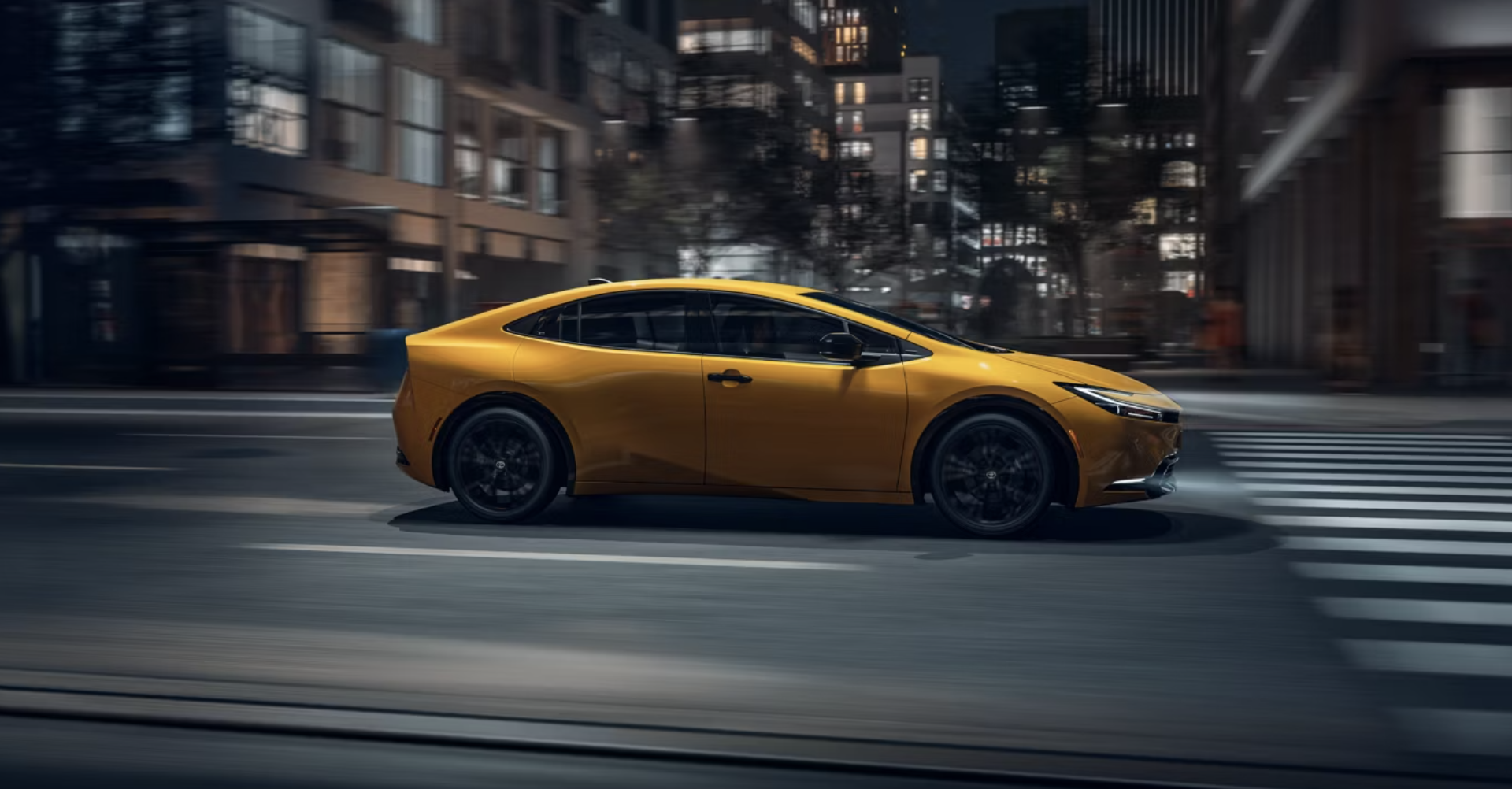
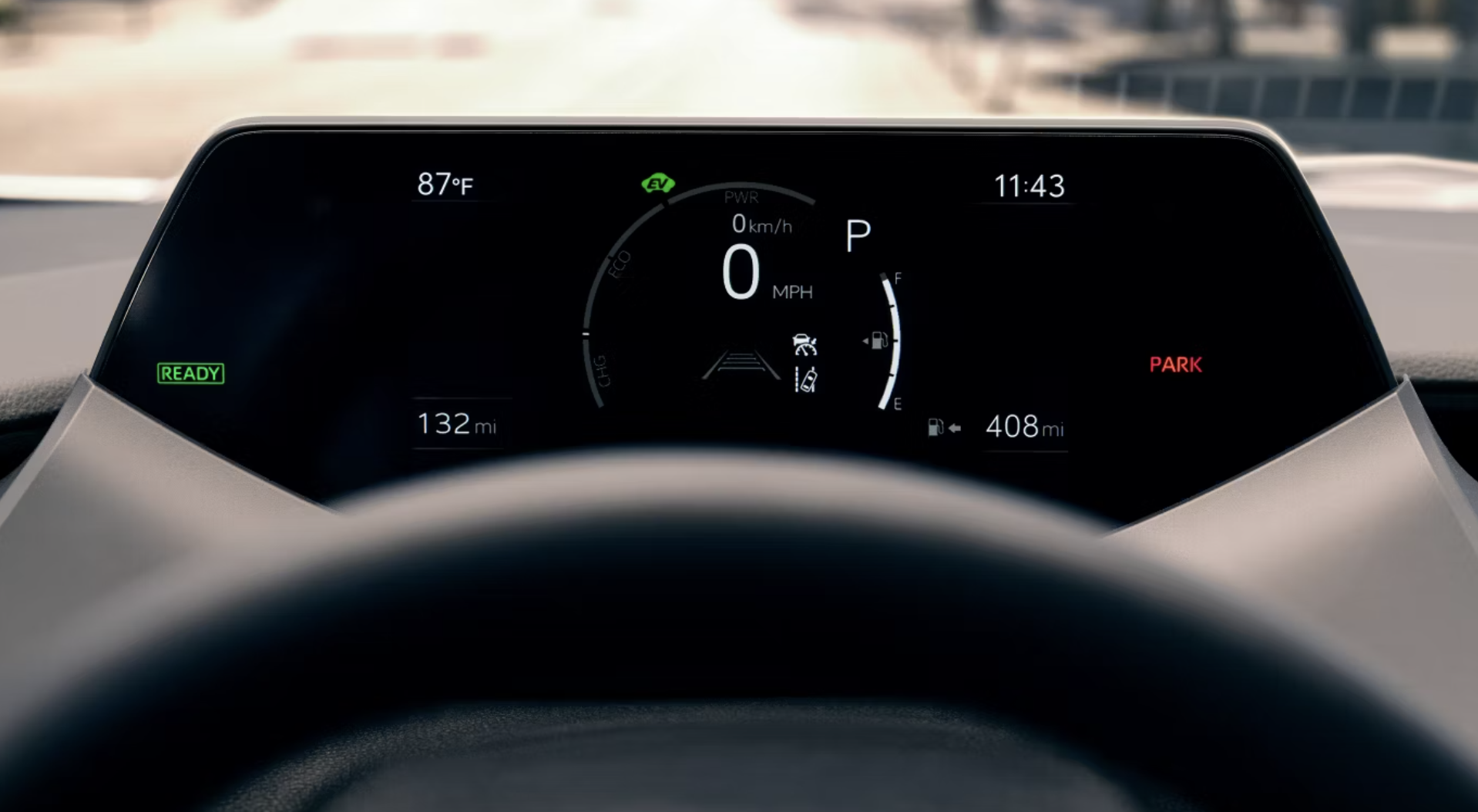
But let’s focus on this year. The 2027 Toyota Prius has four grades up for grabs – the LE, XLE, Nightshade, and Limited. You can also choose between front-wheel drive and electronic on-demand all-wheel drive. One of the biggest upgrades this year is the dual-zone air conditioning – this keeps everyone comfortable inside the cabin with ease.
We also love the new exterior black color aptly dubbed Inked. Other colors include bright hues like Cutting Edge, Reservoir Blue, and Supersonic Red, to name a few. We expect to see the 2027 Toyota Prius at Toyota of Orlando this summer with a starting MSRP of $28,755… let’s get into the details of what you can expect when you get behind the wheel.
Executive Summary
- The 2027 Toyota Prius is back with four grades: LE, XLE, Nightshade, and Limited, plus your choice of front-wheel drive or electronic on-demand all-wheel drive.
- Toyota’s fifth-generation hybrid system brings the best of both worlds with up to 196 horsepower and an EPA-estimated 55 mpg combined, so you don’t have to sacrifice fun for fuel efficiency.
- Tech is a major win this year with available features like a 12.3-inch touchscreen, JBL Premium Audio, wireless Apple CarPlay and Android Auto, and Toyota Safety Sense 3.0 standard across the lineup.
- Each trim brings something different to the table, from the budget-friendly LE to the blacked-out Nightshade and feature-packed Limited with available Advanced Park and Panoramic View Monitor.
- Starting at $28,755, the 2027 Toyota Prius delivers efficiency, style, safety, and plenty of everyday tech, and it should be making its way to Toyota of Orlando soon.
Get Top Efficiency with Toyota’s Fifth Generation Hybrid System
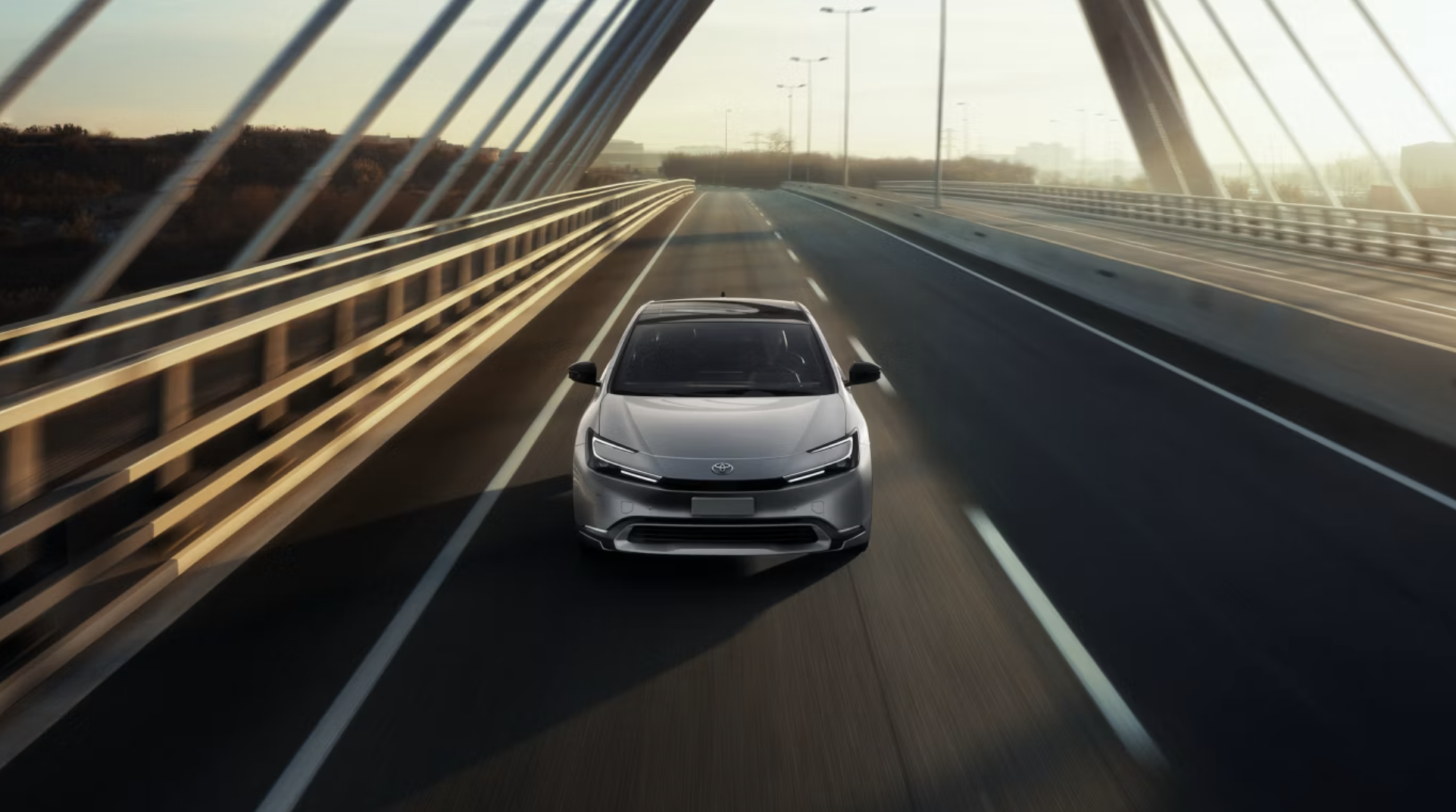
One of the biggest selling points of the 2027 Toyota Prius is its hybrid system. We’re on THS 5 at this point, which combines a 2.0L four-cylinder gas engine with electric motors to amp up your fuel efficiency. Front-wheel drive models get 194 horsepower and get from 0-60 mph in just 7.2 seconds, and get up to 55 mpg combined.
All-wheel drive models have 196 horsepower and the same 0-60 mph time, and get up to 53 mpg combined. No matter which you choose, it’s a win.
You’ll also have regenerative braking on your side. The THS 5 uses the gas engine and electric motors to charge the lithium ion battery in the mix, and the brake system coordinates the regenerate and hydraulic braking to maximize your efficiency. You can even opt for EV mode – this means driving with only electric power over short distances at low speeds.
You’ll Love the Available Electronic On-Demand AWD
If you want a little extra traction when you cruise Orlando, you’ll definitely want an all-wheel drive model. It’s a compact system that helps reduce front-wheel slip while you’re accelerating, improve your cornering, and give you extra traction on slippery surfaces.
On top of that, you get three drive modes:
- Normal mode to balance fuel economy and acceleration
- Eco mode to moderate your power and improve hybrid efficiency
- Sport mode for enhanced throttle response and exciting performance.
It’s Never Been Easier to Stay Connected Than in the 2027 Toyota Prius
Tech has always been an important back of the Orlando Toyota Prius, and 2027 is no exception. Here are some highlights:
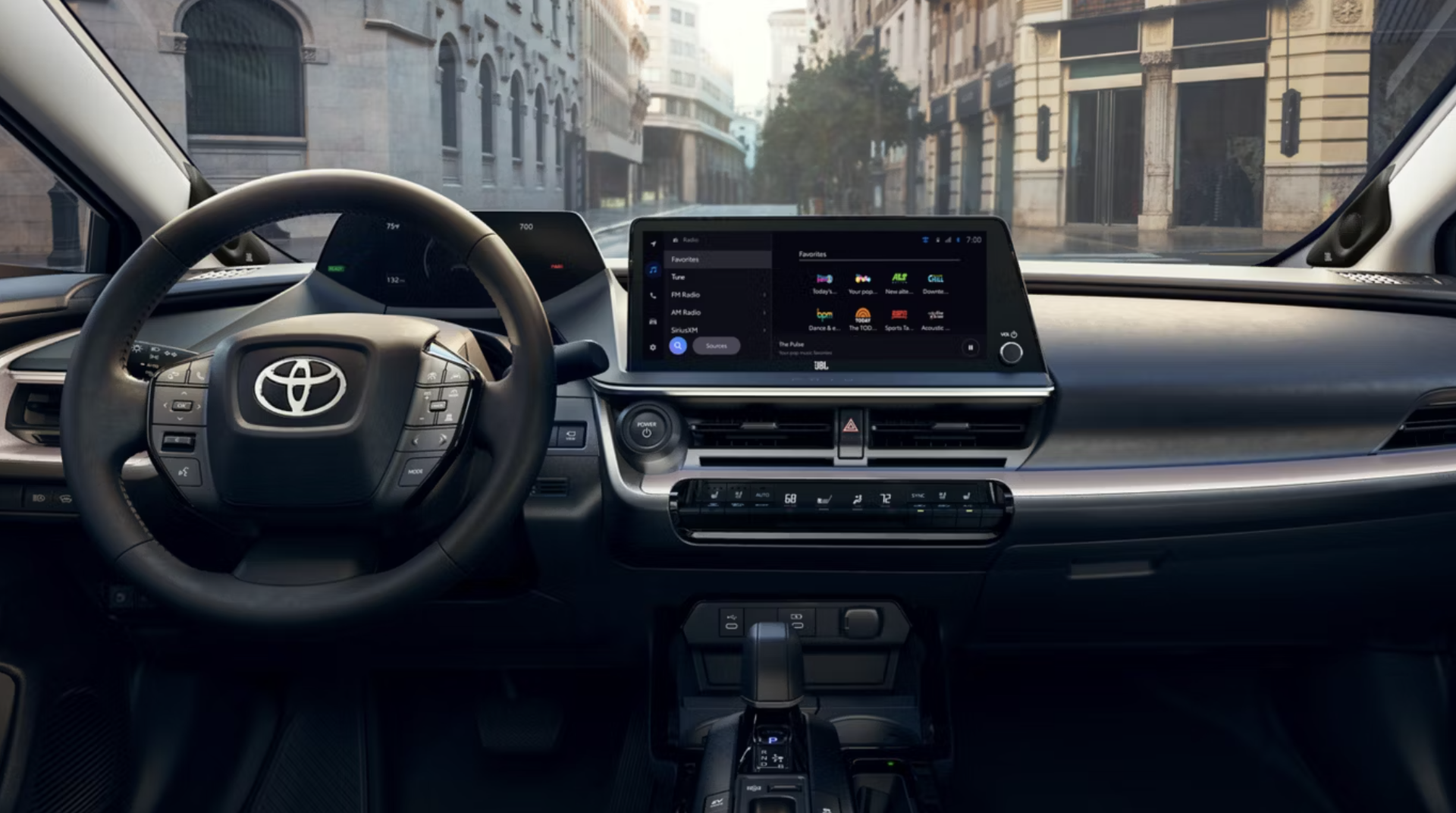
- The LE, XLE, and Nightshade have a standard 8-inch Toyota Audio Multimedia touchscreen system
- The Limited models have a standard 12.3-inch touchscreen (you can also get this larger screen on the Nightshade if you want it).
- You get over-the-air updates for your Toyota Audio Multimedia system
- The LE, XLE, and Nightshade models have a standard six-speaker audio system. The Limited models take things up a notch with an eight-speaker JBL Premium Audio System for top sound quality.
- You also get a five-year trial for Safety Connect, Service Connect, Remote Connect, and a 30-day trial for WiFi connect.
Every 2027 Toyota Prius at Toyota of Orlando will also include wireless Apple CarPlay and Android Auto, as well as a 7-inch digital gauge cluster and Toyota Safety Sense 3.0.
A Breakdown of This Orlando Toyota, Model by Model
2027 Toyota Prius LE
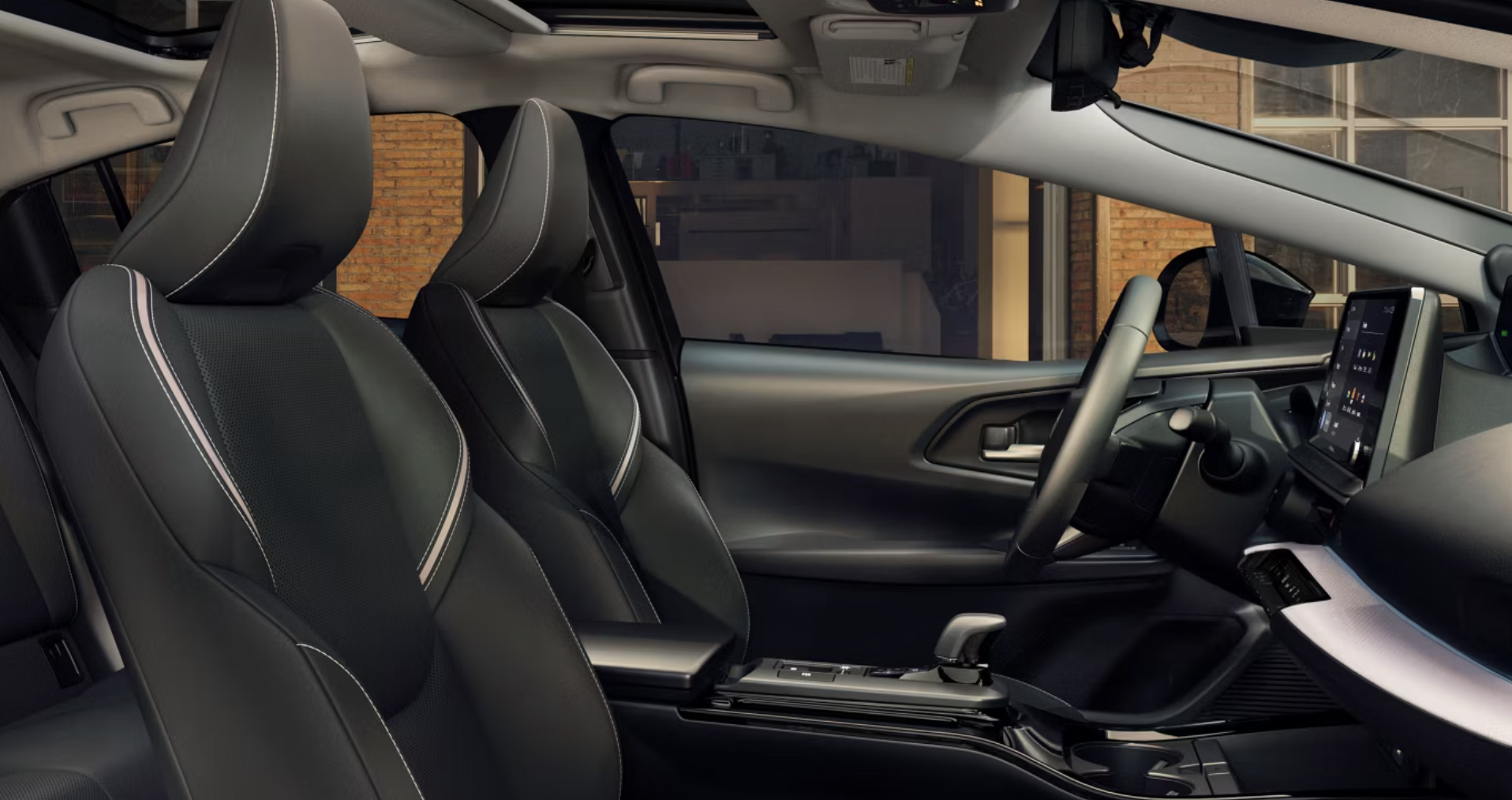
This Orlando Toyota kicks off the lineup with 17-inch alloy wheels, six-way adjustable front seats in black or gray, and a SofTex steering wheel. You’ll also have dual-zone automatic climate control, six USB-C ports, and Toyota Audio Multimedia with an 8-inch touchscreen.
2027 Toyota Prius XLE
The 2027 Toyota Prius XLE takes things up a notch. You’ll get everything on the LE plus 19-inch alloy wheels and eight-way adjustable front seats, as well as heated front seats. This model also throws in a Qi-wireless charger and rain-sensing windshield wipers.
2027 Toyota Prius Nightshade
The 2027 Toyota Prius Nightshade builds on the XLE and gives it more of an edge when it comes to appearance. The 19-inch wheels have a black finish, and you’ll also have black bumper fin, a black shark-fin antenna, and a black SofTex interior with gray stitching. It also has carbon fiber detailing on the dashboard for a sporty touch.
2027 Toyota Prius Limited
This Orlando Toyota sits at the top of the lineup and has everything on the XLE plus features like a power lift back, a driver’s seat with memory functionality, heated and ventilated front seats, and an 8-speaker JBL premium audio system. You can also toss in the Limited Premium Package, which includes Advanced Park and a Panoramic View Monitor.
Get Toyota Safety Sense 3.0 Standard
Every single 2027 Toyota Prius at Toyota of Orlando comes standard with Toyota Safety Sense 3.0. This means you get a suite of safety features including Pre-Collision System with Pedestrian Detection, Full-Speed Range Dynamic Radar Cruise Control, Lane Departure Alert with Steering Assist, Lane Tracing Assist, Road Sign Assist, Automatic High Beams, and Proactive Driving Assist.
You’ll also love additional features like the Blind Spot Monitor with Rear Cross-Traffic Alert and Safe Exit Alert.
2027 Toyota Prius Pricing
The 2027 Prius has the following starting MSRPs:
- Prius LE (Model 1223): $28,755
- Prius XLE (Model 1225): $32,200
- Prius Nightshade (Model 1216): $33,005
- Prius Limited (Model 1227): $35,770
- Prius LE AWD (Model 1263): $30,155
- Prius XLE AWD (Model 1265): $33,600
- Prius Nightshade AWD (Model 1266): $34,405
- Prius Limited AWD (Model 1268): $37,170
Toyota Prius: Coverage You Can Count On
Your new 2027 Toyota Prius will also come with a 36-month/36,000 miles new car warranty, as well as TOyotaCare. ToyotaCare ensures that you get no-cost routine maintenance for the first year or 10,000 miles.
Experience the 2027 Toyota Prius at Toyota of Orlando
Ready to see it for yourself? The 2027 Toyota Prius should be arriving at Toyota of Orlando soon – follow us on social media for updates, or stop by and see us! We’re open until 10pm every night at 3575 Vineland Road, just off I-4 near the Mall at Millenia.
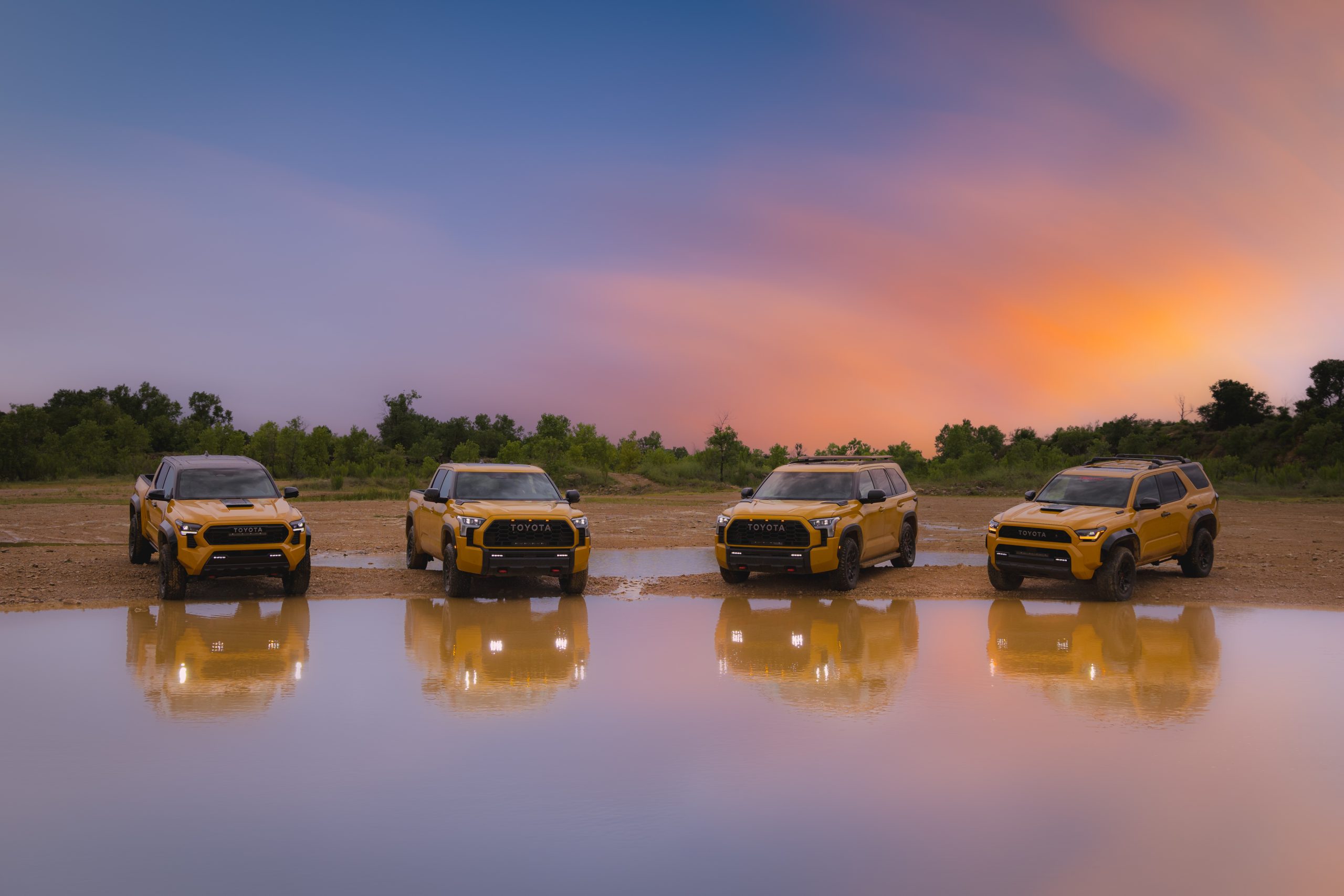
Get ready – the 2027 Toyota TRD Pro lineup is headed our way, and these bold new tricks are sporting two new exterior paint colors as well as refinements to their legendary off-roading abilities. If you like vehicles that turn heads, it’s time to schedule your test drive. Because whether you like the Toyota Tundra, Tacoma, 4Runner, or Sequoia, there’s something for everyone and with the new Honeycomb and Hot Honey paint colors round it all out. Let’s get started – here’s your guide to the 2027 Toyota TRD Pro updates!
Executive Summary
- The 2027 Toyota TRD Pro lineup is coming in hot with two bold new paint colors: Honeycomb for the Tacoma, Tundra, and Sequoia, and Hot Honey for the 4Runner. They’re the latest additions to Toyota’s long-running tradition of exclusive TRD Pro colors, and we’re already obsessed.
- These new colors aren’t the only updates headed our way. The 2027 Toyota Tundra and Sequoia TRD Pro are getting new vehicle-specific FOX QS3 shocks designed to improve ride quality, stability, and adjustability when you head off the pavement.
- Every 2027 Toyota TRD Pro is built for adventure with serious off-road equipment. Depending on the model, you can find features like FOX suspension, Multi-Terrain Select, Crawl Control, locking rear differentials, skid plates, all-terrain tires, and advanced four-wheel-drive systems.
- Select TRD Pro models will also bring back Toyota’s ISODynamic Performance Seats. They’re designed to reduce side-to-side body movement on rough terrain, helping you stay more comfortable when your trail ride gets a little bumpy.
Another Year of Exclusive TRD Pro Colors Headed Our Way
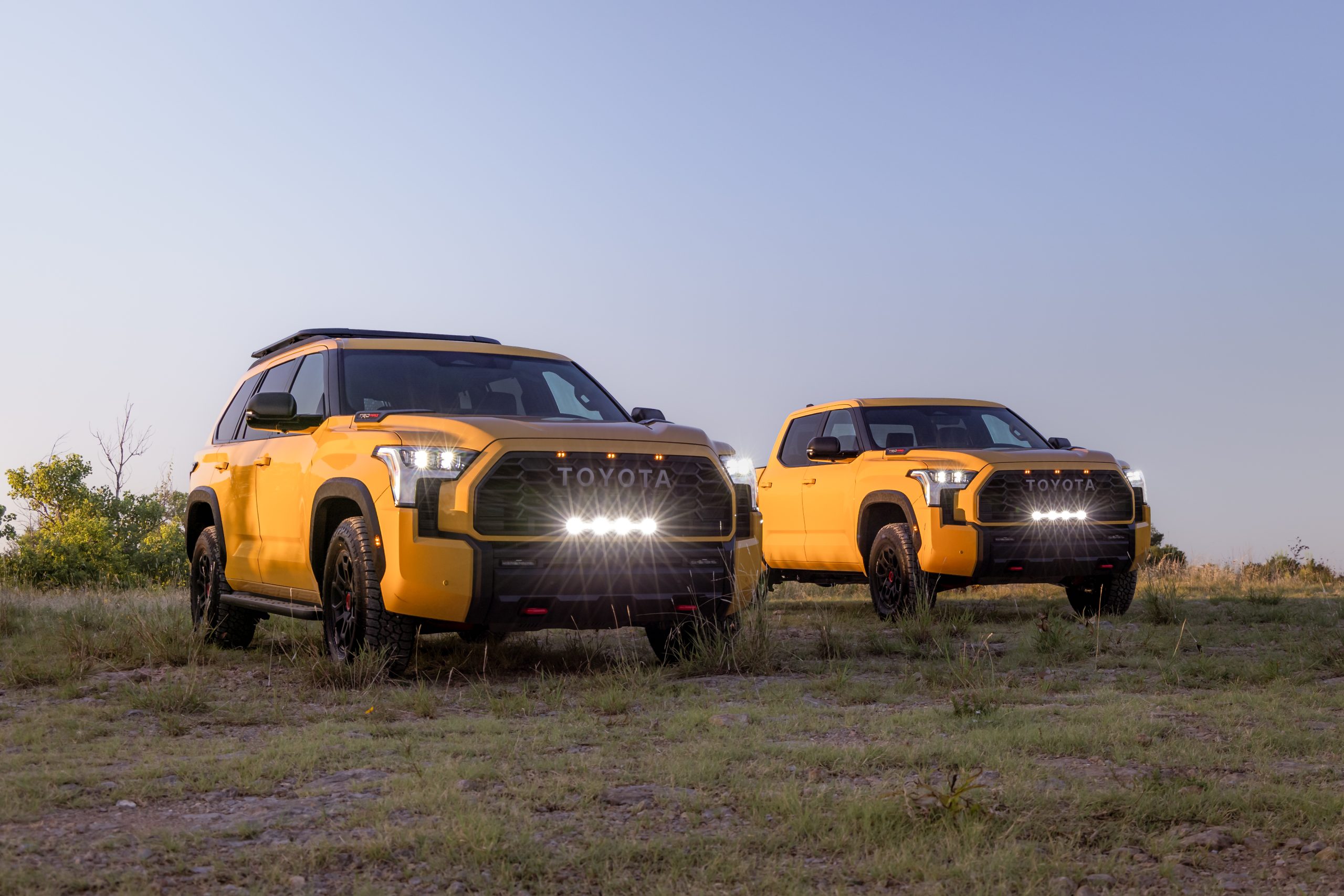
Toyota has built itself a reputation of assigning a signature TRD Pro paint color every year (we live for this), and they never fail to disappoint. Previous model years have included fan favorites like Lunar Rock, Solar Octane, Mudbath, Wave Maker, and more. And for 2027, Toyota’s building on that tradition with the all new Honeycomb and Hot Honey colors.
This year you can take home the 2027 Tacoma, Tundra, and Sequoia in the all-new Honeycomb color. On top of that, the 2027 Toyota 4Runner is rolling out in a slight variation called Hot Honey, giving you plenty of eye-catching options. If you’re ready to make a statement every time you pull into a parking lot or up to a trailhead, it’s time to head over to Toyota of Orlando to explore these all-new paint colors.
TRD Pro Paint Colors: Inspired by Adventure
Color has always been a key component in the TRD Pro lineup. Every exclusive shade is carefully crafted to evoke feelings of exploration, excitement, and the great outdoors. Honeycomb and Hot Honey continue in this vein, and they lean into warmth and energy. They also pair perfectly with TRD Pro features like:
- Bold TRD Pro grille
- Black exterior accents
- Functional skid plates
- Flared fenders
- Off-road tires
- Wide stance
- Signature red recovery hooks on applicable models
There’s no way around it – everyone is going to know it’s a TRD Pro.
The 2027 Toyota TRD Pro Has More Than Looks On Its Side
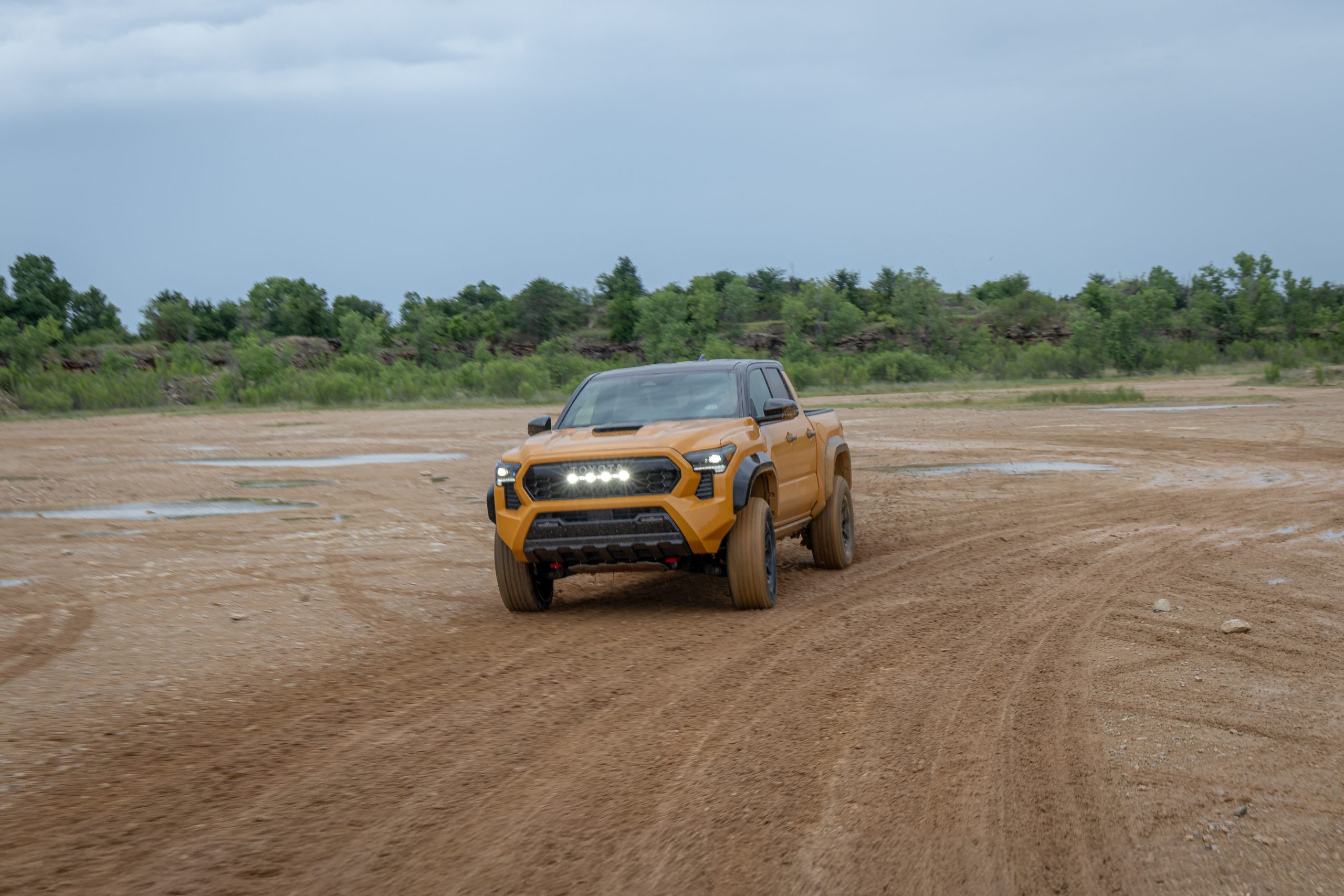
Yes, they look good (especially with those new paint colors up for grabs). However, the TRD Pro is about a lot more than just looks. You’ll also find some upgrades when it comes to off-road performance, including:
- The 2027 Toyota Tundra and Sequoia TRD Pro will have new vehicle-specific FOX QS3shocks. They’re upgraded from the existing suspension and designed to deliver exceptional ride quality, better stability, and more adjustability for uneven terrain. Whether you’re hitting the grocery store or taking on tough mountain trails, this suspension meets you where you need it most.
- You’ll also get standard red tow hooks on the new Tundra and Sequoia TRD Pro models – so it looks cool, but also serves a major purpose.
That’s not all, though. Every single 2027 Toyota TRD Pro is another example of Toyota’s off-road capabilities. Depending on which Orlando Toyota you take home, you can expect features like:
- FOX performance suspension
- Locking rear differential
- Multi-Terrain Select
- Crawl Control
- Multi-Terrain Monitor
- Underbody skid plates
- All-terrain tires
- TRD-tuned suspension
- High ground clearance
- Advanced four-wheel-drive systems
From muddy trails to sandy beaches and rugged mountain paths, the TRD Pro lineup has got your back.
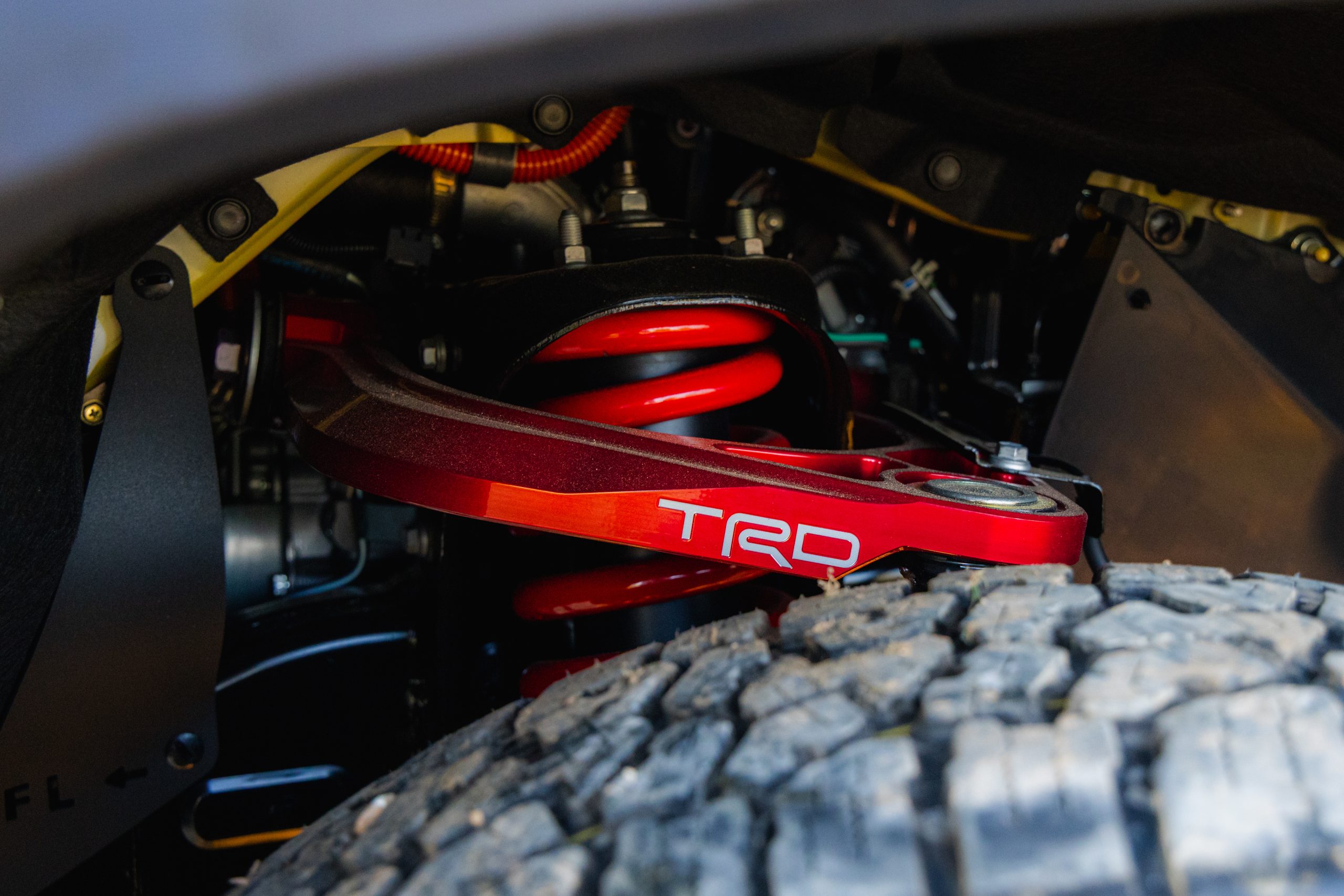
The ISO Dynamic Performance Seats Are Back
If you’re the type of driver who wants a little extra comfort during off-road adventures, you’ll be happy to know that Toyota is going to include its ISODynamic Performance Seats on select TRD Pro models again this year. These seats are designed to stabilize you while you’re driving across rough terrain – they reduce side to side body movement. This means less fatigue on trail rides and better comfort when the off-roading gets technical.
Learn More About the 2027 Toyota TRD Pro at Toyota of Orlando
We aren’t sure exactly when the 2027 TRD Pro models will start rolling in, so follow us on social for more information! You can also stop by to see this year’s color – Wavemaker – in person, or to take any of our TRD Pro models for a spin. Toyota of Orlando is open seven days a week at 3575 Vineland Road, just off I-4 near the Mall at Millenia!
FAQs
What are the new 2027 Toyota TRD Pro colors?
The 2027 Toyota Tacoma, Tundra, and Sequoia TRD Pro will be available in the new Honeycomb exterior color. The 2027 Toyota 4Runner TRD Pro gets its own variation called Hot Honey.
What’s new on the 2027 Toyota Tundra and Sequoia TRD Pro?
Both models are getting new vehicle-specific FOX QS3 shocks for improved ride quality, stability, and adjustability on uneven terrain. They’ll also come standard with red tow hooks for a functional pop of classic TRD Pro style.
What makes a Toyota TRD Pro good for off-roading?
TRD Pro models are designed with serious off-road equipment, which can include FOX performance suspension, locking rear differentials, Crawl Control, Multi-Terrain Select, skid plates, and all-terrain tires. Exact features vary depending on the Toyota model you choose.
What are Toyota ISODynamic Performance Seats?
ISODynamic Performance Seats are designed to help stabilize occupants and reduce side-to-side body movement while traveling over rough terrain. That can mean better comfort and less fatigue when you’re spending more time on the trails.
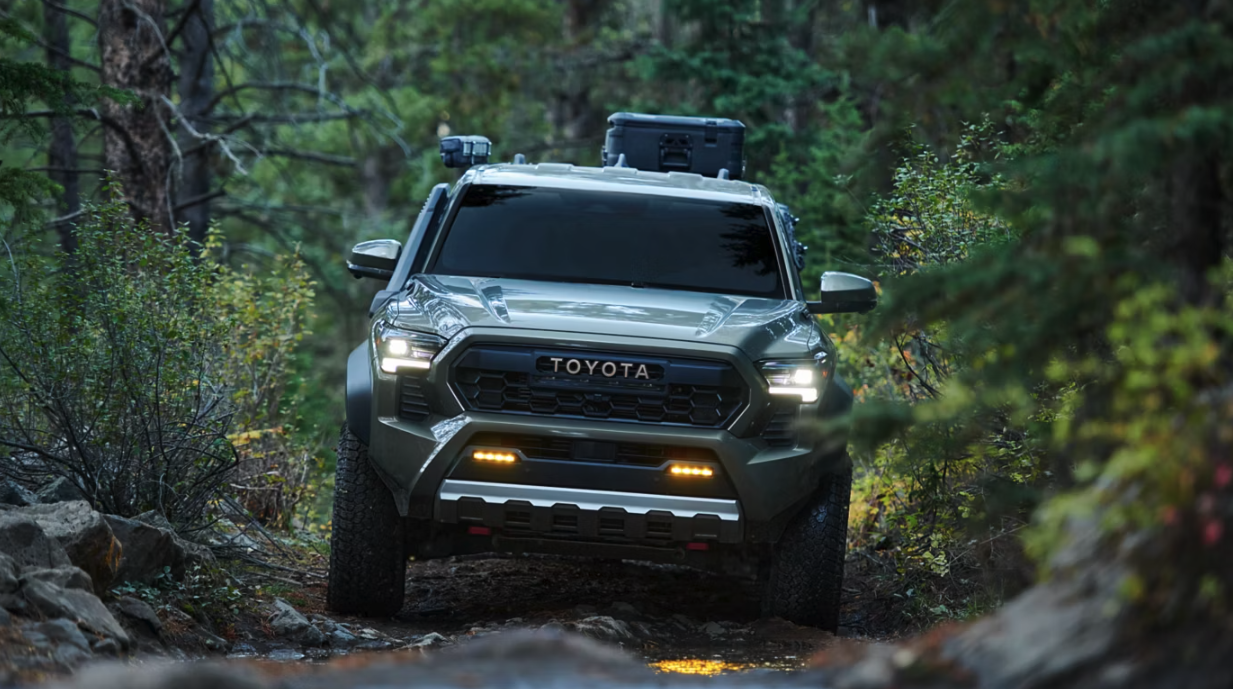
Are you a fan of getting off the beaten path in your Toyota truck or SUV? Well, we’ve got good news for you. Toyota recently announced that they’ll be expanding their partnership with onX, one of the most popular digital navigation platforms out there. If you’re an overland, hiker, hunter, or fisher, we know you’ve heard of it. And this enhanced collaboration is way more than just simple navigation – it’s designed to make adventures easier than ever while also protecting trails and public lands for future generations to come.

Executive Summary
- Toyota and onX are expanding their partnership for 2026, giving outdoor enthusiasts even more tools to explore off-road trails, backcountry roads, camping spots, and public lands with confidence.
- Eligible buyers of select 2026 Toyota Tacoma, Tundra, 4Runner, Sequoia, and Land Cruiser models will receive six months of complimentary onX Elite membership, including access to onX Offroad, Hunt, Backcountry, TroutRoutes Pro, and Fish.
- The partnership goes beyond navigation with an expanded Trail Revival Project focused on trail maintenance, restoration, sustainable recreation, and keeping public lands accessible for future generations.
- Toyota and onX are also launching the Trail Creators Program to promote responsible outdoor adventures, while new onX Offroad features will let users report trails that need maintenance or restoration.
- For Orlando Toyota drivers who love off-roading, overlanding, camping, hunting, fishing, or hiking, the partnership combines Toyota’s trail-ready capability with navigation tools designed specifically for adventures beyond the pavement.
Whether you’re heading into the mountains, exploring service roads, or just finding new camping spots around Orlando, onX is the tool you need. And its latest partnership with Toyota just fits thanks to vehicles like the Tacoma, 4Runner, Land Cruiser, and Tundra that are in our lineup. We’ve got the details – let’s get started.
What Is onX and Why Does It Matter?
Still not sure what onX is (or maybe you’ve never even heard of it)? It’s a digital mapping platform designed specifically for outdoor adventure. Traditional GPS apps focus on paved roads to get you from point A to point B, but onX specializes in detailed maps for remote areas (aka no pavement). Depending on what you’re doing, you can access:
- Off-road trails
- Backcountry roads
- Public and private land ownership information
- Camping locations
- Hunting maps
- Fishing access points
- Hiking trails
- Offline navigation
One of the biggest perks is that you can download maps to use before you leave your cell service area in Orlando. When you’re out in the woods with no signal, the maps still work – you can navigate with confidence and not worry about having no service or internet.
Toyota Owners Will Receive Complimentary onX Elite Access for 2026
So what does this expanded partnership mean for you? We’ve got big news: eligible owners of select 2026 Toyotas will get six months of complimentary onX Elite membership. To be eligible, you have to purchase a 2026:
- Toyota Tacoma
- Toyota Tundra
- Toyota 4Runner
- Toyota Sequoia
- Toyota Land Cruiser
This Elite membership gives you access across the onX ecosystem, which includes:
- onX Offroad
- onX Hunt
- onX Backcountry
- TroutRoutes Pro
- onX Fish
You’ll have premium navigation tools immediately after buying your new Orlando Toyota. This means you can take any adventure and make the most of it starting day one.
Why Toyota and onX Just Make Sense
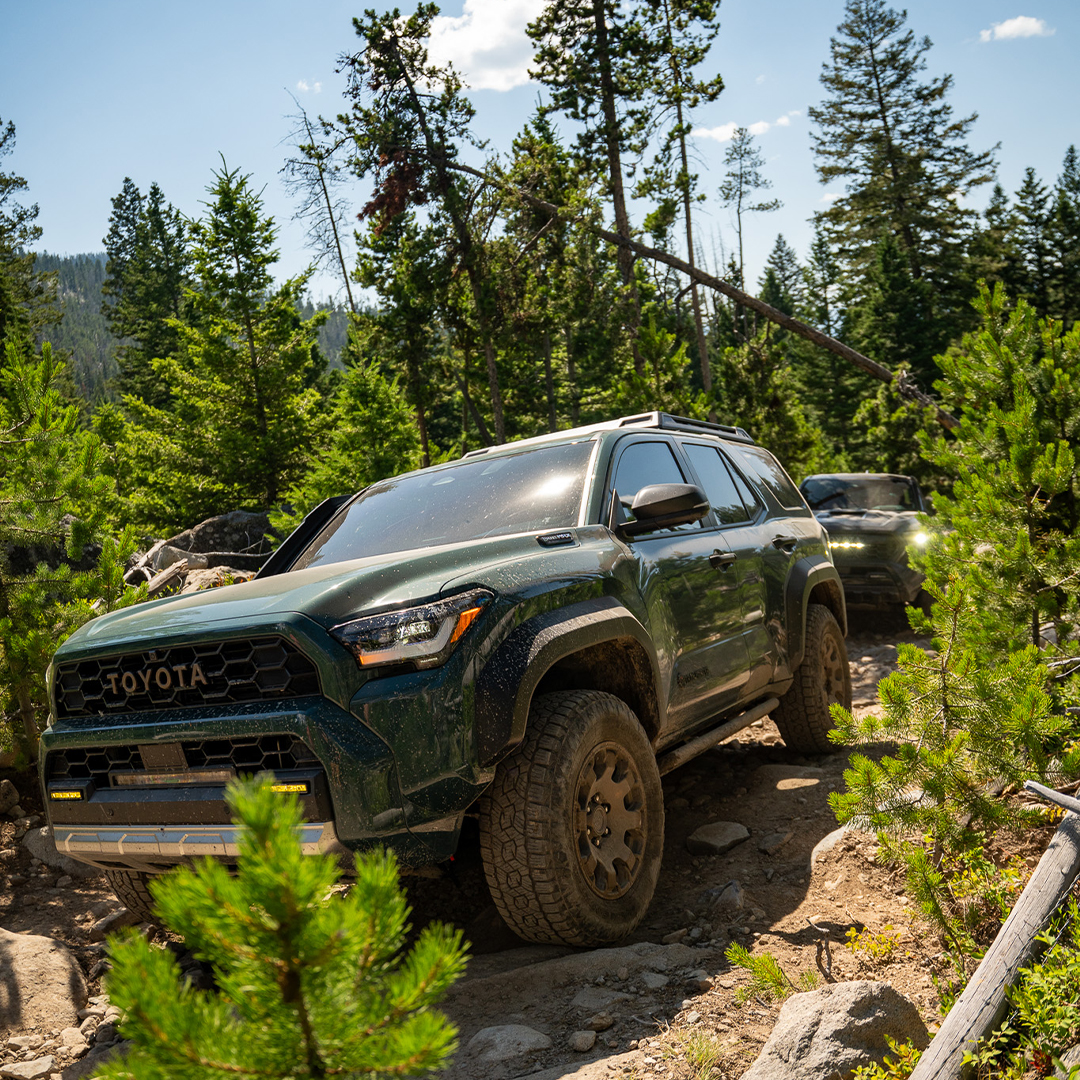
Toyota is renowned for building off-road ready rides. The Tacoma, Land Cruiser, and 4Runner especially have become fan favorites with outdoor enthusiasts. This is because they’re durable, reliable, and pack off-road features like four-wheel drive and more. However, being capable is only one part of exploring the world outside Orlando.
You also need to know where to do and how to get back safely… and that’s where onX comes in. Instead of relying on generic standard mapping apps (that usually don’t show remote trails or forest roads), you have onX. With this app, you can find legal routes to travel, check land ownership boundaries for hunting and fishing and hiking, and plan your trips with the utmost confidence.
How onX Is Helping Protect Public Lands
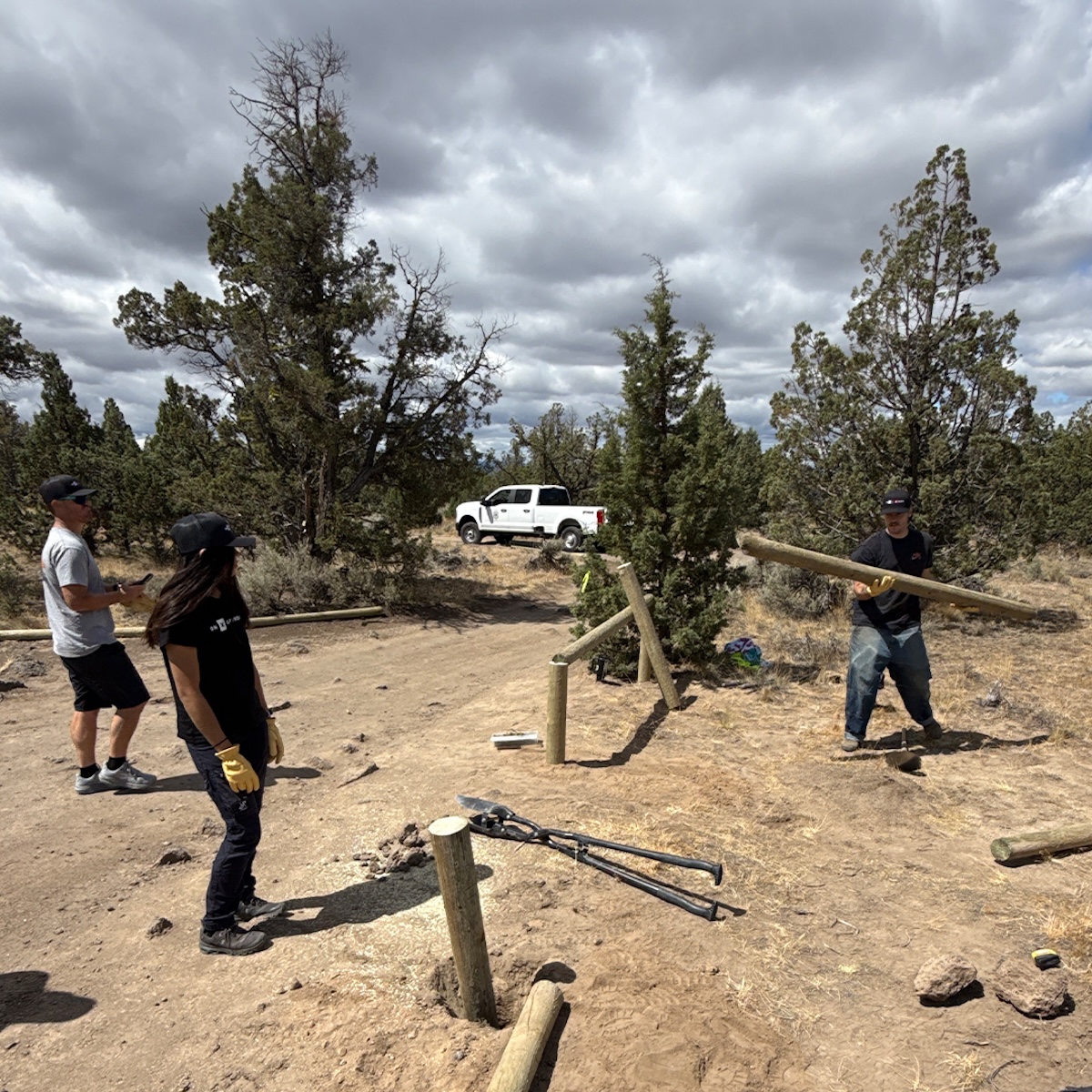
One of the best parts of this partnership is the conservation aspect of it. Toyota and onX are officially expanding their Trail Revival Project. It’s an initiative focused on maintaining and restoring trails across America. Their goal? To keep public lands open, accessible, and able to be enjoyed by future generations.
Their partnership projects for the Trail Revival Project include:
- Trail maintenance
- Restoration efforts
- Sustainable recreation initiatives
- Volunteer opportunities
- Conservation projects
Instead of just encouraging people to explore more, both Toyota and onX are investing in preserving the places we love to explore.
The All-New Trail Creators Program
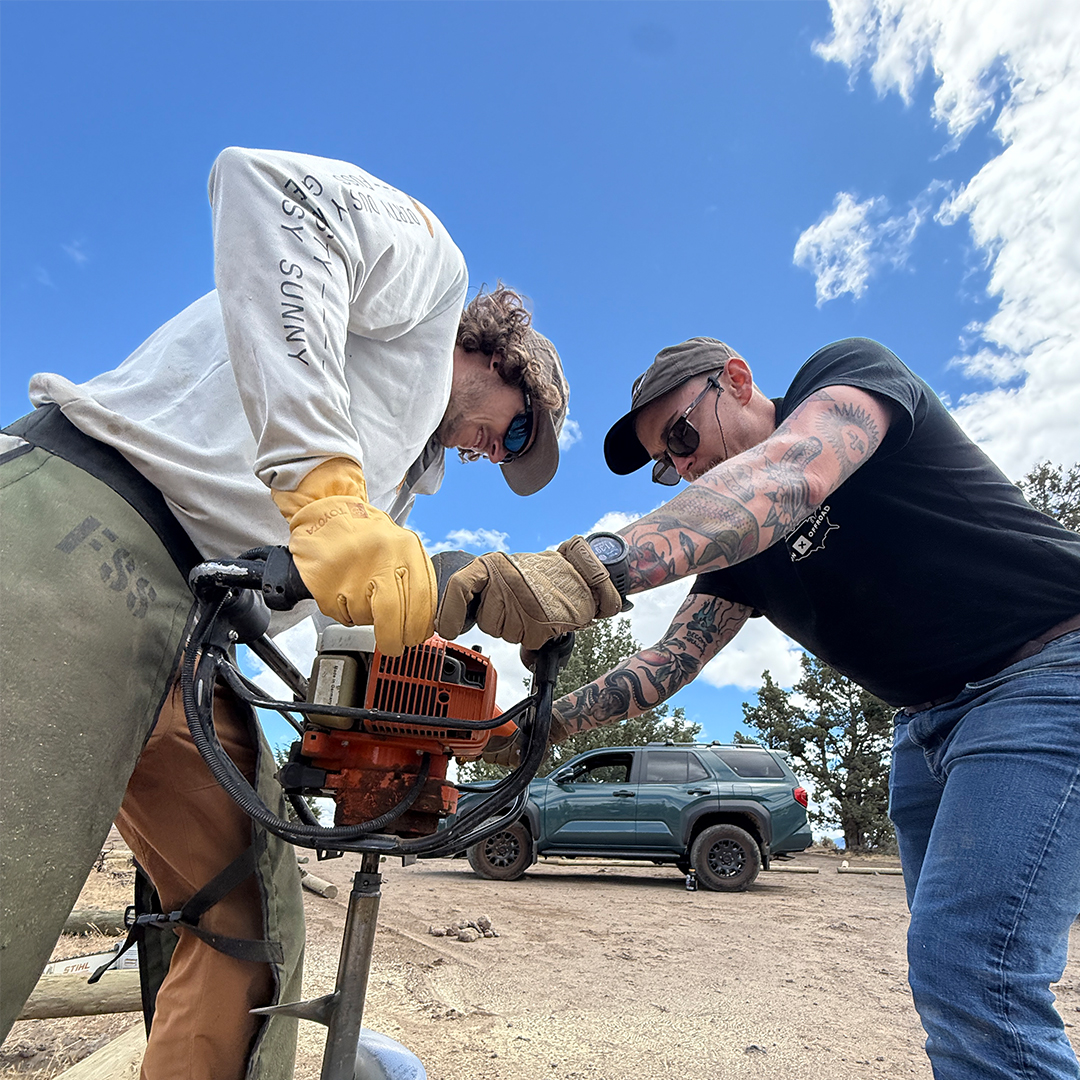
Toyota and onX are also launching the Trail Creators Program. This particular initiative is blending outdoor enthusiasts, content creators, and advocates for responsible adventure. Instead of showing off beautiful destinations, this group of people will demonstrate best outdoor practices like:
- Staying on designated trails
- Respecting wildlife
- Leaving no trace
- Protecting natural resources
- Encouraging ethical outdoor behavior
The idea? To inspire people to explore while simultaneously teaching them how to both help and preserve the environments they’re exploring.
Explore New Features for onX Offroad This Year
This exciting new expanded partnership also means you’ll have access to new features inside onX Offroad. One important update is that users can now report trails that need maintenance or restoration both here in Orlando and across America. This creates a feedback loop between adventurers and the organizations working tirelessly to maintain the trail systems.
When you combine this with offline navigation, detailed route info, and public land data, you get so much more than just navigation. It’s a tool to get where you’re going, but it’s also a way to play your part in trail management.
Who Benefits from this Toyota + onX Partnership?
Anyone who loves outdoor adventures will benefit from onX, but the partnership with Toyota really benefits anyone who loves overlanding and off-roading. If you’re into camping, hunting, fishing, hiking, or even just visiting national parks, reliable navigation and detailed trail information are a must.
Find Outdoor Adventures with a New Toyota Today
Curious to learn more about Toyota and onX’s partnership, or want to get behind the wheel of a 2026 Toyota that’s trail-ready? Come down to Toyota of Orlando today – we’re open seven days a week at 3575 Vineland Road, just off I-4 near the Mall at Millenia.
FAQs
What is onX Offroad?
onX Offroad is a digital mapping and navigation platform built for adventures beyond paved roads. It offers detailed information on off-road trails, backcountry roads, public lands, camping areas, and more, plus offline maps for exploring without cell service.
Which 2026 Toyota models qualify for complimentary onX Elite access?
Eligible owners who purchase a 2026 Toyota Tacoma, Tundra, 4Runner, Sequoia, or Land Cruiser can receive six months of complimentary onX Elite membership. This provides access to multiple onX platforms designed for off-roading, hiking, hunting, fishing, and other outdoor activities.
How are Toyota and onX helping protect trails and public lands?
Toyota and onX are expanding the Trail Revival Project, which supports trail maintenance, restoration, conservation, and sustainable recreation. They’re also introducing the Trail Creators Program to encourage responsible habits like staying on designated trails, respecting wildlife, and leaving no trace.
Can I use onX when I don’t have cell service?
Yes! You can download maps before leaving Orlando or another area with cell service and access them offline once you’re out on the trail, making it easier to navigate remote areas with confidence.
Connect with us


- September 2026
- August 2026
- July 2026
- June 2026
- May 2026
- April 2026
- March 2026
- February 2026
- January 2026
- December 2025
- November 2025
- October 2025
- September 2025
- August 2025
- July 2025
- June 2025
- May 2025
- April 2025
- March 2025
- February 2025
- January 2025
- December 2024
- November 2024
- October 2024
- September 2024
- August 2024
- July 2024
- June 2024
- May 2024
- April 2024
- March 2024
- February 2024
- January 2024
- December 2023
- November 2023
- October 2023
- September 2023
- August 2023
- July 2023
- June 2023
- May 2023
- April 2023
- March 2023
- February 2023
- January 2023
- December 2022
- November 2022
- October 2022
- September 2022
- August 2022
- July 2022
- June 2022
- May 2022
- April 2022
- March 2022
- February 2022
- January 2022
- December 2021
- November 2021
- October 2021
- September 2021
- August 2021
- July 2021
- June 2021
- May 2021
- April 2021
- March 2021
- February 2021
- January 2021
- December 2020
- November 2020
- October 2020
- September 2020
- August 2020
- July 2020
- June 2020
- May 2020
- April 2020
- March 2020
- February 2020
- January 2020
- December 2019
- November 2019
- October 2019
- September 2019
- August 2019
- July 2019
- June 2019
- May 2019
- April 2019
- March 2019
- February 2019
- January 2019
- December 2018
- November 2018
- October 2018
- September 2018
- August 2018
- July 2018
- June 2018
- May 2018
- April 2018
- March 2018
- February 2018
- January 2018
- July 2017
- June 2017
- May 2017