


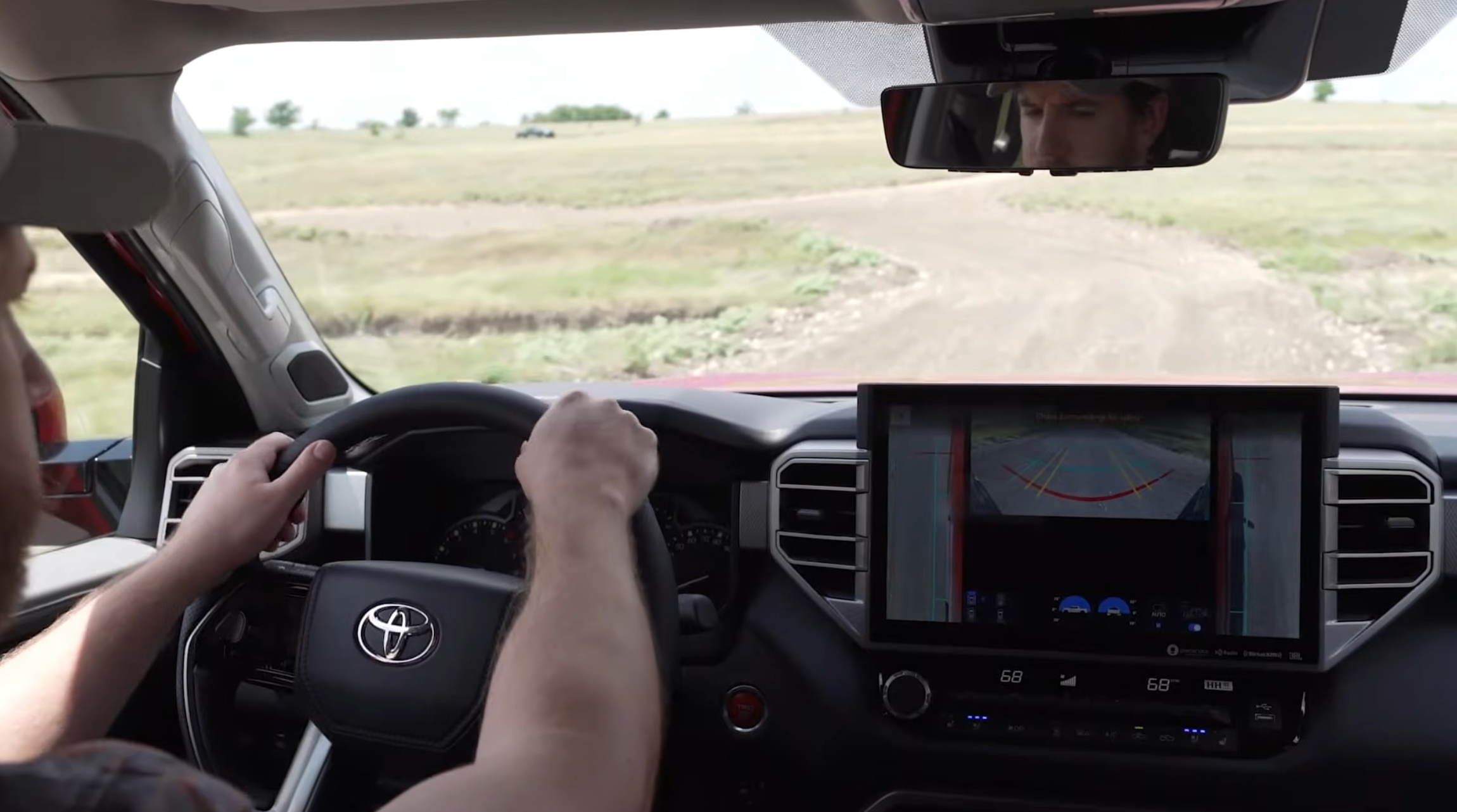
When you’re car shopping, you’ve probably got a list of must-have features. Some people want the best safety tech, some people want fuel efficiency, and others want to be able to tow. Whatever you need in your next Orlando Toyota, it’s a good idea to have it in mind before you shop. However, some people don’t take technology into consideration when shopping. Today we’re addressing a big but not commonly asked question: is there a benefit to cars with 360 cameras?
Why Cars with 360 Cameras Are a Game-Changer for Orlando Drivers- Cars with 360-degree camera systems (like Toyota’s Panoramic View Monitor) provide a bird’s-eye view of your surroundings, significantly improving visibility beyond traditional mirrors and backup cameras.
- This technology enhances safety and confidence by reducing blind spots and helping drivers detect obstacles such as curbs, poles, and other vehicles during low-speed maneuvers.
- It is especially valuable in everyday situations like parking, navigating tight garages, and driving larger vehicles such as SUVs and trucks.
- Many 2026 Toyota models across sedans, SUVs, trucks, and hybrids offer this feature, typically on higher trims or as part of advanced technology packages.
- While aftermarket systems exist, factory-installed 360 cameras provide better accuracy, integration, and reliability, making them the preferred option for most drivers.
Technology in vehicles has advanced a lot over the past decade, and many of the newest innovations are focused on improving safety and visibility for drivers. Cars with 360 cameras are one of the most useful examples of this. These systems are designed to give you a better understanding of everything happening around your vehicle so you can drive and park with more confidence. For many drivers, especially those who frequently drive in busy city environments like Orlando, this type of technology can make a noticeable difference in day-to-day driving.
What is a 360 camera in a car?
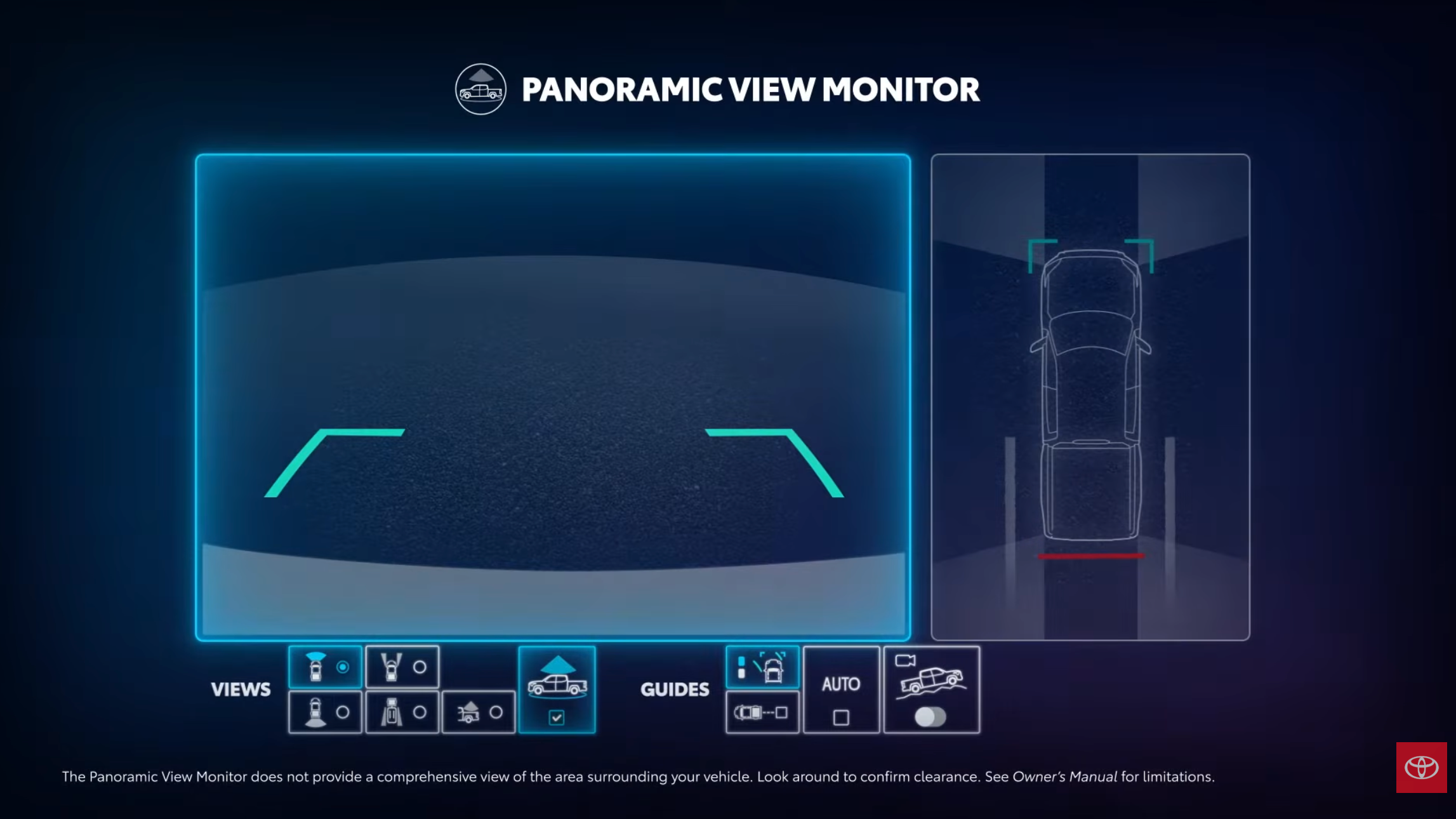
A 360 camera in a car goes by multiple names. For example, in our new Toyotas, it’s called a Panoramic View Monitor. Some other car manufacturers call it a surround-view camera or a bird’s eye view camera. Whatever you call it, it has one main function: to give you a 360-degree view of what’s around your car.
- Cars with 360 cameras are designed to give drivers a perspective they normally wouldn’t have. Instead of relying only on mirrors or a traditional backup camera, this system displays an overhead-style view of your vehicle and its surroundings on the infotainment screen.
- It essentially stitches together images from multiple cameras around the car to simulate a top-down perspective.
- This feature can be especially helpful for drivers who want a clearer understanding of their surroundings when maneuvering in tight spaces. Whether you’re parking in a crowded shopping plaza, pulling into a narrow garage, or navigating through a busy parking lot, having that bird’s eye view can make the process much easier.
How does this type of Toyota technology work?
The Panoramic View Monitor (and other cars with 360 cameras) truly gives you a full view of what’s going on around your Orlando Toyota. But how? Here’s how this feature works:
- There are typically at least four cameras in this system to ensure you get the full view of what’s around you. The mirrors are usually located in the rear, on the side mirrors, and in the front grille. Some systems may have more than four cameras.
- What you see when you look at your monitor while using this technology is a composite of the different cameras around your car. The cameras join their images through a software program to create a 360-degree image. This model shows you a true “bird’s eye view” – it looks like there’s a drone hovering over your car, showing you what’s surrounding you.
- This majorly enhances visibility. Rather than relying on a standard backup camera, which only shows you what’s behind you, you can see the entirety of your car’s surroundings.
- Some of these systems are paired with a split-view image to give you even more visibility (typically the backup camera is the other image). They might also be paired with a proximity alert to let you know when you’re getting too close to surrounding objects.
Obviously, there are a lot of perks to having this technology in your car. It gives you a clear view of your surroundings and this makes navigating tight parking spaces, off-road terrain, bad traffic, and other tricky circumstances a good deal easier.
Another reason many drivers prefer cars with 360 cameras is because they help reduce blind spots when maneuvering at low speeds. While mirrors and sensors help, they can’t always show everything happening near the corners of your vehicle. The overhead view provided by these systems fills in those gaps and helps you see obstacles like curbs, poles, shopping carts, or even small objects that might otherwise go unnoticed.
When is a 360 camera most helpful?
Cars with 360 cameras are particularly helpful in everyday driving situations where visibility can be limited. Parking is one of the biggest examples. Whether you’re backing into a parking space or trying to parallel park on a busy street, it can be tricky. The overhead view helps you line up your vehicle more accurately and avoid getting too close to surrounding cars.
- This feature is also extremely useful in tight spaces like parking garages. Garages often have narrow lanes, concrete pillars, and limited lighting, which can make maneuvering stressful. A 360 camera system gives you a clear view of where your vehicle sits in relation to those obstacles so you can drive more confidently.
- Another situation where cars with 360 cameras really shine is when driving larger vehicles like SUVs and trucks. Vehicles like the Toyota Tundra or Toyota Sequoia sit higher off the ground and have larger dimensions. This can sometimes make it harder to judge distances in close quarters. A surround-view camera system helps eliminate that guesswork by giving you a better view of everything around your vehicle.
Drivers who enjoy outdoor adventures may also appreciate this technology when traveling on rough terrain. While it’s not a replacement for careful driving, the additional visibility can help when navigating narrow trails, rocky paths, or uneven ground.
Which Toyotas have 360 cameras?
Thinking you might want a car with a 360 camera in your driveway? Here are the 2026 Toyotas that offer this helpful feature:
- Toyota RAV4 + RAV4 Plug-In
- Toyota Highlander + Highlander Hybrid
- Toyota Grand Highlander + Grand Highlander Hybrid
- Toyota Tundra
- Toyota Sequoia
- Toyota Prius + Prius Plug-in
- Toyota Sienna
- Toyota Camry
- Toyota 4Runner
- Toyota bZ + bZ Woodland
- Toyota Crown
- Toyota Land Cruiser
- Toyota Tacoma
As you can see, if this feature is on your must-have list, you have many options. Cars with 360 cameras are available across multiple vehicle types, including sedans, SUVs, trucks, and even hybrid and electric models. This makes it easier than ever to find a vehicle that fits both your lifestyle and your technology preferences.
It’s also worth noting that this feature is typically available on higher trims or as part of a technology package. That means you may not see it on entry-level models. But it’s often included when you upgrade to trims that feature additional driver-assistance technology and convenience features.
For many drivers, the added visibility and peace of mind are well worth the investment. Parking mishaps and low-speed collisions can happen easily in crowded areas, and having a clear view around your car can help prevent those situations before they occur.
Can you install a 360 camera after you buy your car?
Believe it or not, 360 cameras are also sold as aftermarket parts that you can add to your vehicle. Do we recommend it? No. More often than not, you won’t get the same quality and results with an aftermarket system. Further, it’s not an easy DIY project. It requires a lot of adjusting and calibration and a basic knowledge of the technology.
- Factory-installed systems are specifically designed for your vehicle’s dimensions and integrated with the vehicle’s software and display systems. Aftermarket versions may not offer the same image quality, accuracy, or reliability.
- Additionally, installation can be complicated because multiple cameras need to be mounted around the vehicle and then calibrated correctly so that the system can generate an accurate overhead image. If the cameras are even slightly misaligned, the display may not accurately reflect your surroundings.
Because of this, many drivers who want cars with 360 cameras prefer to shop for vehicles that already come equipped with the technology from the factory.
Shop for cars with 360 cameras today at Toyota of Orlando
Ready to test out this tech for yourself? Head over to Toyota of Orlando today to find it in one of our new Toyotas. We’re ready and waiting at 3575 Vineland Road, just off I-4 across from the Mall at Millenia. Our team can help you explore vehicles equipped with advanced safety technology like the Panoramic View Monitor so you can experience firsthand how helpful cars with 360 cameras can be. Stop by for a test drive, check out our latest inventory, and see how this smart technology can make everyday driving in Orlando easier and more convenient.
FAQs1. When should I use a 360 camera while driving?New Toyotas come equipped with several other helpful camera and sensor systems, including a backup (rearview) camera, blind spot monitoring, and rear cross-traffic alert, all designed to improve visibility and awareness around your vehicle.
3. What's the difference between a 360 camera and a backup camera?