Blog

All Toyota of Orlando's Tips Toyota of Orlando News New Toyota Toyota Service Orlando Toyota Service Used Cars Toyota of Orlando Service Toyota of Orlando Body Shop
2022 Toyota Tacoma towing capacity

2022 Toyota Tacoma Towing Capacity: What you should know

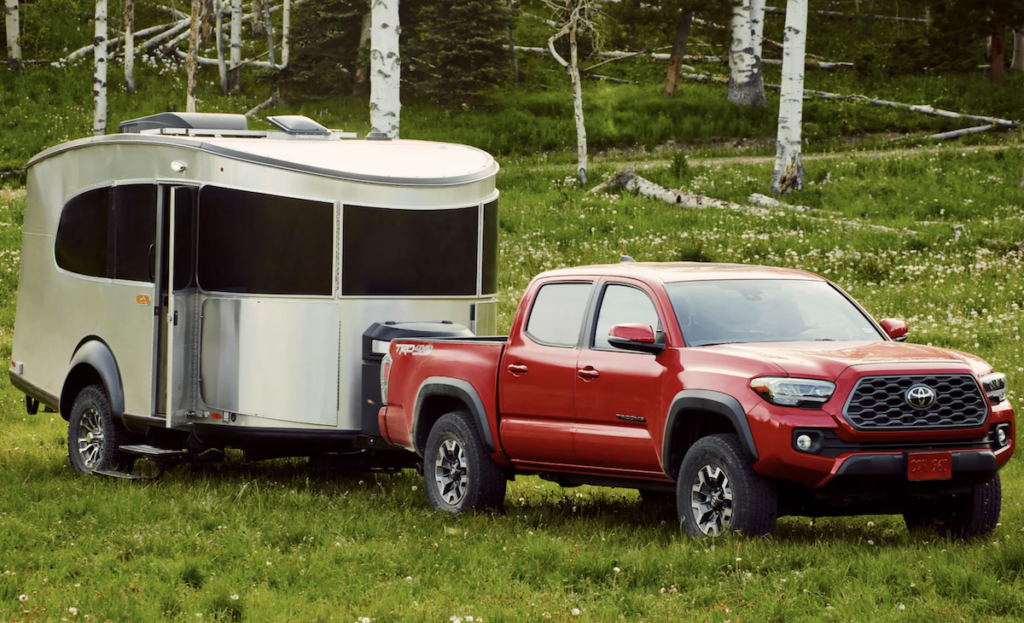
Did you know that when you get behind the wheel of a 2022 Toyota Tacoma, you're getting a huge amount of versatility? This truck is lauded throughout the industry for its ability to take on any situation, whether it's on OR off the pavement. It can handle both city streets and off-road trails, and not only that, it has a great towing capacity. We're here to talk more about the 2022 Toyota Tacoma towing capacity, what it means for your drive time, and to offer some quick tips on how to maximize it. What is the towing capacity of the 2022 Toyota Tacoma? Let's start with the basics - what is the 2022 Toyota Tacoma's towing capacity? Here's the breakdown: The 2022 Toyota Tacoma towing capacity max is 6,400 lbs. To give you a clearer picture, this Orlando Toyota can easily pull things like a small camper, boat, or trailer behind it without issue. However, the towing capacity depends on a variety of factors including the engine, trim level, bed, and cab style. To get even more granular with it, here's another breakdown of a Tacoma SR Tow Rating: A 4×2 Access Cab w/ 4-Cylinder Engine 6-Speed Automatic Transmission & 6-feet Bed can tow 3,500 lbs A 4×2 Access Cab w/ V6 Engine 6-Speed Automatic Transmission & 6-feet Bed can tow 6,400 lbs A 4×2 Double Cab w/ 4-Cylinder Engine 6-Speed Automatic Transmission & 5-feet Bed can tow 3,500 lbs A 4×4 Access Cab w/ 4-Cylinder Engine 6-Speed Automatic Transmission & 6-feet Bed can tow 3,500 lbs A 4×4 Access Cab w/ V6 Engine 6-Speed Automatic Transmission & 6-feet Bed can tow 6,400 lbs As you can see, it really depends on which 2022 Toyota Tacoma you decide to put in the driveway. You can also throw in the Tow Package on this Orlando Toyota, which adds features like: Class-IV towing hitch receiver* ATF cooler (not available on manual transmission), Engine oil cooler Power steering cooler 130-amp alternator 4- and 7-pin connector with converter Trailer-Sway Control (TSC) Whatever you're looking for in terms of towing capacity, our Toyota of Orlando specialist can help you customize the perfect new 2022 Toyota Tacoma to make it happen. And don't forget, even if you don't see what you want on our lot, we can preorder your next Toyota truck and have it delivered to the dealership! Toyota of Orlando's towing safety tips However, before you hit the road with something behind you, it's a good idea to brush up on towing safety tips. Here's a general rundown of what you should keep in mind: Practice beforehand in an empty parking lot or less-busy road to ensure you're comfortable with towing, especially when it comes to making turns. Get auto service before you head out. You'll want our techs to check your truck's tires, brakes, and lights especially, and it doesn't hurt to check your trailer lights and tires, too. And don't forget to have spares for both your truck AND your trailer on hand. Don't overload your truck - exceeding the maximum towing capacity can do both engine and structural damage. Be sure to use your best defensive driving skills. Use your turn signals, don't tailgate, and give yourself plenty of space to come to a stop - remember, you have more weight behind you now so you'll need extra road to bring everything to a halt. Want more tips, need a new Toyota Tacoma, or need to schedule auto service before towing? Toyota of Orlando is here to help! Call us at (407) 298-4500 or stop buy. We're open seven days a week at 3575 Vineland Road, just off I-4 near the Millenia Mall.

2022 Toyota Tacoma towing capacity

2022 Toyota Tacoma Towing Capacity: What you should know

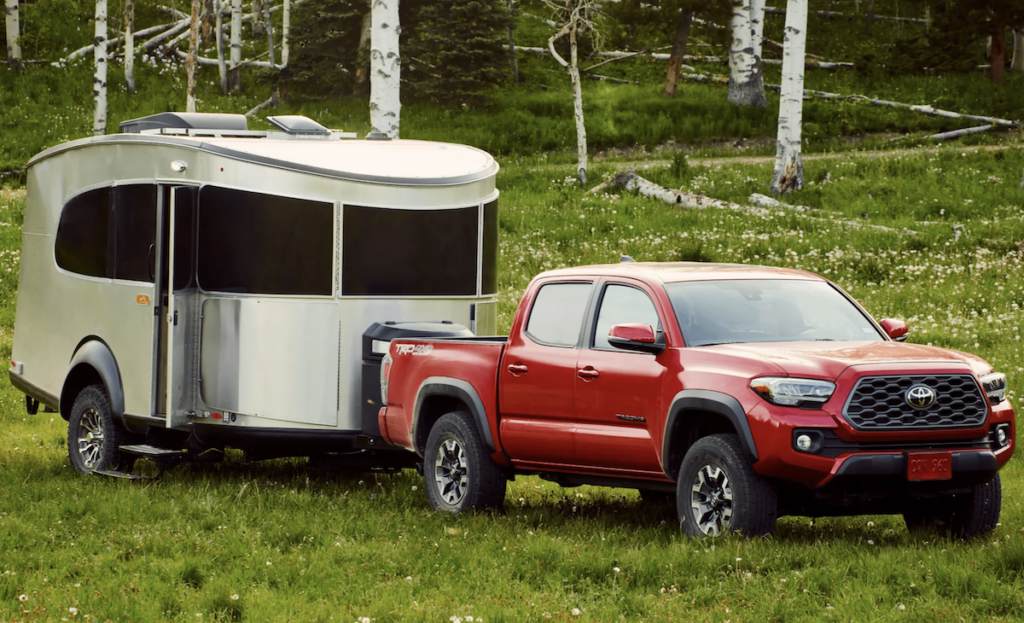
Did you know that when you get behind the wheel of a 2022 Toyota Tacoma, you're getting a huge amount of versatility? This truck is lauded throughout the industry for its ability to take on any situation, whether it's on OR off the pavement. It can handle both city streets and off-road trails, and not only that, it has a great towing capacity. We're here to talk more about the 2022 Toyota Tacoma towing capacity, what it means for your drive time, and to offer some quick tips on how to maximize it. What is the towing capacity of the 2022 Toyota Tacoma? Let's start with the basics - what is the 2022 Toyota Tacoma's towing capacity? Here's the breakdown: The 2022 Toyota Tacoma towing capacity max is 6,400 lbs. To give you a clearer picture, this Orlando Toyota can easily pull things like a small camper, boat, or trailer behind it without issue. However, the towing capacity depends on a variety of factors including the engine, trim level, bed, and cab style. To get even more granular with it, here's another breakdown of a Tacoma SR Tow Rating: A 4×2 Access Cab w/ 4-Cylinder Engine 6-Speed Automatic Transmission & 6-feet Bed can tow 3,500 lbs A 4×2 Access Cab w/ V6 Engine 6-Speed Automatic Transmission & 6-feet Bed can tow 6,400 lbs A 4×2 Double Cab w/ 4-Cylinder Engine 6-Speed Automatic Transmission & 5-feet Bed can tow 3,500 lbs A 4×4 Access Cab w/ 4-Cylinder Engine 6-Speed Automatic Transmission & 6-feet Bed can tow 3,500 lbs A 4×4 Access Cab w/ V6 Engine 6-Speed Automatic Transmission & 6-feet Bed can tow 6,400 lbs As you can see, it really depends on which 2022 Toyota Tacoma you decide to put in the driveway. You can also throw in the Tow Package on this Orlando Toyota, which adds features like: Class-IV towing hitch receiver* ATF cooler (not available on manual transmission), Engine oil cooler Power steering cooler 130-amp alternator 4- and 7-pin connector with converter Trailer-Sway Control (TSC) Whatever you're looking for in terms of towing capacity, our Toyota of Orlando specialist can help you customize the perfect new 2022 Toyota Tacoma to make it happen. And don't forget, even if you don't see what you want on our lot, we can preorder your next Toyota truck and have it delivered to the dealership! Toyota of Orlando's towing safety tips However, before you hit the road with something behind you, it's a good idea to brush up on towing safety tips. Here's a general rundown of what you should keep in mind: Practice beforehand in an empty parking lot or less-busy road to ensure you're comfortable with towing, especially when it comes to making turns. Get auto service before you head out. You'll want our techs to check your truck's tires, brakes, and lights especially, and it doesn't hurt to check your trailer lights and tires, too. And don't forget to have spares for both your truck AND your trailer on hand. Don't overload your truck - exceeding the maximum towing capacity can do both engine and structural damage. Be sure to use your best defensive driving skills. Use your turn signals, don't tailgate, and give yourself plenty of space to come to a stop - remember, you have more weight behind you now so you'll need extra road to bring everything to a halt. Want more tips, need a new Toyota Tacoma, or need to schedule auto service before towing? Toyota of Orlando is here to help! Call us at (407) 298-4500 or stop buy. We're open seven days a week at 3575 Vineland Road, just off I-4 near the Millenia Mall.

how much does an oil change cost

How much does an oil change cost?

Care care doesn’t have to cost a fortune (believe it or not). If you keep up with a routine car maintenance schedule, pay attention to how your car looks and sounds, and avoid aggressive driving, it shouldn’t break the bank to regularly care for your car. And one car care appointment you NEVER want to miss is your oil change. Here’s the breakdown - regular oil changes are one of the easiest and most affordable ways to protect your ride’s engine and extend your car’s life. Whether you drive a fuel-efficient sedan, a family SUV, or a powerhouse truck, clean motor oil keeps everything running smoothly. It reduces friction, prevents overheating, and helps your engine components stay lubricated. Skipping this simple car care can lead to gnarly, expensive engine repairs down the road, which is why it’s so important to stay on top of it. But how much does an oil change cost at the end of the day? Our Toyota of Orlando service team here is to walk you through it. <span data-mce-type="bookmark" style="display: inline-block; width: 0px; overflow: hidden; line-height: 0;" class="mce_SELRES_start"></span> How much does an oil change cost at Toyota of Orlando? How much does an oil change cost when you schedule it at our Orlando Toyota Service Center (or anywhere else)? The answer varies. Here are some points to consider: If you’re getting a conventional oil change, the cost should be anywhere between $35-75. If you’re getting a synthetic oil change, the cost should be anywhere between $65-125. However, the size of your ride can also affect the cost of your oil change. A typical passenger car (like a sedan) will need around 5 quarts of oil to get the job done, but larger trucks and SUVs may require additional oil, which can boost the price up. Another factor that can affect how much an oil change costs is the type of oil filter your car needs. Some filters are more advanced and designed to last longer, especially in vehicles using synthetic oil. Luxury trims, performance vehicles, and trucks that tow heavy loads might also require specialty oil products or additional inspections during service. What Happens During an Oil Change at our Toyota Service Center? At Toyota of Orlando, our goal is to keep your vehicle maintenance affordable and convenient for all of our customers. We frequently offer Orlando Toyota service specials that can help lower the cost of routine maintenance like oil changes, tire rotations, battery inspections, and more. Checking for coupons before your appointment can help you save even more money when you get here. During your Orlando oil change, our Toyota service techs will drain out all of the old oil to ensure you’re working on a clean slate. (And they’ll discard the old oil appropriately – you can’t just dump it in the trash or down the drain.) They’ll also replace the dirty oil filter with a clean one and add the recommended amount of fresh oil back into your engine. It’s a simple process and shouldn’t take a long amount of time, barring any complications. Your oil change appointment will also include a quick multi-point inspection. Our Toyota service technicians check your tire pressure, fluid levels, battery health, brakes, belts, and hoses to make sure your ride is in good shape overall. Catching small issues early can help you avoid bigger repair bills later. How often should you schedule an oil change? Here are a few other things to keep in mind besides the question of “how much does an oil change cost”: The intervals at which you’ll need an oil change depend on your driving habits and the type of oil you use. Orlando Toyotas that use conventional oil typically need an oil change every 3,000 – 5,000 miles. Cars that use synthetic oil can go longer, usually needing an oil change every 7,500 – 15,000 miles. Check with our auto service techs to see which schedule YOUR car should be on. And remember, the more you drive, the sooner you’ll need an oil change. Conventional and synthetic oil changes both have their perks and drawbacks, so it’s a personal choice for you (or your car might require a certain type of oil – ask our techs to check it out). Your driving conditions matter, too. If you frequently sit in Orlando traffic, take short trips around town, drive in extremely hot weather, tow cargo, or take frequent road trips, your engine works harder than average. In these situations, you might need oil changes more frequently to keep your ride protected. Many newer Toyotas are equipped with maintenance reminder systems that alert you when it’s time for your service. Even with these reminders, it’s still a good idea to keep track of your mileage and stay on top of your owner’s manual recommendations. Conventional vs. synthetic oil: what’s the difference? Basically, conventional oil is cheaper than synthetic. It’s made from refined crude oil. However, it doesn’t last as long and some drivers say it doesn’t offer the same performance benefits as synthetic. Synthetic oil is much more refined and processed. It costs more than conventional oil, but lasts a lot longer (so you can go longer in between oil changes). It also helps to enhance vehicle performance. Synthetic oil is beneficial in extreme temperatures because it flows more smoothly in cold weather and resists breakdown in high heat. Many modern Toyotas are designed specifically for synthetic oil because it helps improve their fuel efficiency and engine protection. You might also be able to use a synthetic blend, which is a mix of conventional and synthetic oils. Synthetic blends are a great middle-ground option for drivers who want some of the benefits of synthetic oil without the higher price tag. If your car is getting up there in years, our Orlando auto service techs might recommend high mileage oil. This special motor oil is designed to keep older cars up and running and help prevent leaks. High mileage oil contains additives that help reduce wear and condition engine seals. This makes it a popular choice for cars with more than 75,000 miles on the odometer. What happens if you skip oil changes? Many drivers wonder if delaying an oil change by a few weeks or a few thousand miles is really a big deal. Unfortunately, it is. Neglecting your oil changes can lead to serious engine damage over time, which means big repair bills. When your car’s oil gets old, it becomes dirty and less effective at lubricating your engine components. Sludge can build up inside the engine, friction increases, and heat can cause parts to wear out faster. Eventually, ignoring oil changes can lead to reduced fuel efficiency, poor engine performance, costly repairs, or even complete engine failure. Routine oil changes are much less expensive than replacing major engine components, which is why preventive maintenance is always worth it. Why choose Toyota of Orlando for your next oil change? When you bring your ride to Toyota of Orlando for service, you can feel confident knowing your car is being cared for by factory-trained Toyota technicians. Our Orlando Toyota Service Center uses quality parts, recommended oils, and the latest equipment to help keep your ride running at its best. We also make scheduling service easy and convenient. Whether you need a quick oil change, tire service, brake inspection, or larger repair, our team is here to help make the process stress-free. Bottom line, you should ask our techs at Toyota of Orlando not only how much does an oil change cost, but also which motor oil you should be using for your car. And don’t forget to ask how often you should be scheduling this service. They can get you on a routine and also send you helpful reminders when you’re due to come in. Schedule your Orlando oil change today Have questions or want to get your next oil change on the books? Schedule today online, call (407) 298-0001, or visit us in person at 3575 Vineland Road, just off I-4 near the Millenia Mall. Our Orlando Toyota Service Center is here to help keep your car running smoothly mile after mile.


how much does an oil change cost

How much does an oil change cost?

Care care doesn’t have to cost a fortune (believe it or not). If you keep up with a routine car maintenance schedule, pay attention to how your car looks and sounds, and avoid aggressive driving, it shouldn’t break the bank to regularly care for your car. And one car care appointment you NEVER want to miss is your oil change. Here’s the breakdown - regular oil changes are one of the easiest and most affordable ways to protect your ride’s engine and extend your car’s life. Whether you drive a fuel-efficient sedan, a family SUV, or a powerhouse truck, clean motor oil keeps everything running smoothly. It reduces friction, prevents overheating, and helps your engine components stay lubricated. Skipping this simple car care can lead to gnarly, expensive engine repairs down the road, which is why it’s so important to stay on top of it. But how much does an oil change cost at the end of the day? Our Toyota of Orlando service team here is to walk you through it. <span data-mce-type="bookmark" class="mce_SELRES_start"></span> How much does an oil change cost at Toyota of Orlando? How much does an oil change cost when you schedule it at our Orlando Toyota Service Center (or anywhere else)? The answer varies. Here are some points to consider: If you’re getting a conventional oil change, the cost should be anywhere between $35-75. If you’re getting a synthetic oil change, the cost should be anywhere between $65-125. However, the size of your ride can also affect the cost of your oil change. A typical passenger car (like a sedan) will need around 5 quarts of oil to get the job done, but larger trucks and SUVs may require additional oil, which can boost the price up. Another factor that can affect how much an oil change costs is the type of oil filter your car needs. Some filters are more advanced and designed to last longer, especially in vehicles using synthetic oil. Luxury trims, performance vehicles, and trucks that tow heavy loads might also require specialty oil products or additional inspections during service. What Happens During an Oil Change at our Toyota Service Center? At Toyota of Orlando, our goal is to keep your vehicle maintenance affordable and convenient for all of our customers. We frequently offer Orlando Toyota service specials that can help lower the cost of routine maintenance like oil changes, tire rotations, battery inspections, and more. Checking for coupons before your appointment can help you save even more money when you get here. During your Orlando oil change, our Toyota service techs will drain out all of the old oil to ensure you’re working on a clean slate. (And they’ll discard the old oil appropriately – you can’t just dump it in the trash or down the drain.) They’ll also replace the dirty oil filter with a clean one and add the recommended amount of fresh oil back into your engine. It’s a simple process and shouldn’t take a long amount of time, barring any complications. Your oil change appointment will also include a quick multi-point inspection. Our Toyota service technicians check your tire pressure, fluid levels, battery health, brakes, belts, and hoses to make sure your ride is in good shape overall. Catching small issues early can help you avoid bigger repair bills later. How often should you schedule an oil change? Here are a few other things to keep in mind besides the question of “how much does an oil change cost”: The intervals at which you’ll need an oil change depend on your driving habits and the type of oil you use. Orlando Toyotas that use conventional oil typically need an oil change every 3,000 – 5,000 miles. Cars that use synthetic oil can go longer, usually needing an oil change every 7,500 – 15,000 miles. Check with our auto service techs to see which schedule YOUR car should be on. And remember, the more you drive, the sooner you’ll need an oil change. Conventional and synthetic oil changes both have their perks and drawbacks, so it’s a personal choice for you (or your car might require a certain type of oil – ask our techs to check it out). Your driving conditions matter, too. If you frequently sit in Orlando traffic, take short trips around town, drive in extremely hot weather, tow cargo, or take frequent road trips, your engine works harder than average. In these situations, you might need oil changes more frequently to keep your ride protected. Many newer Toyotas are equipped with maintenance reminder systems that alert you when it’s time for your service. Even with these reminders, it’s still a good idea to keep track of your mileage and stay on top of your owner’s manual recommendations. Conventional vs. synthetic oil: what’s the difference? Basically, conventional oil is cheaper than synthetic. It’s made from refined crude oil. However, it doesn’t last as long and some drivers say it doesn’t offer the same performance benefits as synthetic. Synthetic oil is much more refined and processed. It costs more than conventional oil, but lasts a lot longer (so you can go longer in between oil changes). It also helps to enhance vehicle performance. Synthetic oil is beneficial in extreme temperatures because it flows more smoothly in cold weather and resists breakdown in high heat. Many modern Toyotas are designed specifically for synthetic oil because it helps improve their fuel efficiency and engine protection. You might also be able to use a synthetic blend, which is a mix of conventional and synthetic oils. Synthetic blends are a great middle-ground option for drivers who want some of the benefits of synthetic oil without the higher price tag. If your car is getting up there in years, our Orlando auto service techs might recommend high mileage oil. This special motor oil is designed to keep older cars up and running and help prevent leaks. High mileage oil contains additives that help reduce wear and condition engine seals. This makes it a popular choice for cars with more than 75,000 miles on the odometer. What happens if you skip oil changes? Many drivers wonder if delaying an oil change by a few weeks or a few thousand miles is really a big deal. Unfortunately, it is. Neglecting your oil changes can lead to serious engine damage over time, which means big repair bills. When your car’s oil gets old, it becomes dirty and less effective at lubricating your engine components. Sludge can build up inside the engine, friction increases, and heat can cause parts to wear out faster. Eventually, ignoring oil changes can lead to reduced fuel efficiency, poor engine performance, costly repairs, or even complete engine failure. Routine oil changes are much less expensive than replacing major engine components, which is why preventive maintenance is always worth it. Why choose Toyota of Orlando for your next oil change? When you bring your ride to Toyota of Orlando for service, you can feel confident knowing your car is being cared for by factory-trained Toyota technicians. Our Orlando Toyota Service Center uses quality parts, recommended oils, and the latest equipment to help keep your ride running at its best. We also make scheduling service easy and convenient. Whether you need a quick oil change, tire service, brake inspection, or larger repair, our team is here to help make the process stress-free. Bottom line, you should ask our techs at Toyota of Orlando not only how much does an oil change cost, but also which motor oil you should be using for your car. And don’t forget to ask how often you should be scheduling this service. They can get you on a routine and also send you helpful reminders when you’re due to come in. Schedule your Orlando oil change today Have questions or want to get your next oil change on the books? Schedule today online, call (407) 298-0001, or visit us in person at 3575 Vineland Road, just off I-4 near the Millenia Mall. Our Orlando Toyota Service Center is here to help keep your car running smoothly mile after mile.

Orlando Toyota electric cars

How is an electric car different from a plug-in hybrid or hybrid?

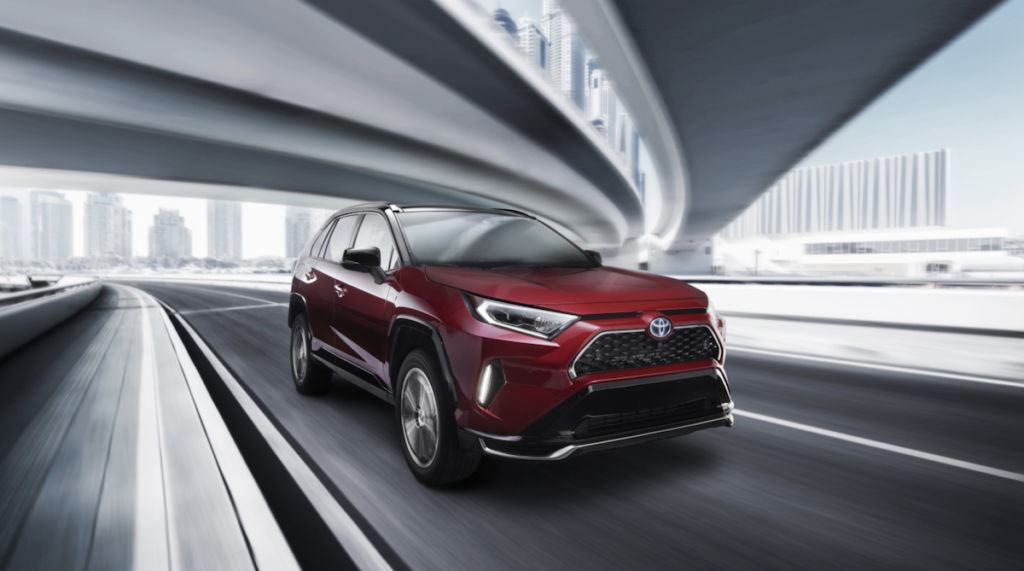
So you're shopping for your next green car, but you're unsure as to what you should purchase or lease. We get it! There are tons of options available when it comes to eco-friendly and fuel-efficient Orlando Toyotas, but we're always here to make your shopping process as streamlined and stress-free as possible. Today we're breaking down the three main categories of fuel-efficient options: electric cars, hybrid cars, and plug-in hybrid cars so you can decide which is better, a hybrid, plug-in hybrid, or electric car. What is a hybrid car? Chances are by now you've heard of hybrid cars. Toyota hybrids are renowned for their clean performance and fuel efficiency and the Orlando Toyota Prius started the hybrid car game years back. Basically, hybrid cars are 100% fueled by gasoline, but they don't rely only on gasoline to power them. They have electric motors in the car that work alongside the gasoline engine to power the car, and the two of them switch off and even work together sometimes to get the best mix of power and efficiency. The batteries in these cars are charged by the electric motors via regenerative braking - you never plug a true hybrid into an external source to charge it. What is a plug-in hybrid car? A plug-in hybrid car, on the other hand, is similar to a hybrid in that it is gasoline-powered. However, it has a much larger battery that can be plugged into an external source for charging. These cars run more on electric power than traditional hybrids, really only bringing gasoline power when absolutely necessary. Essentially, it's an electric car with a gasoline-powered safety net in case you run out of charge. If you can both plug it in to charge it AND put gasoline in it, it's a plug-in hybrid. What is an electric car? An electric car has a large battery that solely powers the vehicle. There is no gasoline-powered engine to use as a backup - these cars don't have gas tanks at all - and the car is charged from an external power source (aka plugging it into the wall). So what is better, a hybrid or a plug-in hybrid? It really comes down to your individual drive time needs. Here's the basic breakdown. What is the difference between hybrid, plug-in hybrid, and electric cars? Hybrid cars have a lot of pros. They're exceptionally versatile and you can drive long distances without worrying about charging; they're also not as expensive anymore because the technology has been around for a while and is constantly refining. However, you'll still have the maintenance costs (like oil changes) and some fuel costs like a normal car, and they aren't quite as efficient as an electric car or even a plug-in hybrid. Electric cars also have their benefits. They're zero emissions, have way fewer maintenance costs (no oil, fluids, etc. under the hood), and are much cheaper to operate as electricity is far less expensive than gasoline (especially now). On the other hand, you don't have a safety net so you HAVE to remember to charge your car, and if you're going to be driving long distances, you have to make sure charging stations will be in your range. Not only that, electric cars can be more expensive to buy. Plug-in hybrids are becoming more of a common go-to. They really offer the best of both worlds; they're green and efficient but also have that safety backup of a gasoline engine in case you need it. They used to be less popular because there weren't as many options available but this is no longer the case; many automotive makes offer plug-in options as a part of their regular lineup (including Toyota of Orlando). Shop for electric cars and more at Toyota of Orlando Have questions about the difference between hybrids, plug-in hybrids, and electric cars? Toyota of Orlando has the answers you need. We're open seven days a week at (407) 298-4500, and you can also stop by and see us in person at 3575 Vineland Road, just off I-4 near the Millenia Mall. You can shop all of our alternative fuel options online, too!

Orlando Toyota electric cars

How is an electric car different from a plug-in hybrid or hybrid?

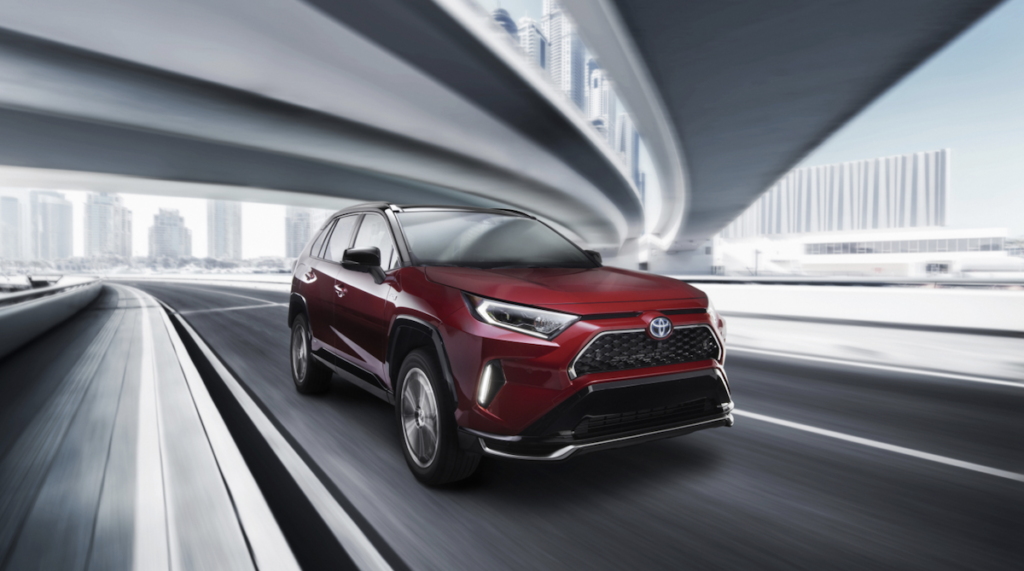
So you're shopping for your next green car, but you're unsure as to what you should purchase or lease. We get it! There are tons of options available when it comes to eco-friendly and fuel-efficient Orlando Toyotas, but we're always here to make your shopping process as streamlined and stress-free as possible. Today we're breaking down the three main categories of fuel-efficient options: electric cars, hybrid cars, and plug-in hybrid cars so you can decide which is better, a hybrid, plug-in hybrid, or electric car. What is a hybrid car? Chances are by now you've heard of hybrid cars. Toyota hybrids are renowned for their clean performance and fuel efficiency and the Orlando Toyota Prius started the hybrid car game years back. Basically, hybrid cars are 100% fueled by gasoline, but they don't rely only on gasoline to power them. They have electric motors in the car that work alongside the gasoline engine to power the car, and the two of them switch off and even work together sometimes to get the best mix of power and efficiency. The batteries in these cars are charged by the electric motors via regenerative braking - you never plug a true hybrid into an external source to charge it. What is a plug-in hybrid car? A plug-in hybrid car, on the other hand, is similar to a hybrid in that it is gasoline-powered. However, it has a much larger battery that can be plugged into an external source for charging. These cars run more on electric power than traditional hybrids, really only bringing gasoline power when absolutely necessary. Essentially, it's an electric car with a gasoline-powered safety net in case you run out of charge. If you can both plug it in to charge it AND put gasoline in it, it's a plug-in hybrid. What is an electric car? An electric car has a large battery that solely powers the vehicle. There is no gasoline-powered engine to use as a backup - these cars don't have gas tanks at all - and the car is charged from an external power source (aka plugging it into the wall). So what is better, a hybrid or a plug-in hybrid? It really comes down to your individual drive time needs. Here's the basic breakdown. What is the difference between hybrid, plug-in hybrid, and electric cars? Hybrid cars have a lot of pros. They're exceptionally versatile and you can drive long distances without worrying about charging; they're also not as expensive anymore because the technology has been around for a while and is constantly refining. However, you'll still have the maintenance costs (like oil changes) and some fuel costs like a normal car, and they aren't quite as efficient as an electric car or even a plug-in hybrid. Electric cars also have their benefits. They're zero emissions, have way fewer maintenance costs (no oil, fluids, etc. under the hood), and are much cheaper to operate as electricity is far less expensive than gasoline (especially now). On the other hand, you don't have a safety net so you HAVE to remember to charge your car, and if you're going to be driving long distances, you have to make sure charging stations will be in your range. Not only that, electric cars can be more expensive to buy. Plug-in hybrids are becoming more of a common go-to. They really offer the best of both worlds; they're green and efficient but also have that safety backup of a gasoline engine in case you need it. They used to be less popular because there weren't as many options available but this is no longer the case; many automotive makes offer plug-in options as a part of their regular lineup (including Toyota of Orlando). Shop for electric cars and more at Toyota of Orlando Have questions about the difference between hybrids, plug-in hybrids, and electric cars? Toyota of Orlando has the answers you need. We're open seven days a week at (407) 298-4500, and you can also stop by and see us in person at 3575 Vineland Road, just off I-4 near the Millenia Mall. You can shop all of our alternative fuel options online, too!

Orlando auto service

What is a fuel injector flush, and do you need one?

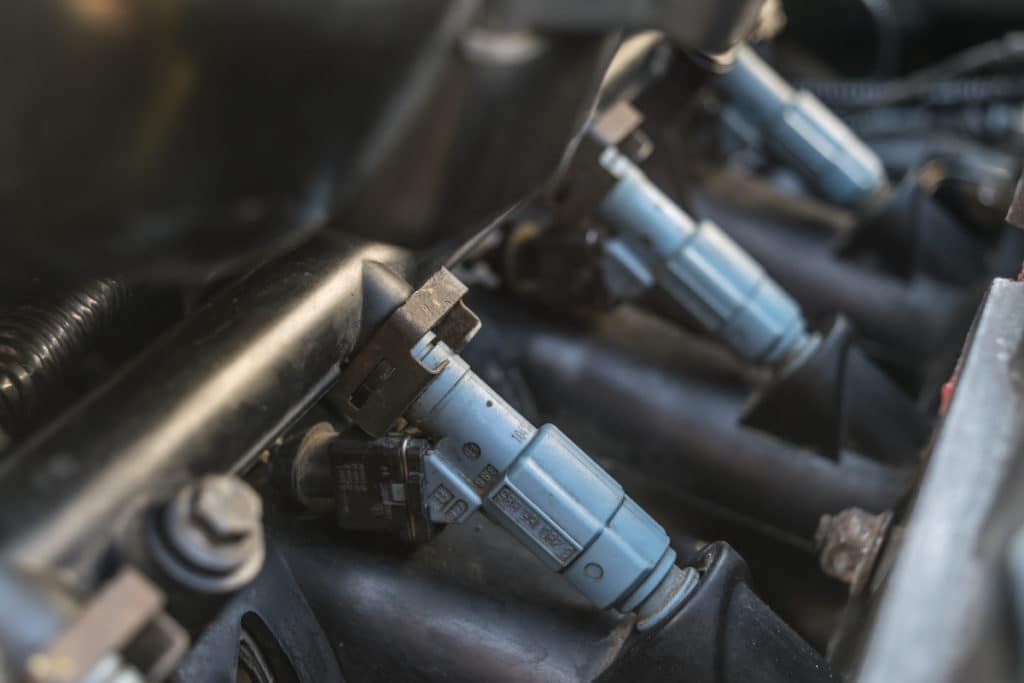
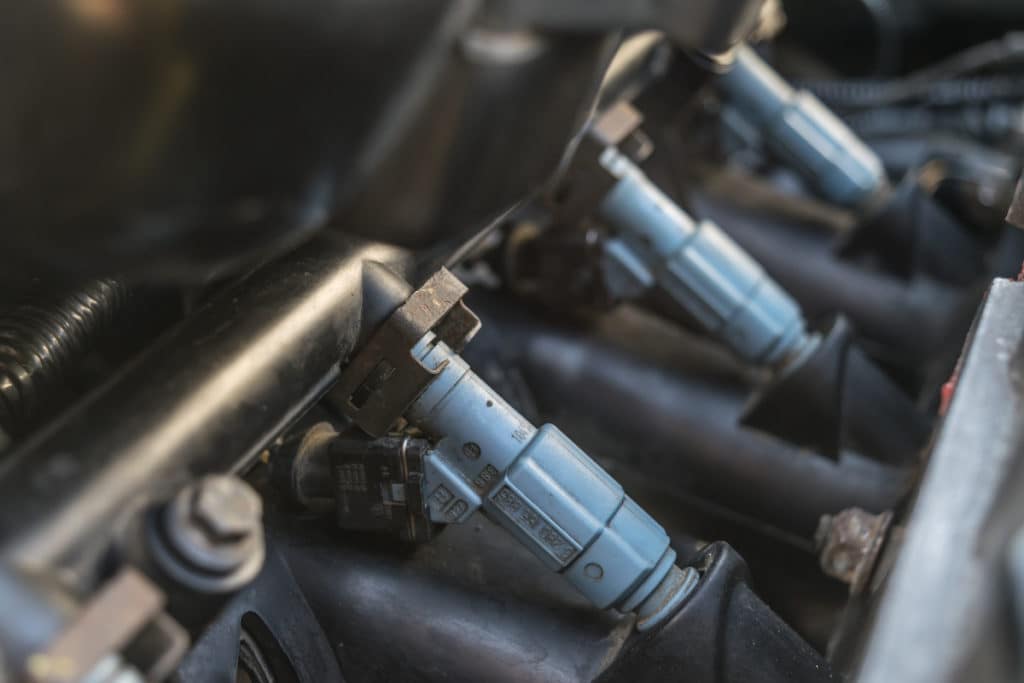
Routine car care is pretty simple. You get your tires rotated, your oil changed, your brakes done, and your battery checked as needed (and the techs at Toyota of Orlando can get you on a service schedule to make it even simpler). However, sometimes car ownership throws out-of-the-ordinary car care elements at you. Today we're walking you through a necessary auto service appointment that's not in the ordinary routine - fuel injector flushes. What is a fuel injector flush? Before you can understand what a fuel injector flush is, you need to know what a fuel injector is and its purpose in the grand scheme of things. Basically, the fuel injector is a pressurized valve that pushes fuel into the engine so your car can run. Since they're used often, over time they tend to collect grime, dirt, and soot, which can lead to an air-fuel mixture imbalance in your engine. Basically, less gas is able to get through to the engine, or gas is pushed through unevenly, which leads to performance problems and reduced fuel efficiency (which means more money spent at the pump). However, an easy way to remedy this is to get a fuel injector flush at Toyota of Orlando! During this auto service appointment, our techs will flush out your fuel injectors and fuel system with special chemicals. This will remove the dirt, debris, and other buildup that's accumulated in the system and also get rid of any corrosion that may be there. The benefits? You can get better gas mileage out of your car, reduce emissions to make your performance cleaner, and prolong the life of your vehicle in general. So how do you know if you need to schedule a fuel injector flush at Toyota of Orlando? Here are the main signs you may need this car care appointment on your calendar: Your car is stalling out when you're stopped at a light or in slow-moving traffic. You have a rough idle (your car sputters and shakes when it's running but you're not in motion). Your fuel efficiency has dropped below what it should be. This is because your car will try to push more fuel into the engine to accommodate the problem, and ends up using more gas than it should. Your RPM needle is moving erratically - it jumps up and down without warning and for no reason. Your engine is misfiring. This is when you hit the accelerator and instead of moving faster, your car sputters or takes more time than it should to pick up speed. You'll be able to rule out other issues. Fuel injector flushes can be diagnostic, ruling out other (more expensive) problems that might be causing similar symptoms in your car's performance. Schedule a fuel injector flush at Toyota of Orlando Think you might need a fuel injector flush? Our Orlando Toyota service techs can help. Call us today! We're open seven days a week at (407) 298-0001. You can also stop by 3575 Vineland Road to chat with our techs, or schedule your service online to make it easy. See you soon!

Orlando auto service

What is a fuel injector flush, and do you need one?

Routine car care is pretty simple. You get your tires rotated, your oil changed, your brakes done, and your battery checked as needed (and the techs at Toyota of Orlando can get you on a service schedule to make it even simpler). However, sometimes car ownership throws out-of-the-ordinary car care elements at you. Today we're walking you through a necessary auto service appointment that's not in the ordinary routine - fuel injector flushes. What is a fuel injector flush? Before you can understand what a fuel injector flush is, you need to know what a fuel injector is and its purpose in the grand scheme of things. Basically, the fuel injector is a pressurized valve that pushes fuel into the engine so your car can run. Since they're used often, over time they tend to collect grime, dirt, and soot, which can lead to an air-fuel mixture imbalance in your engine. Basically, less gas is able to get through to the engine, or gas is pushed through unevenly, which leads to performance problems and reduced fuel efficiency (which means more money spent at the pump). However, an easy way to remedy this is to get a fuel injector flush at Toyota of Orlando! During this auto service appointment, our techs will flush out your fuel injectors and fuel system with special chemicals. This will remove the dirt, debris, and other buildup that's accumulated in the system and also get rid of any corrosion that may be there. The benefits? You can get better gas mileage out of your car, reduce emissions to make your performance cleaner, and prolong the life of your vehicle in general. So how do you know if you need to schedule a fuel injector flush at Toyota of Orlando? Here are the main signs you may need this car care appointment on your calendar: Your car is stalling out when you're stopped at a light or in slow-moving traffic. You have a rough idle (your car sputters and shakes when it's running but you're not in motion). Your fuel efficiency has dropped below what it should be. This is because your car will try to push more fuel into the engine to accommodate the problem, and ends up using more gas than it should. Your RPM needle is moving erratically - it jumps up and down without warning and for no reason. Your engine is misfiring. This is when you hit the accelerator and instead of moving faster, your car sputters or takes more time than it should to pick up speed. You'll be able to rule out other issues. Fuel injector flushes can be diagnostic, ruling out other (more expensive) problems that might be causing similar symptoms in your car's performance. Schedule a fuel injector flush at Toyota of Orlando Think you might need a fuel injector flush? Our Orlando Toyota service techs can help. Call us today! We're open seven days a week at (407) 298-0001. You can also stop by 3575 Vineland Road to chat with our techs, or schedule your service online to make it easy. See you soon!

all-new GR Corolla

The all-new GR Corolla is officially coming to Toyota of Orlando

It's FINALLY official - the 2023 GR Corolla is coming to Toyota of Orlando. We've been waiting, combing through the endless teasers that Toyota has dropped, and hoping that this day would come... and here it is. We've got the details on exactly what the new GR Corolla will offer when it arrives - keep scrolling! The 2023 GR Corolla will arrive at Toyota of Orlando later this year The 2023 GR Corolla will be available later this year at Toyota of Orlando and will come in two grades: Core and Circuit. Circuit will ONLY be available for purchase in the 2023 launch year. There are three packages available to add on - Performance, Technology, and Cold Weather. There's so much to unpack for the new 2023 GR Corolla that we're going to break it up into sections - let's start with performance. Here are the highlights: This new Orlando Toyota is rally-ready. It has the first sports all-wheel-drive system in 20 years - GR-FOUR - and offers exceptional control and traction with power being sent to each wheel. The system is also simple and lightweight to optimize performance. Changing the performance is as easy as the twist of a dial. Drivers can set their front/rear torque distribution to 60:40 for everyday driving, 30:70 for a sportier experience or winding roads, and 50:50 for maximum stability at high speeds (like on a track). The Orlando GR Corolla also has front and rear Torsen Limited-Slip Differentials for enhanced cornering and grip, as well as control of left AND right-hand drive torque distribution on the front and rear axles. Remember the GR Yaris and how mad everyone (we) was that it wasn't coming to the US? The 2023 GR Corolla will offer the same turbocharged G16E-GTS powerplant under the hood... but it's been boosted. The 3-cylinder engine has more power thanks to a new engine exhaust with a 3-piece muffler - this design means less exhaust pressure AND outside noise. The G16E engine also offers multi-oil jet piston cooling, large-diameter exhaust valves, and a part-machined intake port. Maximum power is 300 horsepower and 273 lb-ft torque in this Orlando Toyota. You'll also get a single-scroll ball-bearing turbo in the GR Corolla with a 6-speed intelligent manual transmission with rev-matching to handle high torque with ease. There's also Toyota's D-4S direct and port fuel injection system for maximum fuel dispersion and efficiency. The 2023 GR Corolla has a shift lever with a shortened stroke for quick throw and a pull-type mechanical parking brake. The front suspension is MacPherson type strut design with circuit-tuned coil springs, shock absorbers, and stabilizer bars for light weight and firm handling while the rear suspension uses a double-wishbone multilink system to accommodate the AWD system. The new 2023 GR Corolla has wide tread tires for high cornering and high-speed stability and you'll love the 18" gloss-black 15-spoke cast alloy wheels. It also showcases fixed-caliper disc brakes (painted red with the GR logo, of course) for maximum stopping power. The Orlando Toyota car itself has a highly rigid body that was specially designed just for this vehicle. It showcases more weld points in the frame and extensive use of structural adhesive. PHEW. Let's talk about aesthetics now, like we're not already excited enough. As you well know, the GR Corolla is a hot hatchback. There was a focus in the design to make it as lightweight as possible. Here are a few things we love: On the special Circuit Edition of the new GR Corolla, the roof is made of forged carbon fiber to make it lighter. Aluminum was used for the hood and front door panels, as well as high-tensile steel to ensure a safe structure. The nose of the GR Corolla ascends to a tapered roofline for the best possible aerodynamics, and the rear spoiler creates more downforce. It also has lower rockers to make air flow down the sides of the car, and features hood, fender, and rear bumper ducts as well as a flat underfloor to reduce drag. The 2023 GR Corolla sits wide and low to the ground for the best possible handling. It has wide front and rear fender flares. It also showcases a black matrix grille and LED exterior lighting, as well as gloss black exterior accents, a shark fin antenna, and rear wings. The interior of the 2023 GR Corolla has a 12.3" color multi-information display with a GR meter that displays 4WD mode, gear position indicator, a tachometer, and the turbo pressure. There are Brin Naud suede and synthetic-leather trimmed sport seats with red stitching, red mesh inserts, and GR badging available as well as heated front seats and steering wheel. The GR Corolla will also offer features like a push-button start, aluminum sport pedals, automatic climate control, power windows with one-touch auto up/down, 2 USB charging ports and one 12V auxiliary power outlet, and Qi wireless charging. Additionally, this Toyota sports car has the Toyota Audio Multimedia system with an 8" touchscreen, Bluetooth, Drive Connect Intelligent Assistant, voice control, and cloud-based native navigation. You'll also have Apple CarPlay and Android Auto at your fingertips, as well las a 4G WiFi hotspot and optional JBL sound system. And finally, let's talk extras. Each 2023 GR Corolla will come standard with Toyota Safety Sense 3.0, a rear-seat reminder, a Blind Spot Monitor with Rear Cross-Traffic Alert, and Hill Start Assist Control as well as a one-year trial subscription of Toyota Safety Connect. Follow us on social media for the latest updates on the Orlando GR Corolla We're already ready to climb into the driver's seat - are you? For more information, follow us on social media OR call. Toyota of Orlando is open seven days a week at (407) 298-4500 and the new 2023 GR Corolla will arrive later this year!

all-new GR Corolla

The all-new GR Corolla is officially coming to Toyota of Orlando

It's FINALLY official - the 2023 GR Corolla is coming to Toyota of Orlando. We've been waiting, combing through the endless teasers that Toyota has dropped, and hoping that this day would come... and here it is. We've got the details on exactly what the new GR Corolla will offer when it arrives - keep scrolling! The 2023 GR Corolla will arrive at Toyota of Orlando later this year The 2023 GR Corolla will be available later this year at Toyota of Orlando and will come in two grades: Core and Circuit. Circuit will ONLY be available for purchase in the 2023 launch year. There are three packages available to add on - Performance, Technology, and Cold Weather. There's so much to unpack for the new 2023 GR Corolla that we're going to break it up into sections - let's start with performance. Here are the highlights: This new Orlando Toyota is rally-ready. It has the first sports all-wheel-drive system in 20 years - GR-FOUR - and offers exceptional control and traction with power being sent to each wheel. The system is also simple and lightweight to optimize performance. Changing the performance is as easy as the twist of a dial. Drivers can set their front/rear torque distribution to 60:40 for everyday driving, 30:70 for a sportier experience or winding roads, and 50:50 for maximum stability at high speeds (like on a track). The Orlando GR Corolla also has front and rear Torsen Limited-Slip Differentials for enhanced cornering and grip, as well as control of left AND right-hand drive torque distribution on the front and rear axles. Remember the GR Yaris and how mad everyone (we) was that it wasn't coming to the US? The 2023 GR Corolla will offer the same turbocharged G16E-GTS powerplant under the hood... but it's been boosted. The 3-cylinder engine has more power thanks to a new engine exhaust with a 3-piece muffler - this design means less exhaust pressure AND outside noise. The G16E engine also offers multi-oil jet piston cooling, large-diameter exhaust valves, and a part-machined intake port. Maximum power is 300 horsepower and 273 lb-ft torque in this Orlando Toyota. You'll also get a single-scroll ball-bearing turbo in the GR Corolla with a 6-speed intelligent manual transmission with rev-matching to handle high torque with ease. There's also Toyota's D-4S direct and port fuel injection system for maximum fuel dispersion and efficiency. The 2023 GR Corolla has a shift lever with a shortened stroke for quick throw and a pull-type mechanical parking brake. The front suspension is MacPherson type strut design with circuit-tuned coil springs, shock absorbers, and stabilizer bars for light weight and firm handling while the rear suspension uses a double-wishbone multilink system to accommodate the AWD system. The new 2023 GR Corolla has wide tread tires for high cornering and high-speed stability and you'll love the 18" gloss-black 15-spoke cast alloy wheels. It also showcases fixed-caliper disc brakes (painted red with the GR logo, of course) for maximum stopping power. The Orlando Toyota car itself has a highly rigid body that was specially designed just for this vehicle. It showcases more weld points in the frame and extensive use of structural adhesive. PHEW. Let's talk about aesthetics now, like we're not already excited enough. As you well know, the GR Corolla is a hot hatchback. There was a focus in the design to make it as lightweight as possible. Here are a few things we love: On the special Circuit Edition of the new GR Corolla, the roof is made of forged carbon fiber to make it lighter. Aluminum was used for the hood and front door panels, as well as high-tensile steel to ensure a safe structure. The nose of the GR Corolla ascends to a tapered roofline for the best possible aerodynamics, and the rear spoiler creates more downforce. It also has lower rockers to make air flow down the sides of the car, and features hood, fender, and rear bumper ducts as well as a flat underfloor to reduce drag. The 2023 GR Corolla sits wide and low to the ground for the best possible handling. It has wide front and rear fender flares. It also showcases a black matrix grille and LED exterior lighting, as well as gloss black exterior accents, a shark fin antenna, and rear wings. The interior of the 2023 GR Corolla has a 12.3" color multi-information display with a GR meter that displays 4WD mode, gear position indicator, a tachometer, and the turbo pressure. There are Brin Naud suede and synthetic-leather trimmed sport seats with red stitching, red mesh inserts, and GR badging available as well as heated front seats and steering wheel. The GR Corolla will also offer features like a push-button start, aluminum sport pedals, automatic climate control, power windows with one-touch auto up/down, 2 USB charging ports and one 12V auxiliary power outlet, and Qi wireless charging. Additionally, this Toyota sports car has the Toyota Audio Multimedia system with an 8" touchscreen, Bluetooth, Drive Connect Intelligent Assistant, voice control, and cloud-based native navigation. You'll also have Apple CarPlay and Android Auto at your fingertips, as well las a 4G WiFi hotspot and optional JBL sound system. And finally, let's talk extras. Each 2023 GR Corolla will come standard with Toyota Safety Sense 3.0, a rear-seat reminder, a Blind Spot Monitor with Rear Cross-Traffic Alert, and Hill Start Assist Control as well as a one-year trial subscription of Toyota Safety Connect. Follow us on social media for the latest updates on the Orlando GR Corolla We're already ready to climb into the driver's seat - are you? For more information, follow us on social media OR call. Toyota of Orlando is open seven days a week at (407) 298-4500 and the new 2023 GR Corolla will arrive later this year!

highway driving tips

Safe driving around semi trucks: Our top five tips

When you're out on the highway, you've got a lot on your plate when it comes to safe driving. You're moving at higher speeds (which can make it harder to control your car and react quickly to other vehicles) and so are the cars around you. Bad weather, fatigued drivers, and traffic complicate things even further, but one of the most common scary situations is driving around semi-trucks. Check out these tips for safe driving around semis from the experts at Toyota of Orlando. Five safe driving tips for when you're around semi-trucks Tip #1: Stay out of their blind spots. Tractor-trailers and semi-trucks have much larger blind spots than your typical passenger car. Be sure to stay out of them. A good way to tell if you're in one is this quick test: If you can't see the driver's side mirrors, then they can't see you. Try not to linger in blind spots so you can better avoid an accident. Tip #2: Pass on the left. Another safe driving tip for driving around semi-trucks is to always pass on the left - as that's the typical lane you would use to pass - and never pass on a double yellow line. Be sure to pass the truck quickly but safely, sticking to the speed limit, and use your blinkers to indicate your movements to other cars. Additionally, be sure to give the semi-truck plenty of space when you're moving over to get in front of it. (Don't cut them off.) Tip #3: Don't drive next to them for longer than you have to. This safe driving tip comes straight from a truck driver - don't drive next to a tractor-trailer truck any longer than you have to. If a tire blows out, they could easily lose control and swerve into you, doing some major, even fatal, damage. Try not to coast alongside them when you're out on the highway in your Orlando Toyota. Tip #4: Avoid them in high winds. In the same vein, you should avoid driving next to these trucks when it's particularly windy out. Semi-trucks and tractor-trailers have more surface area, so the wind affects them more and can push them into your lane. Tip #5: Give them plenty of space. Semi-trucks have a lot more weight than your Orlando Toyota and as such, need lots of space to come to a full stop, to make turns, and to pass. Be sure to give them that necessary space; never tailgate or follow too closely. If you were to rear-end a semi-truck, your bumper wouldn't help in the collision - it's more than likely that your windshield would hit the truck instead, putting you in extreme danger. Remember, a tractor-trailer or semi-truck can weigh 16 times more than your car - you would definitely be in the losing spot if you got into a collision with one. Always pay close attention when behind the wheel, especially on the highway, and put your best defensive driving techniques into play. Follow us on social media for more safe driving tips Want more safe driving tips for your time on the road? Call Toyota of Orlando at (407) 298-4500 or follow us on social media today!

highway driving tips

Safe driving around semi trucks: Our top five tips

When you're out on the highway, you've got a lot on your plate when it comes to safe driving. You're moving at higher speeds (which can make it harder to control your car and react quickly to other vehicles) and so are the cars around you. Bad weather, fatigued drivers, and traffic complicate things even further, but one of the most common scary situations is driving around semi-trucks. Check out these tips for safe driving around semis from the experts at Toyota of Orlando. Five safe driving tips for when you're around semi-trucks Tip #1: Stay out of their blind spots. Tractor-trailers and semi-trucks have much larger blind spots than your typical passenger car. Be sure to stay out of them. A good way to tell if you're in one is this quick test: If you can't see the driver's side mirrors, then they can't see you. Try not to linger in blind spots so you can better avoid an accident. Tip #2: Pass on the left. Another safe driving tip for driving around semi-trucks is to always pass on the left - as that's the typical lane you would use to pass - and never pass on a double yellow line. Be sure to pass the truck quickly but safely, sticking to the speed limit, and use your blinkers to indicate your movements to other cars. Additionally, be sure to give the semi-truck plenty of space when you're moving over to get in front of it. (Don't cut them off.) Tip #3: Don't drive next to them for longer than you have to. This safe driving tip comes straight from a truck driver - don't drive next to a tractor-trailer truck any longer than you have to. If a tire blows out, they could easily lose control and swerve into you, doing some major, even fatal, damage. Try not to coast alongside them when you're out on the highway in your Orlando Toyota. Tip #4: Avoid them in high winds. In the same vein, you should avoid driving next to these trucks when it's particularly windy out. Semi-trucks and tractor-trailers have more surface area, so the wind affects them more and can push them into your lane. Tip #5: Give them plenty of space. Semi-trucks have a lot more weight than your Orlando Toyota and as such, need lots of space to come to a full stop, to make turns, and to pass. Be sure to give them that necessary space; never tailgate or follow too closely. If you were to rear-end a semi-truck, your bumper wouldn't help in the collision - it's more than likely that your windshield would hit the truck instead, putting you in extreme danger. Remember, a tractor-trailer or semi-truck can weigh 16 times more than your car - you would definitely be in the losing spot if you got into a collision with one. Always pay close attention when behind the wheel, especially on the highway, and put your best defensive driving techniques into play. Follow us on social media for more safe driving tips Want more safe driving tips for your time on the road? Call Toyota of Orlando at (407) 298-4500 or follow us on social media today!

Contact Us

Fill out this form below and we'll contact you shortly
*Required Fields