

Blog / Toyota Service

Blog

All Toyota Service Toyota of Orlando's Tips Toyota of Orlando News New Toyota Orlando Toyota Service Used Cars Toyota of Orlando Service Toyota of Orlando Body Shop
Toyota of Orlando tips

7 ways to prevent a flat tire

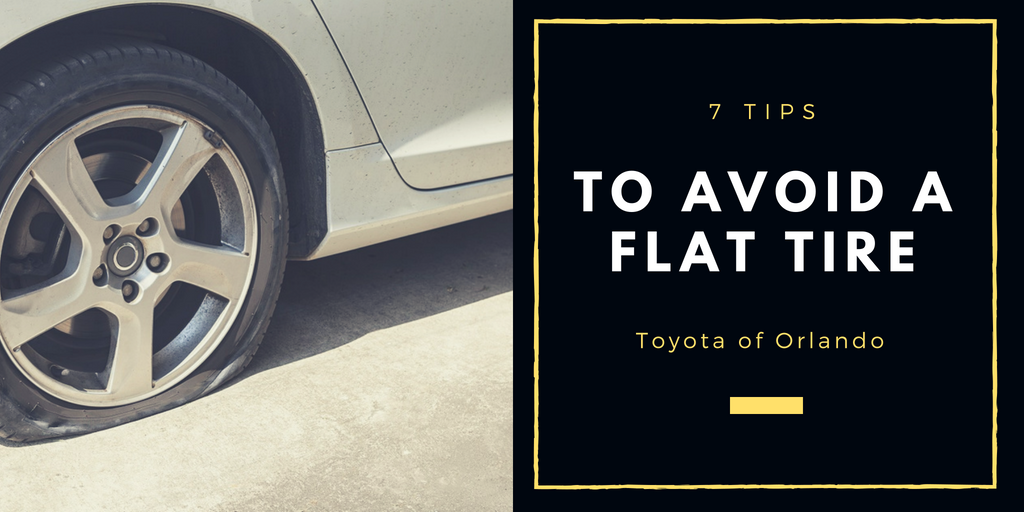
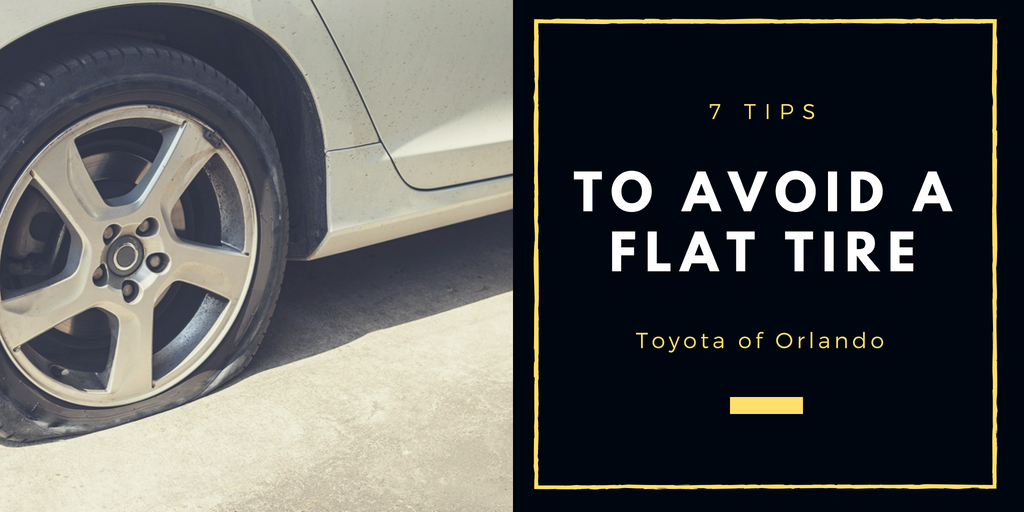
Chances are that at some point in your drive time, you've encountered a flat tire. It's a big inconvenience because not only do you have to change it and put on a spare to get anywhere (or wait hours for a tow truck), you also have to shell out money to replace the tire at an auto service center. We get it - it's a big annoyance. And while it's great to know how to change a flat tire, wouldn't it be even more helpful to know how to prevent them in the first place? Toyota of Orlando is here with 7 tips to help you avoid this emergency drive time situation. Tip #1: Don't buy low-quality tires. Low-quality tires are more likely to end up as flats because they're less durable, less reliable, and also have a shorter lifespan. It may hurt a little to shell out for high-quality tires (although our Orlando Toyota service center can get you a great deal on an affordable set), but it'll hurt more if you end up with a flat tire on an important day. Buy quality tires and get what you pay for! Tip #2: Be sure to keep an eye on the condition of your tires. Always monitor the condition of your tires by giving them a quick once-over on a weekly basis. This is just a visual inspection where you look for warning signs of a flat tire like bubbles, bulging, cracks, or tread that's wearing unevenly. If you spot any of these signs, visit Toyota of Orlando to have our techs inspect things and see what steps need to be taken next. Tip #3: Keep them properly inflated to the correct PSI. When your tires are underinflated, more surface area touches the road. This creates more friction and subsequently, more heat and more wear. This means you're more likely to get a flat! Ensure your tires are inflated to the right PSI, which can be found in your owner's manual. Toyota of Orlando shares tips to help you avoid a flat tire Tip #4: Be careful of where you take your car. Always be aware of where you're driving. Driving around constructions sites is a bad idea because they often have metal, glass, nails, screws, and other sharp objects that can damage your tire lying around. Potholes are another big cause of tire damage, so try to avoid roads that have a lot of them. Tip #6: Sign up for recall alerts via email. Recalls happen, and they happen for a reason - to let you fix the issue before someone gets hurt or something gets damaged. Go to the NHTSA website to sign up for email alerts regarding any recalls on your vehicle or its tires. Tip #7: Don't count on your spare to act as a replacement tire. Your spare is a temporary stop-gap measure meant to get you to your nearest auto service center. They are not meant to travel long distances or at high speeds so replace them with a regular tire as quickly as possible. Don't delay and spend days driving around on one! Ready to shop replacement tires or need help with a flat tire situation? Call Toyota of Orlando today at (407) 298-0001!
Toyota of Orlando tips

7 ways to prevent a flat tire

Chances are that at some point in your drive time, you've encountered a flat tire. It's a big inconvenience because not only do you have to change it and put on a spare to get anywhere (or wait hours for a tow truck), you also have to shell out money to replace the tire at an auto service center. We get it - it's a big annoyance. And while it's great to know how to change a flat tire, wouldn't it be even more helpful to know how to prevent them in the first place? Toyota of Orlando is here with 7 tips to help you avoid this emergency drive time situation. Tip #1: Don't buy low-quality tires. Low-quality tires are more likely to end up as flats because they're less durable, less reliable, and also have a shorter lifespan. It may hurt a little to shell out for high-quality tires (although our Orlando Toyota service center can get you a great deal on an affordable set), but it'll hurt more if you end up with a flat tire on an important day. Buy quality tires and get what you pay for! Tip #2: Be sure to keep an eye on the condition of your tires. Always monitor the condition of your tires by giving them a quick once-over on a weekly basis. This is just a visual inspection where you look for warning signs of a flat tire like bubbles, bulging, cracks, or tread that's wearing unevenly. If you spot any of these signs, visit Toyota of Orlando to have our techs inspect things and see what steps need to be taken next. Tip #3: Keep them properly inflated to the correct PSI. When your tires are underinflated, more surface area touches the road. This creates more friction and subsequently, more heat and more wear. This means you're more likely to get a flat! Ensure your tires are inflated to the right PSI, which can be found in your owner's manual. Toyota of Orlando shares tips to help you avoid a flat tire Tip #4: Be careful of where you take your car. Always be aware of where you're driving. Driving around constructions sites is a bad idea because they often have metal, glass, nails, screws, and other sharp objects that can damage your tire lying around. Potholes are another big cause of tire damage, so try to avoid roads that have a lot of them. Tip #6: Sign up for recall alerts via email. Recalls happen, and they happen for a reason - to let you fix the issue before someone gets hurt or something gets damaged. Go to the NHTSA website to sign up for email alerts regarding any recalls on your vehicle or its tires. Tip #7: Don't count on your spare to act as a replacement tire. Your spare is a temporary stop-gap measure meant to get you to your nearest auto service center. They are not meant to travel long distances or at high speeds so replace them with a regular tire as quickly as possible. Don't delay and spend days driving around on one! Ready to shop replacement tires or need help with a flat tire situation? Call Toyota of Orlando today at (407) 298-0001!
car tires for sale

Which car tires are best for your drive time?

Do you know how to shop for car tires? It can be confusing - there are tons of options out on the market and unless you're extremely familiar with your vehicle's performance needs and the tires that translate, it can be difficult to decide which is best. Toyota of Orlando is here to give you the guidance you need when it comes to buying car tires as well as give you tons of affordable options to choose from. Let's get started! Narrow down your options with Orlando Toyota tips The first thing you should do when starting your car tire shopping process is make a list of what you need in terms of performance capabilities. Here are some questions to ask yourself before you visit our Orlando Toyota service center: What type of weather will I be driving in? Do I need something to handle rain, snow, ice, or any other inclement conditions? How long do I want my tires to last? How important is ride quality (comfort and quiet inside the cabin for you and your passengers) to my overall drive time? Is speed rating going to be an important factor in my final decision? (Speed rating is basically the maximum speed the tires can handle.) How much am I willing and able to spend on new car tires? Once you've answered those questions, it should be a lot easier to narrow your search and settle on a smaller number of options. Our Orlando auto service techs can also give you a hand if you bring the list in when shopping. Types of car tires Next, let's talk about the options available to you! Here are the main types of tires and the purposes they serve. All-season tires: All-weather tires are your go-to if you're a typical driver who hits the road in a climate that doesn't offer too many extremes. They're perfect for here in Central Florida as we don't ever see snow or ice, but we get our fair share of rain (especially in the summer). All-season tires are well-suited for normal, day-to-day driving and also have the best balance when it comes to performance, road noise, comfort, and longevity. Snow/ice/winter tires: If you live in a climate that sees extreme winter weather, you should consider switching out your tires for snow tires every year. They're specifically designed to withstand temperatures that drop low (under 45 degrees on a routine basis) and also have snipes on them. Snipes are special features that help provide you more traction by gripping snow and ice better than the average tire. (Obviously, these don't really matter if you're driving here in Central Florida only.) Off-road tires: Do you take things off the pavement regularly? Consider off-road tires. They're higher resistance, which means they can handle tougher terrains without sustaining punctures or tears, and they can also more pressure as well as slippery surfaces. High-performance tires: If you like to hit the track in your sports car, then high-performance tires are the right choice for your ride. They have a high speed rating and give you superior traction and handling so you can hit high speeds and still retain control of your car. Ready to shop? Call Toyota of Orlando today. We're open seven days a week with the longest service hours in Central Florida at (407) 298-0001.

car tires for sale

Which car tires are best for your drive time?

Do you know how to shop for car tires? It can be confusing - there are tons of options out on the market and unless you're extremely familiar with your vehicle's performance needs and the tires that translate, it can be difficult to decide which is best. Toyota of Orlando is here to give you the guidance you need when it comes to buying car tires as well as give you tons of affordable options to choose from. Let's get started! Narrow down your options with Orlando Toyota tips The first thing you should do when starting your car tire shopping process is make a list of what you need in terms of performance capabilities. Here are some questions to ask yourself before you visit our Orlando Toyota service center: What type of weather will I be driving in? Do I need something to handle rain, snow, ice, or any other inclement conditions? How long do I want my tires to last? How important is ride quality (comfort and quiet inside the cabin for you and your passengers) to my overall drive time? Is speed rating going to be an important factor in my final decision? (Speed rating is basically the maximum speed the tires can handle.) How much am I willing and able to spend on new car tires? Once you've answered those questions, it should be a lot easier to narrow your search and settle on a smaller number of options. Our Orlando auto service techs can also give you a hand if you bring the list in when shopping. Types of car tires Next, let's talk about the options available to you! Here are the main types of tires and the purposes they serve. All-season tires: All-weather tires are your go-to if you're a typical driver who hits the road in a climate that doesn't offer too many extremes. They're perfect for here in Central Florida as we don't ever see snow or ice, but we get our fair share of rain (especially in the summer). All-season tires are well-suited for normal, day-to-day driving and also have the best balance when it comes to performance, road noise, comfort, and longevity. Snow/ice/winter tires: If you live in a climate that sees extreme winter weather, you should consider switching out your tires for snow tires every year. They're specifically designed to withstand temperatures that drop low (under 45 degrees on a routine basis) and also have snipes on them. Snipes are special features that help provide you more traction by gripping snow and ice better than the average tire. (Obviously, these don't really matter if you're driving here in Central Florida only.) Off-road tires: Do you take things off the pavement regularly? Consider off-road tires. They're higher resistance, which means they can handle tougher terrains without sustaining punctures or tears, and they can also more pressure as well as slippery surfaces. High-performance tires: If you like to hit the track in your sports car, then high-performance tires are the right choice for your ride. They have a high speed rating and give you superior traction and handling so you can hit high speeds and still retain control of your car. Ready to shop? Call Toyota of Orlando today. We're open seven days a week with the longest service hours in Central Florida at (407) 298-0001.

car suspension care

Troubleshoot your car's suspension with these 6 tips

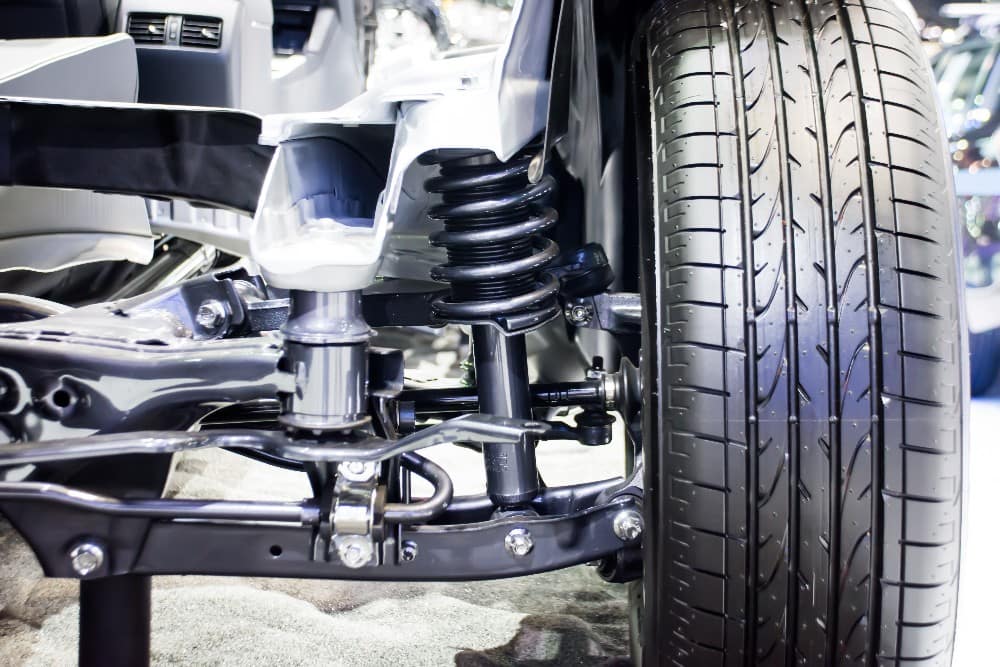
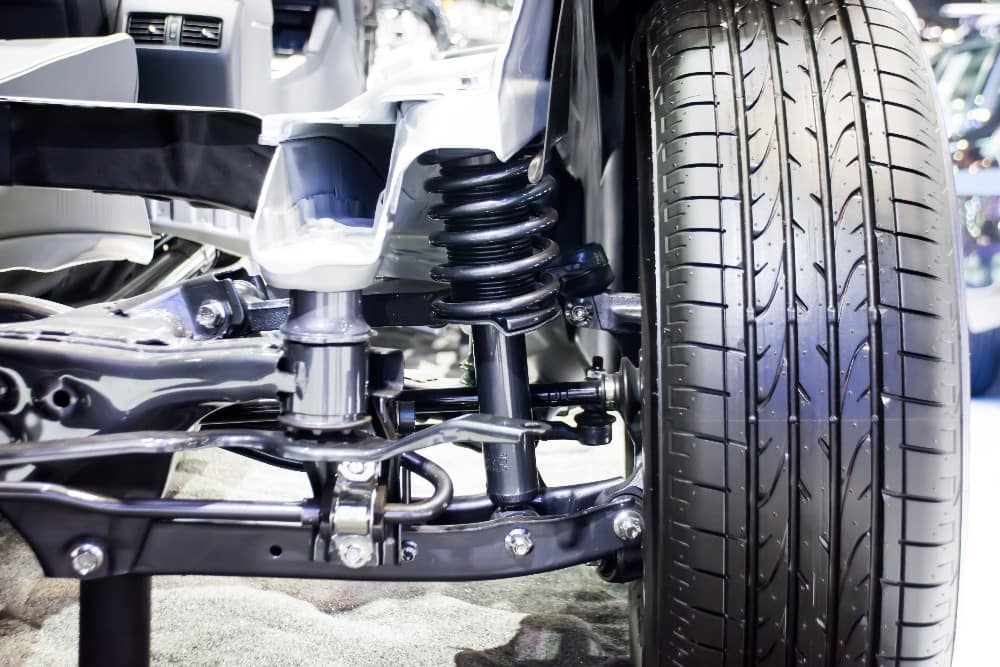
Are you having problems with your car's suspension? You may not even know if you are - unless you're well-versed in car maintenance, it can be tricky to tell what's wrong with your car besides the immediate symptoms. Toyota of Orlando is here to tell you a bit more about this very important car part and also teach you how to troubleshoot it. Check out these tips straight from our auto service specialists! Why is suspension so important to performance? First, let's talk about what your car's suspension actually is. Suspension is a system in your vehicle that allows you to have a smooth and comfortable ride. It also enables you to steer your wheels and maneuver your car, and plays a heavy hand when it comes to braking. Obviously, it's an integral part of your car's performance and when it's not working as it should, it can have some pretty serious effects. There are five main types of suspension - MacPherson Strut, Double Wishbone, Trailing Arm, Leading Arm, and Swing Axle. The most common is MacPherson Strut, followed closely by Double Wishbone. There are also high performance suspensions available if you own a car that's decked out for the track or a truck that has to do some heavy lifting. Let our Orlando auto service techs help you maintain this important part How do you maintain your car's suspension? Easy - just bring it in for routine car maintenance at Toyota of Orlando. Our techs will alert you when you're due for maintenance for this part, but they'll also conduct a multi-point inspection whenever you visit us so if they see any problems developing, they can quickly nip them in the bud before they get costly or complex. Now let's talk troubleshooting. Here are some common signs you may be facing a suspension problem in your ride: Your car is pulling to one side - if you take your hands off the wheel, your car drifts to one side of the road of its own volition. You notice that steering your car is more difficult than it usually is. You feel less comfortable in your car - it seems to be riding rougher than usual. You may notice bumps and holes more if there's a problem with your suspension, too. You notice the steering wheel vibrating or shuddering when your car is in motion. You hear noises when you make a turn. These noises may be knocking, clunking, or squealing, and all can indicate an issue. You feel like your steering is "looser" than normal - you have to turn the wheel further to achieve the same turn as before. Think you may need to have your car inspected? We can help. Our Toyota Service Center is open seven days a week with the longest service hours in Central Florida - and we're conveniently located just off I-4 near the Millenia Mall at 3575 Vineland Road. Call to set up an appointment today, and don't forget about about our money-saving service specials! We're waiting at (407) 298-0001.

car suspension care

Troubleshoot your car's suspension with these 6 tips

Are you having problems with your car's suspension? You may not even know if you are - unless you're well-versed in car maintenance, it can be tricky to tell what's wrong with your car besides the immediate symptoms. Toyota of Orlando is here to tell you a bit more about this very important car part and also teach you how to troubleshoot it. Check out these tips straight from our auto service specialists! Why is suspension so important to performance? First, let's talk about what your car's suspension actually is. Suspension is a system in your vehicle that allows you to have a smooth and comfortable ride. It also enables you to steer your wheels and maneuver your car, and plays a heavy hand when it comes to braking. Obviously, it's an integral part of your car's performance and when it's not working as it should, it can have some pretty serious effects. There are five main types of suspension - MacPherson Strut, Double Wishbone, Trailing Arm, Leading Arm, and Swing Axle. The most common is MacPherson Strut, followed closely by Double Wishbone. There are also high performance suspensions available if you own a car that's decked out for the track or a truck that has to do some heavy lifting. Let our Orlando auto service techs help you maintain this important part How do you maintain your car's suspension? Easy - just bring it in for routine car maintenance at Toyota of Orlando. Our techs will alert you when you're due for maintenance for this part, but they'll also conduct a multi-point inspection whenever you visit us so if they see any problems developing, they can quickly nip them in the bud before they get costly or complex. Now let's talk troubleshooting. Here are some common signs you may be facing a suspension problem in your ride: Your car is pulling to one side - if you take your hands off the wheel, your car drifts to one side of the road of its own volition. You notice that steering your car is more difficult than it usually is. You feel less comfortable in your car - it seems to be riding rougher than usual. You may notice bumps and holes more if there's a problem with your suspension, too. You notice the steering wheel vibrating or shuddering when your car is in motion. You hear noises when you make a turn. These noises may be knocking, clunking, or squealing, and all can indicate an issue. You feel like your steering is "looser" than normal - you have to turn the wheel further to achieve the same turn as before. Think you may need to have your car inspected? We can help. Our Toyota Service Center is open seven days a week with the longest service hours in Central Florida - and we're conveniently located just off I-4 near the Millenia Mall at 3575 Vineland Road. Call to set up an appointment today, and don't forget about about our money-saving service specials! We're waiting at (407) 298-0001.

Orlando auto service tips

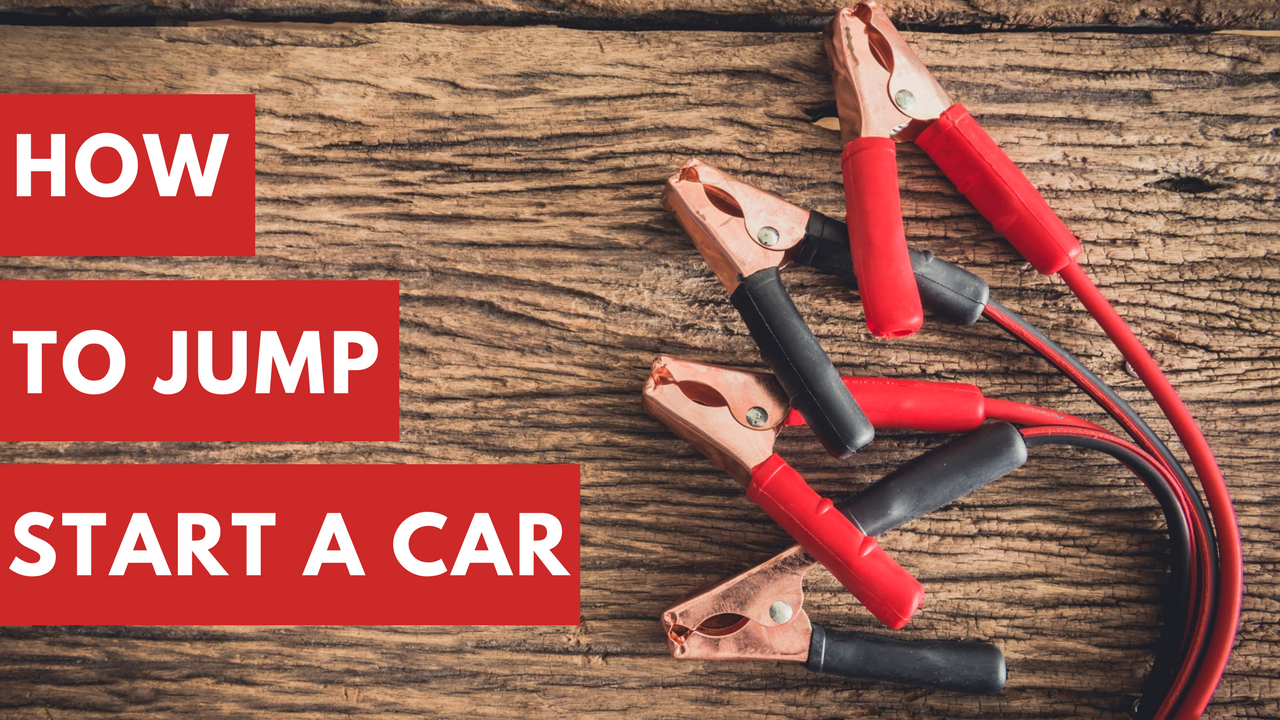
How to jump start a car: Toyota of Orlando tips

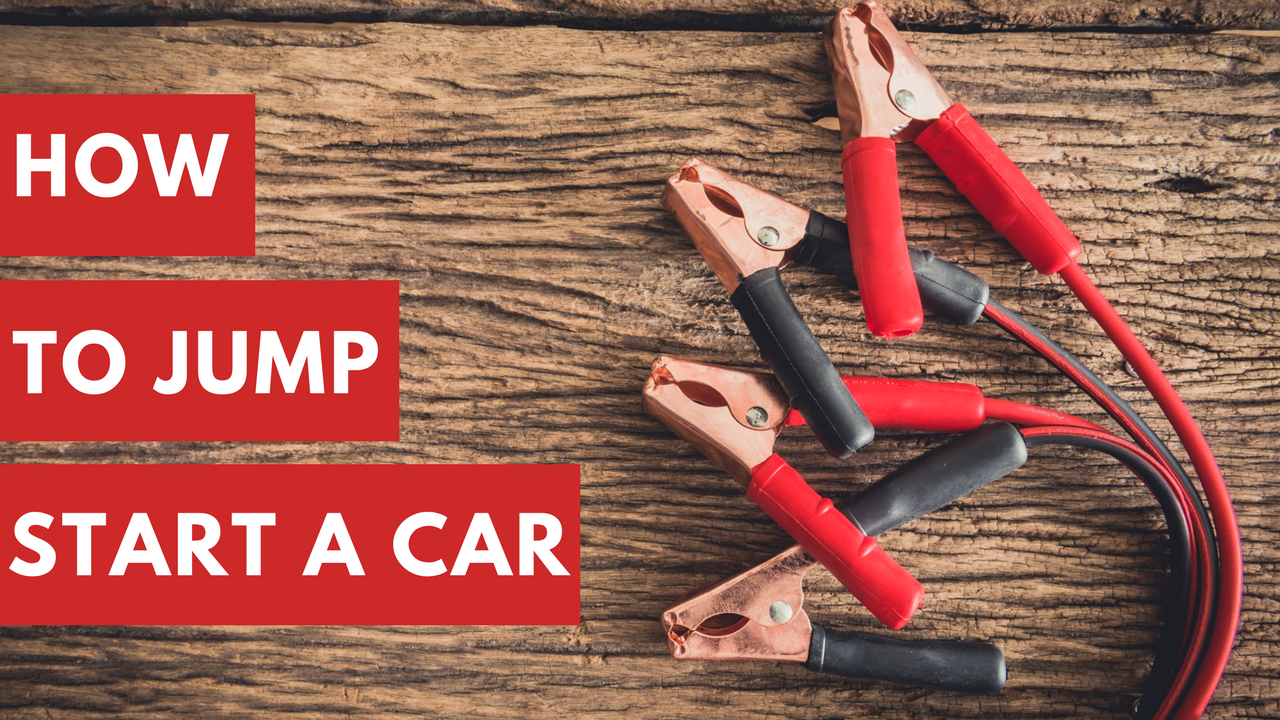
Do you know how to jump-start a car? It's a pretty essential skill. Almost all of us have been in the tight spot where our car battery conks out, we can't get our ride up and running, and we're stuck waiting for a tow truck. However, if you carry jumper cables and know how to jump-start a car, you're a lot more self-sufficient. If you get your car running again, you can bring it straight to our Orlando Toyota service center to have the battery checked and if needed, switched out, instead of sitting around for hours waiting for a tow. Knowing how to jump-start a car will make your drive time safer, easier, and a lot more time- and money-efficient. We've got the step-by-step instructions you need right here! Learn how to jump-start a car, step by step Step #1: Buy jumper cables. You don't want to have to depend on passerby to have them when you need to jump-start a car. Keep them in your trunk at all times. Step #2: Before you hook up the jumper cables, ensure that the car battery is actually the problem. Our Orlando Toyota service specialists recommend checking your fuel level, checking the dashboard for any warning lights, and turning on the headlights. If the headlights glow strong and bright, your issue isn't the battery. If they're dim, flickering, or dead, it's time to jump-start your ride. Step #3: Pop the hood of your car and have the person who's giving you a jump pull up next to you and pop theirs. Make sure the cars are close enough that the jumper cables will reach both batteries and turn both cars completely off. Step #4: Connect one of the RED cables to the POSITIVE terminal on the working battery. Attach the other RED cable to the POSITIVE terminal on the dead battery. Step #5: Connect one of the BLACK cables to the NEGATIVE terminal on the working battery. Attach the other BLACK cable to a metal surface on the car with the dead battery. Keep this cable as far away as possible from the battery and don't attach it to anything in the engine bay. Step #6: Start the working car and let it run for a few minutes, leaving your car off. After a few minutes have elapsed, start your car. Then it's safe to remove the jumper cables in the opposite order - black then red. Step #7: Head straight to our Orlando auto service center to have things checked out. You may have just left a light on in your car, but it's worth having your battery and its voltage checked to ensure it's not going to die again. Orlando battery service is within your reach Need to schedule battery service? Call Toyota of Orlando today - our service center is open seven days a week with the longest hours in Central Florida. <span data-mce-type="bookmark" class="mce_SELRES_start"></span>

Orlando auto service tips

How to jump start a car: Toyota of Orlando tips

Do you know how to jump-start a car? It's a pretty essential skill. Almost all of us have been in the tight spot where our car battery conks out, we can't get our ride up and running, and we're stuck waiting for a tow truck. However, if you carry jumper cables and know how to jump-start a car, you're a lot more self-sufficient. If you get your car running again, you can bring it straight to our Orlando Toyota service center to have the battery checked and if needed, switched out, instead of sitting around for hours waiting for a tow. Knowing how to jump-start a car will make your drive time safer, easier, and a lot more time- and money-efficient. We've got the step-by-step instructions you need right here! Learn how to jump-start a car, step by step Step #1: Buy jumper cables. You don't want to have to depend on passerby to have them when you need to jump-start a car. Keep them in your trunk at all times. Step #2: Before you hook up the jumper cables, ensure that the car battery is actually the problem. Our Orlando Toyota service specialists recommend checking your fuel level, checking the dashboard for any warning lights, and turning on the headlights. If the headlights glow strong and bright, your issue isn't the battery. If they're dim, flickering, or dead, it's time to jump-start your ride. Step #3: Pop the hood of your car and have the person who's giving you a jump pull up next to you and pop theirs. Make sure the cars are close enough that the jumper cables will reach both batteries and turn both cars completely off. Step #4: Connect one of the RED cables to the POSITIVE terminal on the working battery. Attach the other RED cable to the POSITIVE terminal on the dead battery. Step #5: Connect one of the BLACK cables to the NEGATIVE terminal on the working battery. Attach the other BLACK cable to a metal surface on the car with the dead battery. Keep this cable as far away as possible from the battery and don't attach it to anything in the engine bay. Step #6: Start the working car and let it run for a few minutes, leaving your car off. After a few minutes have elapsed, start your car. Then it's safe to remove the jumper cables in the opposite order - black then red. Step #7: Head straight to our Orlando auto service center to have things checked out. You may have just left a light on in your car, but it's worth having your battery and its voltage checked to ensure it's not going to die again. Orlando battery service is within your reach Need to schedule battery service? Call Toyota of Orlando today - our service center is open seven days a week with the longest hours in Central Florida. <span data-mce-type="bookmark" style="display: inline-block; width: 0px; overflow: hidden; line-height: 0;" class="mce_SELRES_start"></span>

Learn how to prevent brake failure

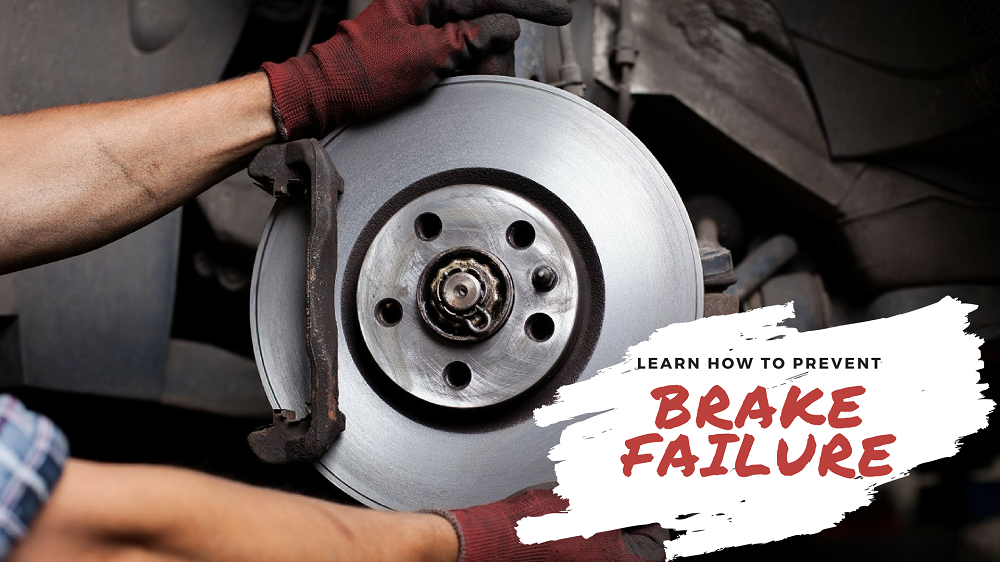
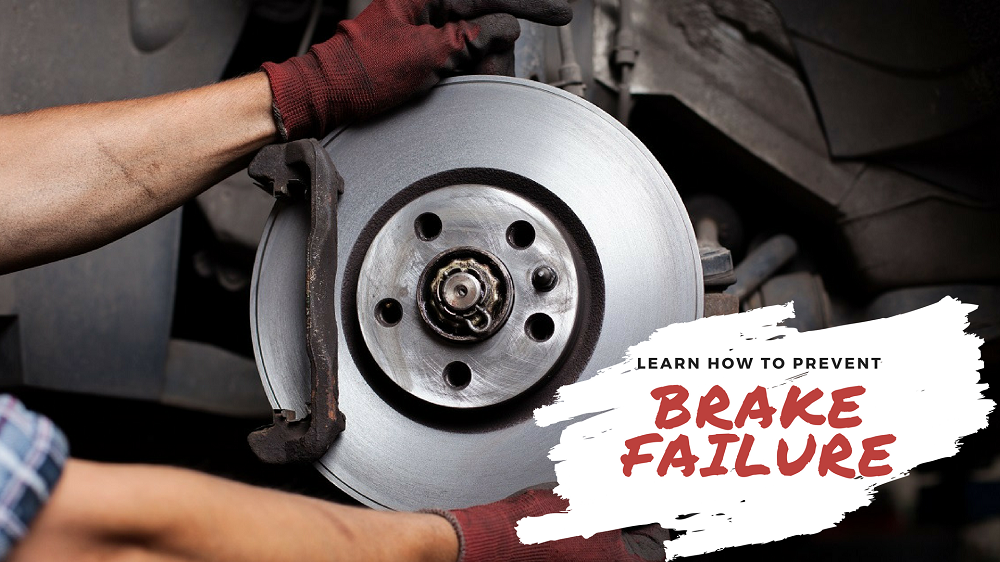
How to prevent brake failure (and what to do if it happens anyway)

Have you ever been in the driver's seat when brake failure happens? It can be downright terrifying. After all, being able to bring your car to a quick and efficient stop is an integral part of drive time safety. Toyota of Orlando is here to help you prevent this scary situation and also give you tips on how to react if you should someday face brake failure in your vehicle. Orlando auto service can save your brakes There are two main ways to prevent brake failure, and they're fairly simple (and affordable). Pay attention to how your car is handling. Do your brakes seem "mushy" or non-responsive when you hit them? You should be able to tap them and get a reaction out of your vehicle. If you're finding that you have to press hard to bring your car to a safe stop, it's time to schedule Orlando brake service to have our techs check them out and see how they can tune them up again. Get routine auto service. It's important to change out your brake pads when the time calls for it, check brake fluid, inspect rotors, and make sure the entire braking system is in excellent shape. When you slack on car care, your performance will suffer accordingly... and potentially lead to brake failure. How to handle brake failure So, what if you do all of this and you still find yourself in this dangerous situation? Here are some Orlando Toyota tips to help you bring your car safely to a stop. Use your horn. Once you've realized your brakes have failed, immediately use your horn to alert other motorists that you're headed in their direction and that you're not able to slow your car. This will help them get out of the way and reduce your chances of a collision. Downshift. In a manual car, you can achieve this by using the stick. In an automatic, taking your foot off the gas will ease the RPMs and your car should automatically shift to a lower gear. Either way, it helps slow your vehicle down. Try pumping the brakes. 3-4 hard pumps may switch your brakes back into action if you don't have an ABS system in your vehicle. Use your emergency brake but BE CAREFUL. If you're traveling at a high speed or your brake is powerful, it can cause you to skid. Bottom line, don't yank it or slam it - gently pull or push (depending on what type of e-brake you have) to help slow your car. Pull off to the side of the road to get out of the way of other motorists and bring your car to a complete stop. DO NOT try to drive it again - call a tow truck and get it into Toyota of Orlando's service center. And remember, if you're experiencing brake failure you should never: Turn your car off - this will get rid of power steering and increase the hazard in your situation. Shift to neutral - this will keep your car from downshifting and slowing. You'll keep coasting at a high speed. Have questions or need to schedule Orlando brake service? Call us today! We're open seven days a week for your convenience at (407) 298-0001.

Learn how to prevent brake failure

How to prevent brake failure (and what to do if it happens anyway)

Have you ever been in the driver's seat when brake failure happens? It can be downright terrifying. After all, being able to bring your car to a quick and efficient stop is an integral part of drive time safety. Toyota of Orlando is here to help you prevent this scary situation and also give you tips on how to react if you should someday face brake failure in your vehicle. Orlando auto service can save your brakes There are two main ways to prevent brake failure, and they're fairly simple (and affordable). Pay attention to how your car is handling. Do your brakes seem "mushy" or non-responsive when you hit them? You should be able to tap them and get a reaction out of your vehicle. If you're finding that you have to press hard to bring your car to a safe stop, it's time to schedule Orlando brake service to have our techs check them out and see how they can tune them up again. Get routine auto service. It's important to change out your brake pads when the time calls for it, check brake fluid, inspect rotors, and make sure the entire braking system is in excellent shape. When you slack on car care, your performance will suffer accordingly... and potentially lead to brake failure. How to handle brake failure So, what if you do all of this and you still find yourself in this dangerous situation? Here are some Orlando Toyota tips to help you bring your car safely to a stop. Use your horn. Once you've realized your brakes have failed, immediately use your horn to alert other motorists that you're headed in their direction and that you're not able to slow your car. This will help them get out of the way and reduce your chances of a collision. Downshift. In a manual car, you can achieve this by using the stick. In an automatic, taking your foot off the gas will ease the RPMs and your car should automatically shift to a lower gear. Either way, it helps slow your vehicle down. Try pumping the brakes. 3-4 hard pumps may switch your brakes back into action if you don't have an ABS system in your vehicle. Use your emergency brake but BE CAREFUL. If you're traveling at a high speed or your brake is powerful, it can cause you to skid. Bottom line, don't yank it or slam it - gently pull or push (depending on what type of e-brake you have) to help slow your car. Pull off to the side of the road to get out of the way of other motorists and bring your car to a complete stop. DO NOT try to drive it again - call a tow truck and get it into Toyota of Orlando's service center. And remember, if you're experiencing brake failure you should never: Turn your car off - this will get rid of power steering and increase the hazard in your situation. Shift to neutral - this will keep your car from downshifting and slowing. You'll keep coasting at a high speed. Have questions or need to schedule Orlando brake service? Call us today! We're open seven days a week for your convenience at (407) 298-0001.

What type of motor oil should I use?

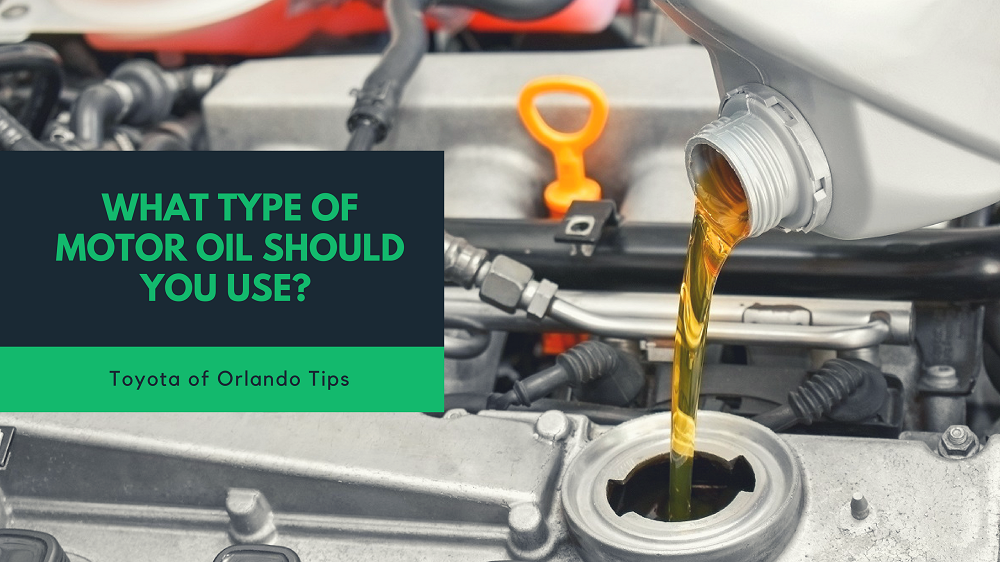
Four types of motor oil (which should you use?)

When it comes to oil changes, most people just know that they need to schedule one when the oil light comes on or when their mechanic sends them a reminder. However, did you know that you can actually choose the type of oil that goes under the hood to best suit your needs and your budget? There are four main types of motor oil available and Toyota of Orlando is here to explain each one of them. That way, you can decide which is best for your car next time you need to schedule an Orlando oil change. What type of motor oil is best for your car? Type 1: Conventional Conventional or regular motor oil used to be the most common type used in cars. It's also the cheapest. However, it works best for drivers who have vehicles with simple engine systems and routine driving styles. Additionally, this type of oil has a shorter lifespan than synthetic. So while it may save you money in the short run, synthetic may save you more money overall. With this type of oil, you'll typically need an oil change every 3,000 to 5,000 miles. Type 2: Synthetic Synthetic oil is what our Orlando Toyota service techs recommend to most customers. While its price tag is a bit higher than conventional, it lasts much, much longer. In some cases, it can last up to 10,000 miles without a problem! This type of oil is chemically engineered (as opposed to being made from natural fossil fuels) and thus provides a cleaner performance with less residue. It also handles cold and hot weather extremes better and in some cases, can even improve your car's performance overall. Type 3: Synthetic Blend This is exactly what it sounds like - a blend of synthetic and conventional motor oils. It's less costly than a full synthetic oil but still gives you a longer life and cleaner performance with less buildup than a conventional oil. It's sort of the happy medium if you can't choose between the two oils mentioned above and is great for towing and hauling in addition to withstanding cold weather well. Type 4: High Mileage High mileage motor oil is specifically designed for older cars that have a lot of miles on them - specifically, over 75,000 miles. It has a different viscosity so it helps older cars perform better; it prevents oil leaks, helps to keep engine compression where it should be, and also prevents oil burnoff. If you drive a late-model car or have a newer one with lots of miles, then this is the perfect choice for you. Schedule your quick oil change at Toyota of Orlando Ready to schedule an Orlando oil change? Don't put off this very important service. Call us today at (407) 298-0001 or swing by 3575 Vineland Road, just off I-4 near the Millenia Mall. We're open seven days a week for your convenience and have great auto service specials waiting to save you money.

What type of motor oil should I use?

Four types of motor oil (which should you use?)

When it comes to oil changes, most people just know that they need to schedule one when the oil light comes on or when their mechanic sends them a reminder. However, did you know that you can actually choose the type of oil that goes under the hood to best suit your needs and your budget? There are four main types of motor oil available and Toyota of Orlando is here to explain each one of them. That way, you can decide which is best for your car next time you need to schedule an Orlando oil change. What type of motor oil is best for your car? Type 1: Conventional Conventional or regular motor oil used to be the most common type used in cars. It's also the cheapest. However, it works best for drivers who have vehicles with simple engine systems and routine driving styles. Additionally, this type of oil has a shorter lifespan than synthetic. So while it may save you money in the short run, synthetic may save you more money overall. With this type of oil, you'll typically need an oil change every 3,000 to 5,000 miles. Type 2: Synthetic Synthetic oil is what our Orlando Toyota service techs recommend to most customers. While its price tag is a bit higher than conventional, it lasts much, much longer. In some cases, it can last up to 10,000 miles without a problem! This type of oil is chemically engineered (as opposed to being made from natural fossil fuels) and thus provides a cleaner performance with less residue. It also handles cold and hot weather extremes better and in some cases, can even improve your car's performance overall. Type 3: Synthetic Blend This is exactly what it sounds like - a blend of synthetic and conventional motor oils. It's less costly than a full synthetic oil but still gives you a longer life and cleaner performance with less buildup than a conventional oil. It's sort of the happy medium if you can't choose between the two oils mentioned above and is great for towing and hauling in addition to withstanding cold weather well. Type 4: High Mileage High mileage motor oil is specifically designed for older cars that have a lot of miles on them - specifically, over 75,000 miles. It has a different viscosity so it helps older cars perform better; it prevents oil leaks, helps to keep engine compression where it should be, and also prevents oil burnoff. If you drive a late-model car or have a newer one with lots of miles, then this is the perfect choice for you. Schedule your quick oil change at Toyota of Orlando Ready to schedule an Orlando oil change? Don't put off this very important service. Call us today at (407) 298-0001 or swing by 3575 Vineland Road, just off I-4 near the Millenia Mall. We're open seven days a week for your convenience and have great auto service specials waiting to save you money.

Contact Us

Fill out this form below and we'll contact you shortly
*Required Fields