

Blog

All Toyota of Orlando's Tips Toyota of Orlando News New Toyota Toyota Service Orlando Toyota Service Used Cars Toyota of Orlando Service Toyota of Orlando Body Shop
hybrid trucks

How is the Tundra hybrid system different from the Prius hybrid system?

When you think of a hybrid vehicle, chances are that the first quality that comes to mind is either fuel efficiency or eco-friendliness. Since the inception of the Orlando Toyota Prius waaaay back in the early 2000's, hybrids have been synonymous with those two ideas. However, new innovations and new vehicles - like the 2022 Toyota Tundra - are evolving the hybrid system to better suit a wide range of drivers, not just those who want to save on gas or cut down on emissions. Which should you consider: The Toyota Tundra Hybrid or Toyota Prius? So how is the hybrid system in a new Toyota Tundra different from that in a Toyota Prius? Toyota of Orlando is here to break down the basics and explain. Let's compare the two cars in terms of performance first. The Orlando Toyota Prius, renowned for its fuel efficiency, gets an incredible 58/53 mpg and offers 121 horsepower. On the other hand, the new Toyota Tundra Hybrid will offer slightly less fuel efficiency (exact numbers have yet to be released) but offers an unbelievable 437 horsepower and 583 lb-ft torque. But how? Fuel efficiency and performance abilities seem to be on opposite ends of the spectrum... so how is it possible to get both? Basically, it boils down to the way the hybrid systems are set up. We're going to keep things basic here (if you want to get super granular, come talk to our Orlando Toyota sales specialists). Here's the breakdown. Hybrid cars like the Toyota Prius, Toyota Corolla Hybrid, etc. have a dual-motor setup. The first motor takes power from the engine and converts it over to the battery to give you that coveted electrical power. The second motor is connected directly to the wheels to power them. Instead of the engine solely sending torque to the wheels, the path is - for the most part - electrical. That's why while you'll get great fuel efficiency in this type of setup, it's not renowned for horsepower or torque. So how does the Orlando Toyota Tundra Hybrid offer such exceptional performance? The main difference is that the path that sends power (you know, the one that's mostly electric in the Prius) is mechanical. There's a single motor in this performance-driven truck, and there's a clutch in between it and the engine. If the clutch is open, the engine can turn off and the electric motor takes over to send power to the wheels. If the clutch is closed because the truck needs that internal combustion power, the twin-turbo V6 engine kicks into life to mechanically send power to the wheels. While one of these hybrid systems offers exceptional fuel efficiency and normal performance, the other offers exceptional performance and enhanced fuel efficiency. So which is better for you? The best way to decide is to take a test drive at our Orlando Toyota dealership or chat with one of our sales specialists. Test drive the hybrid of your dreams at Toyota of Orlando Ready to make it happen? Call Toyota of Orlando to explore our hybrid vehicles today. We're open seven days a week at (407) 298-4500 and conveniently located just off I-4 near the Millenia Mall at 3575 Vineland Road.
hybrid trucks

How is the Tundra hybrid system different from the Prius hybrid system?

When you think of a hybrid vehicle, chances are that the first quality that comes to mind is either fuel efficiency or eco-friendliness. Since the inception of the Orlando Toyota Prius waaaay back in the early 2000's, hybrids have been synonymous with those two ideas. However, new innovations and new vehicles - like the 2022 Toyota Tundra - are evolving the hybrid system to better suit a wide range of drivers, not just those who want to save on gas or cut down on emissions. Which should you consider: The Toyota Tundra Hybrid or Toyota Prius? So how is the hybrid system in a new Toyota Tundra different from that in a Toyota Prius? Toyota of Orlando is here to break down the basics and explain. Let's compare the two cars in terms of performance first. The Orlando Toyota Prius, renowned for its fuel efficiency, gets an incredible 58/53 mpg and offers 121 horsepower. On the other hand, the new Toyota Tundra Hybrid will offer slightly less fuel efficiency (exact numbers have yet to be released) but offers an unbelievable 437 horsepower and 583 lb-ft torque. But how? Fuel efficiency and performance abilities seem to be on opposite ends of the spectrum... so how is it possible to get both? Basically, it boils down to the way the hybrid systems are set up. We're going to keep things basic here (if you want to get super granular, come talk to our Orlando Toyota sales specialists). Here's the breakdown. Hybrid cars like the Toyota Prius, Toyota Corolla Hybrid, etc. have a dual-motor setup. The first motor takes power from the engine and converts it over to the battery to give you that coveted electrical power. The second motor is connected directly to the wheels to power them. Instead of the engine solely sending torque to the wheels, the path is - for the most part - electrical. That's why while you'll get great fuel efficiency in this type of setup, it's not renowned for horsepower or torque. So how does the Orlando Toyota Tundra Hybrid offer such exceptional performance? The main difference is that the path that sends power (you know, the one that's mostly electric in the Prius) is mechanical. There's a single motor in this performance-driven truck, and there's a clutch in between it and the engine. If the clutch is open, the engine can turn off and the electric motor takes over to send power to the wheels. If the clutch is closed because the truck needs that internal combustion power, the twin-turbo V6 engine kicks into life to mechanically send power to the wheels. While one of these hybrid systems offers exceptional fuel efficiency and normal performance, the other offers exceptional performance and enhanced fuel efficiency. So which is better for you? The best way to decide is to take a test drive at our Orlando Toyota dealership or chat with one of our sales specialists. Test drive the hybrid of your dreams at Toyota of Orlando Ready to make it happen? Call Toyota of Orlando to explore our hybrid vehicles today. We're open seven days a week at (407) 298-4500 and conveniently located just off I-4 near the Millenia Mall at 3575 Vineland Road.

Toyota of Orlando tips

Traffic fatalities are at an all-time high - so what can we do about it?

Bad news on the driving front today - traffic fatalities are at an all-time high, which means it's of the utmost importance that you not only drive a safe car but also know the ins and outs of defensive driving and how to conduct yourself when you're behind the wheel. Luckily, we've got both the info and the tips to help you stay safe on the open road - check it out. Why are traffic fatalities so high? The U.S. government reported yesterday that traffic deaths totaled over 31,000 for the first nine months of 2021, an all-time high that's 12% higher than the same time frame in 2020. Why? The NHTSA mostly attributes it to reckless driving, distracted driving, and bad behavior like not abiding by speed limits or wearing a seatbelt. The Secretary of Transportation, however, says that traffic fatalities can be reduced by safer roads, higher safety standards for cars, and new tech like automated braking in cars. But good news, especially if you're an Orlando Toyota driver. Everyone knows that safety is one of Toyota's top priorities; they even have an entire institute devoted to it in Ann Arbor, Michigan. And Toyota put out a press release describing yet another advancement in their safety tech research - they successfully programmed a car to drift autonomously on its own, which could mean fewer traffic fatalities due to black ice, hazardous road conditions, and collisions with other objects or vehicles. Toyota of Orlando tips for road safety So what does this mean for you as a driver? With traffic fatalities so high, it's imperative that you take two major steps: Ensure your car has the safety features you need, and take every safety measure you can when you're behind the wheel. If you drive an Orlando Toyota, you're already in a good place. All of our cars come decked out with incredible safety tech and options, including features like the Pre-Collision System, Dynamic Cruise Control, Toyota Safety Sense, Advanced Airbag Systems, and more to ensure you drive as safely as possible AND have the security you need should you get into a collision. Ensure you're on your best behavior when you're behind the wheel. This means putting your defensive driving skills to use every single time you get into the driver's seat, and also ignoring distractions. Here are a few quick tips: Put away your phone and focus on the road - your hands should be on the wheel and your eyes on the road. ALWAYS buckle up, and don't leave your driveway or parking spot until all of your passengers are buckled up as well. Follow the speed limits. They're there for a reason - to ensure you're moving at a speed at which you can still control your car and react accordingly to avoid an accident. Use your turn signal to indicate your movements on the road so other drivers know if they need to get out of your way. Put aggressive driving to bed - it's better to be late and stay safe than to rush or drive aggressively and get into a possibly-fatal collision or crash. Want more tips or think it's time to get yourself into a safe new Toyota? Call Toyota of Orlando today at (407) 298-4500. We're open seven days a week and conveniently located at 3575 Vineland Road, so feel free to pop by and see how our incredible safety technology works in person!

Orlando Toyota tips

Out-of-state car accidents: A quick guide

Getting into a car accident is a stressful enough situation in itself, but if you're out of state for work or vacation, it's even worse. New rules and laws may apply, insurance may hit a few snags, and on top of that, you have to figure out whether or not you can make it home. That's why the body shop at Toyota of Orlando has put together this quick guide on how to deal with a car accident out of state. Read on! Luckily, you treat out-of-state car accidents pretty similar to ones in your hometown, albeit with a few small tweaks. Here's what the experts at our Orlando Toyota Collision Center recommend. How to deal with an out-of-state car accident Step #1: Check to see that everyone is OK. Was anyone in your car harmed during the accident? Your first step before you do anything else should be to check yourself and all of your passengers for injuries. Once you've done that, you should move your car off the road if possible. If you can't, remove yourself and your passengers to a safe spot on the side of the road that's far away from oncoming traffic. Step #2: Call police to have them come to the scene. You'll need police documentation of the car accident for your car insurance company regardless of whose fault it was. You can call 911 or the local non-emergency number to request that an officer come to the scene of the car accident. Be sure to get their name and a copy of the accident report before they leave the scene. Step #3: Document everything with photos and video. Now's the time to break out your phone and document EVERYTHING. Be sure to get photos/videos of the damage to both cars and the scene of the accident. You'll also want to write down a detailed account of what happened while it's fresh in your memory, as well as get the names and contact information of any witnesses to the accident. Further, get the name, contact info, and insurance info of the other driver, as well as the make, model, color, and license plate number of the other vehicle. Step #4: Decide if your car can make it home or not. If you have your own car out of state and you get into a car accident, can you make it home with the sustained damages? If it was a fender bender, you likely can. However, you definitely want to get your Orlando Toyota checked at a body shop when you get back to your hometown to ensure there aren't any hidden damages or issues that you didn't notice. And if you notice an issue while on the road, stop at your nearest mechanic to have things checked before you go any farther. Step #5: Contact the right people. Regardless of if it's your car or a rental, you'll definitely need to contact your insurance company to let them know about the accident so you can get the repair process started. If it's a rental car, you'll want to contact the rental agency as well. And if you borrowed a car through a rental service like Turo, you'll want to contact the owner of the vehicle to determine the next steps. Schedule repairs at Toyota of Orlando today Need repairs after a car accident? Whether you're out of state and visiting Orlando or live locally, we've got your back. Contact Toyota of Orlando today at (407) 298-6006 or stop by and see us at 3575 Vineland Road!

What To Do If Your Steering Wheel Locks

What To Do If Your Steering Wheel Locks.

It's all happened to us. We're gathering our keys, wallets, purses, water bottles and sprinting out of our homes to quickly make it to our destinations. You get that feeling of relief as you check your estimated time of arrival, and you feel thankful that you will make it to your destination on time. Then, ironically, you turn on your car, and the key or steering wheel won’t budge. Unfortunately, it won't turn, and you can feel your cortisol levels rising. Life has a funny way of testing our patience. This situation might seem like your Orlando Toyota car has broken down, but not all hope has been lost. However, what is happening is that your Orlando Toyota's steering wheel has been locked. So, if you ever turn on your car and the key or steering wheel won't move, our experts got you with car tips that will save you worry and a call to AAA. Why does this happen? This feature of your Orlando Toyota is there as a precaution if you're parked on an incline. This safety feature will save your car from rolling down a hill if your brakes fail. It also helps to keep thieves from stealing your car! It can happen if you turn your steering wheel too far to one side after you take your keys out of your Orlando Toyota. How to fix your locked steering wheel Follow these steps, and your Orlando Toyota will be good to get going to your destination! Step 1. Put your key into the ignition. Gently put your key into the car. Start wiggling the steering wheel back and forth to see which direction the steering wheel will turn. Try turning it with a lot of force, I promise it won't break your wheel! Step 2. Turn your steering wheel to a direction with one hand. After that, go ahead and steer your wheel in the direction your wheel would go. So, if it moves slightly to the right, put your hand on the left side of the steering wheel and push it towards the right side with one hand. Step 3. Then, put the key into the ignition with the other hand. As you are doing that, go ahead and put the key in with your other hand. Step 4. It should unlock! If you follow these steps, it should unlock your steering wheel, and you'll be able to start driving to your destination. If it doesn't work, try it a few times if needed. Remember, turn your wheel with a lot of force! After that, your Orlando Toyota should be ok. And there you have it! Our experts are always here to help you in any car scenario. Still, having issues with your car? Call us if you have any questions at (407) 298-4500. We're here for you! We are located just off the I-4 near the Millenia Mall. Also, you can follow us on socials for more car tips @Toyotaoforlando.

driving in snow

Six winter driving myths you shouldn't fall for

Winter is here - yup, even in Florida - and with it bringing its own set of driving challenges. Driving in winter weather is a whole different ball game, especially if you're headed out into snow, ice, or sleet. Our Orlando Toyota experts are here with tips to help you figure out what's fact and what's fiction when it comes to winter driving myths. Toyota of Orlando busts winter driving myths Myth #1: You have to warm up your car before you can drive it. Nope! This is a pretty common winter driving myth, but believe it or not, your car only needs about 20 seconds to get up and running and get oil moving through the engine. You don't have to sit and let the engine idle to be prepared for the open road - you can essentially start your car and go. (But if you still want to use this excuse to chill and scroll while you wait, we get it.) Myth #2: Pouring hot water on your windshield is an easy way to get rid of frost or ice. For the love of God, DO NOT do this. If your windshield is icy or frosted, that means the glass is cold, too. Pouring boiling or even super hot water over it will create an instant temperature change which can cause your windshield to crack or even shatter from the huge, instantaneous shift. DON'T DO IT. Break out your ice scraper or even a credit card to clear your windshield. And don't use your wipers, either - the ice can damage the blades. Myth #3: Deflate your tires to a lower PSI for better traction. Some people think that deflating their tires a little gives them better traction because the lower the PSI, the more surface area of the tire there is touching the road. Not the case - partially deflated tires actually have LESS traction because the tread can't perform as it should (and you'll also kill your fuel efficiency). Leave your tires inflated to the proper PSI! Myth #4: You can also put sandbags in your trunk for better traction. Drivers who have to deal with slippery winter driving conditions like snow and ice have probably heard the myth that putting sandbags in the trunk for extra weight will improve handling. However, as most cars today are front-wheel drive or four-wheel drive, this is unnecessary and actually throws your car out of balance. This can make handling a lot more difficult than it needs to be and leave you more prone to getting into an accident. Myth #5: You can use cruise control in icy or snowy weather. NOPE. Cruise control is not meant for winter driving - it's meant for dry, clear, and flat conditions where you can easily maintain a constant speed (aka no stoplights). Cruise control in winter weather is a bad idea; when the roads are slippery, you need complete control over your vehicle at all times. Myth #6: Don't worry about winter weather if you have four-wheel drive. Again, not true. While four-wheel drive is a great quality to have in your Orlando Toyota, especially if you're driving in snow, it's not going to save you from spinning out or losing control. Use it as a complement to safe, defensive driving rather than an excuse to drive as you normally would and hope that your four-wheel drive capabilities will save you from a collision. Schedule winter car service today at Toyota of Orlando Have questions about winter driving or need to get your car prepped? Call Toyota of Orlando today at (407) 298-0001. Our Orlando Toyota service center is open seven days a week at 3575 Vineland Road, just off I-4 near the Millenia Mall!

roadside emergency

What you should do if your car runs out of gas

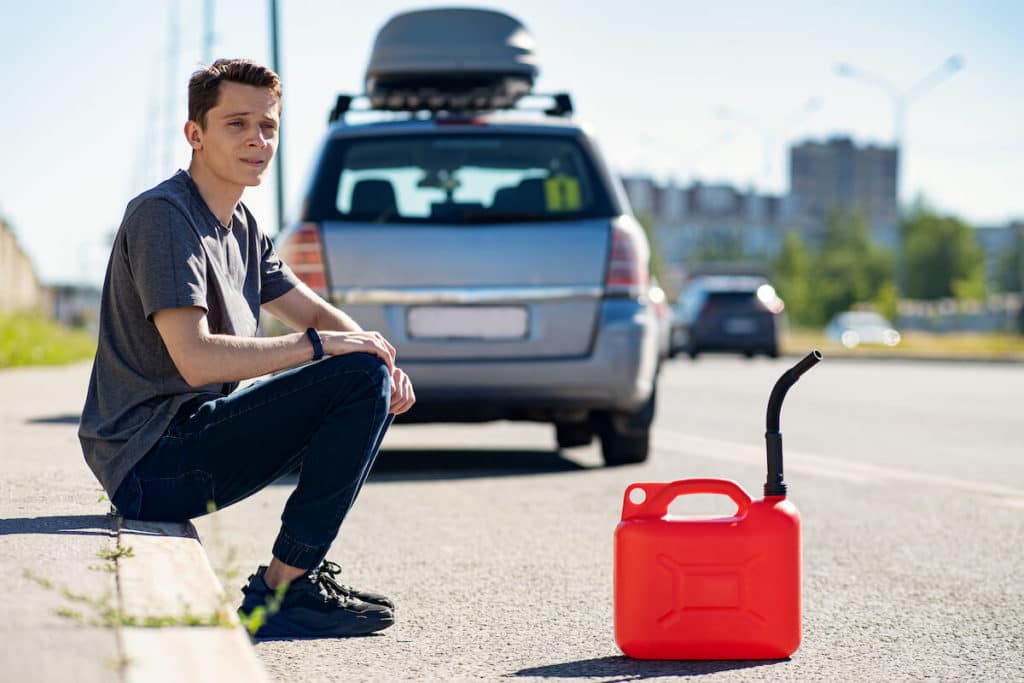
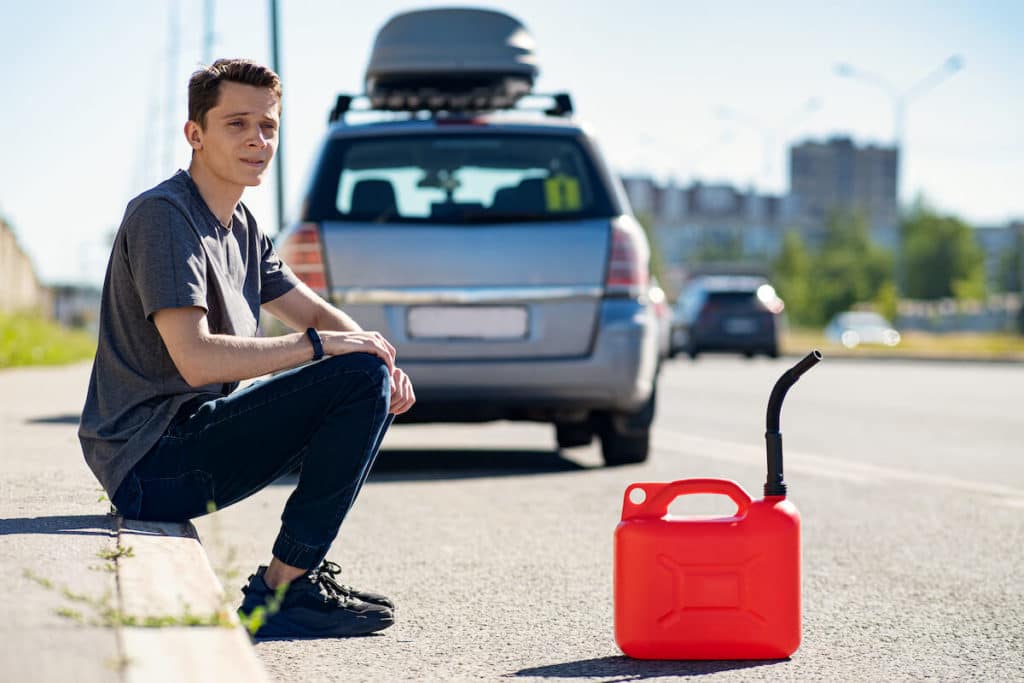
Have you ever run out of gas in your car? And we mean completely run out - not coasting into the gas station parking lot on fumes,  but literally having to stop on the side of the road because your car just can't make it any farther. Plenty of us have been there and for many reasons; it could be a broken gas gauge, an overestimation of how far you can get before filling up, or even just plain forgetting to fill your tank. It happens, but that doesn't make it any less stressful. So how should you handle this roadside emergency? Check out the tips from the experts at Toyota of Orlando. Four signs your car is about to run out of gas First, you have to know the signs that your car is about to run out of gas. Here are the main ones: Sputtering noises coming from the engine Backfiring noises coming from the tailpipe Jerking, surging motions (like sudden acceleration that only lasts a second or two) A lack of power or acceleration (when you hit the gas nothing happens) Now let's talk about what you should do if your Orlando Toyota runs out of gas and how to safely handle the situation with as little stress as possible. Toyota of Orlando tips for this roadside emergency #1: Pull off the road and out of the way of traffic. Your first priority when you notice that your Orlando Toyota is about to run out of gas is to get OFF the road. Find a safe spot to pull over and park; you should look for a flat spot that's free of sand and mud and gives you enough space to stay far away from traffic, especially if you're on the highway. If it's nighttime, try to find a well-lit space as well. Once you've parked, pull your emergency brake, turn on your hazard lights, and turn your steering wheel so your wheels are pointed AWAY from the road - the way on the slim chance someone hits you, you won't be pushed into traffic. #2: Figure out your exact location. You'll need to tell whoever is helping you exactly where you are, so figure it out before you make the call. If you're calling a friend or family member, you can always share your location with them on your smartphone. If you're calling for roadside assistance,  you can use the addresses of local businesses and cross streets to identify your location or if you're on the highway, exits and mile markers. #3: Decide who you're going to call for help. Who will you call to get you out of this pinch? Luckily, you've got options. You can call family or a friend to bring you a gas can full of fuel, or you can opt for roadside assistance. If you have AAA they offer fuel delivery and so do companies like Mach1. You may even want to check with your car insurance - they could have an option for free roadside assistance or towing. Worst case, you can try to walk to the nearest gas station for fuel. However, remember to stick to the sidewalks as often as you can and if you're on the highway, stay as far away as possible from traffic. Have questions? Toyota of Orlando has answers. Call us today at (407) 298-4500 or stop by and see us at 3575 Vineland Road. We're just off I-4 near the Millenia Mall!

Contact Us

Fill out this form below and we'll contact you shortly
*Required Fields