



If you own a car, you’re probably familiar with the basics of what’s going on under the hood. You know you need routine oil changes, tire rotations, brake checks, and battery service. But do you know what’s going on when it comes to your car belts? The belts in your car play a critical role in performance, and if they’re not in top shape, they can keep it from running properly. Not only that, car belts that are worn or damaged can actually lead to expensive repairs down the road.
Here at Toyota of Orlando’s service center, our techs believe that every driver should have a basic understanding of how cars work and what each part does. Check out our beginner’s guide to car belts – we’re running through what they are, how they work, how to spot trouble, and when to schedule car belt service. Let’s get into it!
Car Belts: What Are They?
Let’s make things as simple as possible starting out. Car belts are basically reinforced rubber belts that send power from your car’s engine to other parts of your ride. As your engine runs, these belts spin pulleys, and these pulleys power other systems. All in all, belts keep your car running smoothly.
Sounds pretty simple, right? Here’s another fun fact – modern car belts are built to stand up against friction, heat, and thousands of miles on the road… but they don’t last forever, just like anything else. With time and wear, they can stretch, wear out, or get damaged by heat.
Car belts vary from car to car, but depending on your ride, you might have one or more of these common ones:
- Serpentine belt
- Timing belt (or a timing chain on many newer Toyota models)
- Drive belt
- Alternator belt
Some car belt names are used interchangeable, but all of them serve a different purpose and our Orlando Toyota service techs are here to explain them.
The Serpentine Belt: One of the Most Important Car Belts
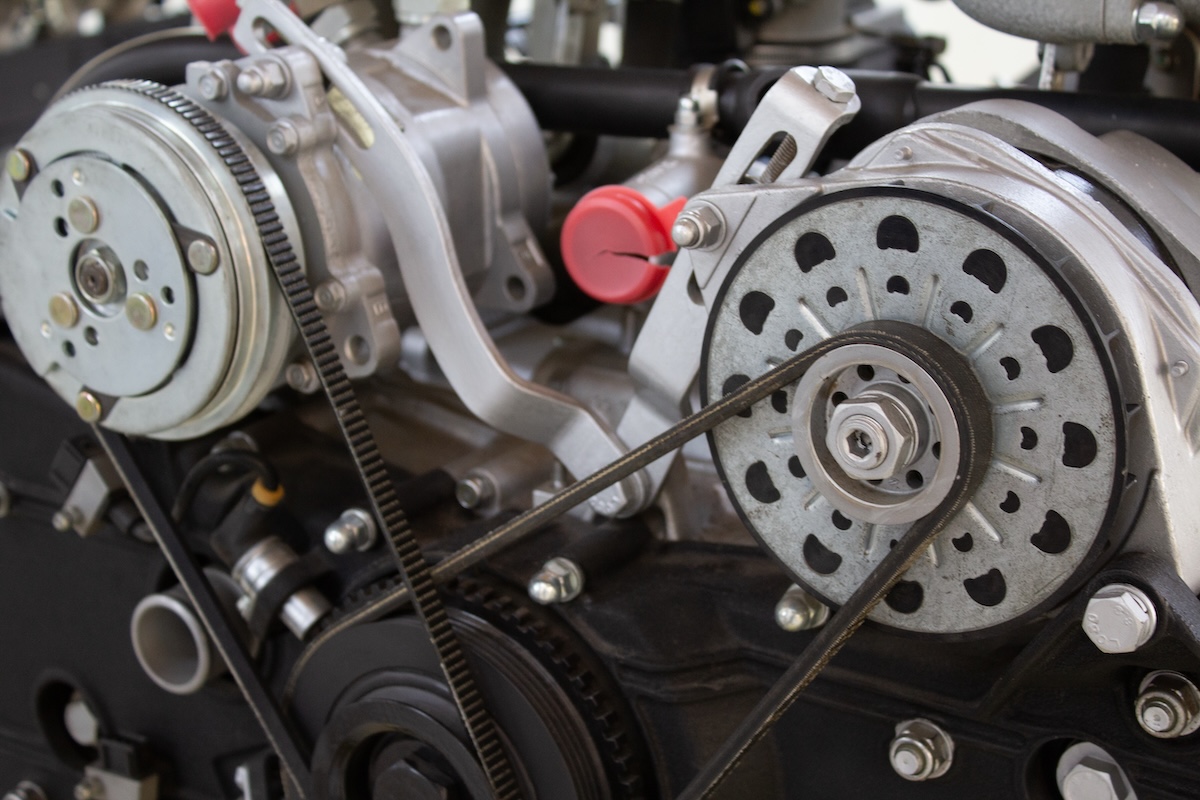
The serpentine belt is one of the most critical car belts in your vehicle. While older cars might use several separate belts, today’s Orlando Toyotas can use a single serpentine belt to power multiple parts of your car. These parts can include:
- The alternator
- The air conditioning compressor
- The power steering pump
- The water pump on some vehicles
Why is it called a serpentine belt? Because it snakes around several pulleys in the engine compartment to power multiple parts at once.
Convenient, right? The only drawback is that if the serpentine belt breaks while you’re driving, you’ll have immediate problems, like:
-
- The battery might stop charging because the alternator stops getting power
- Your steering could become difficult if your Orlando Toyota uses hydraulic power steering
- Your car could overheat if your water pump is powered by the serpentine belt
Here’s the good news. Most serpentine belts last between 60,000 to 100,000 miles depending on the conditions you drive in and the miles you put on your car. The best way to keep track of this VIP car belt is to get it regularly inspected (we’ve got you covered at Toyota of Orlando).
The Timing Belt: Keeps It All Together
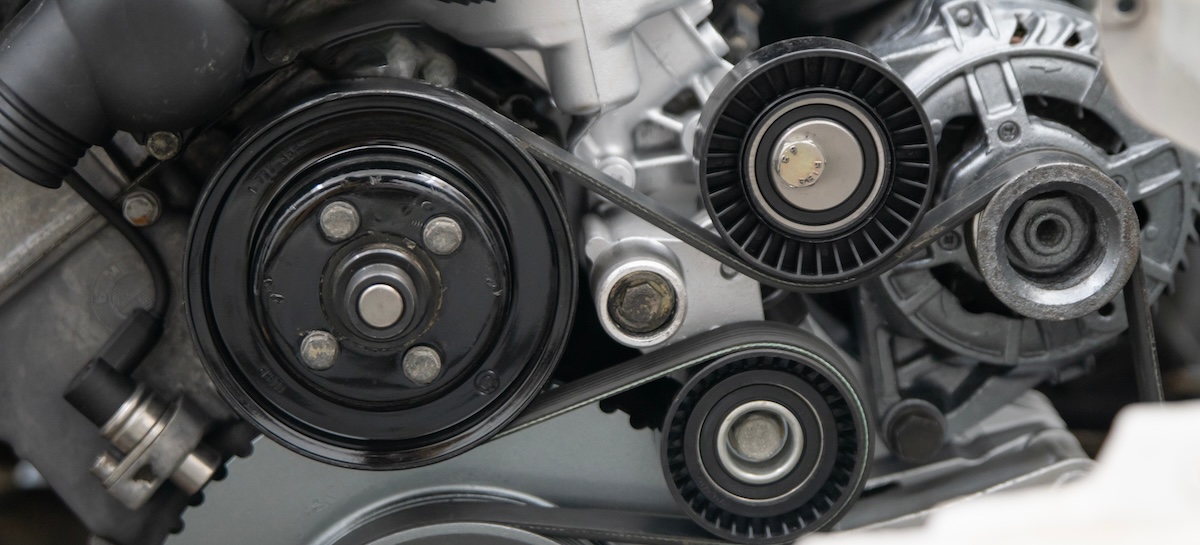
While the serpentine belt powers accessories outside the engine, the timing belt has an entirely different job.
So by now you know that the serpentine belt powers parts outside of your engine, like your alternator. The timing belt has a very different job – it keeps your crankshaft and camshaft synchronized. To put it simply, it makes sure that your Orlando Toyota’s engine valves open and close at the exact right times. The timing here is important for a high-performing engine.
Your timing belt is located inside your engine, behind protective covers (after all, it plays a critical role in performance). However, this makes it hard to inspect during a routine check under the hood. If you think you might have a timing belt issue, it’s important to bring your car to our Orlando auto service center ASAP. If the timing belt fails, it can cause expensive or even irreparable engine damage.
Here’s a spot of hope if you drive a new Toyota – most of our new models use a timing chain instead of a timing belt. Timing chains usually last longer and don’t need as much routine maintenance. Not sure which one you have? Ask one of our Toyota of Orlando techs or check your owner’s manual.
Drive Belt vs Alternator Belt: How Are They Different?
If you’ve heard someone mention a drive belt or alternator belt, don’t be confused.
You may have heard people mention drive belts or alternator belts, and we’re here to clarify.
- The drive belt is another name for the serpentine belt because it powers some of the engine’s accessories.
- The alternator belt is an older term – in older cars, there was a dedicated alternator belt. However, newer cars use the serpentine belt for that.
These names are still commonly used, but usually refer to the serpentine belt at the end of the day.
Warning Signs Your Car Belts Need Service
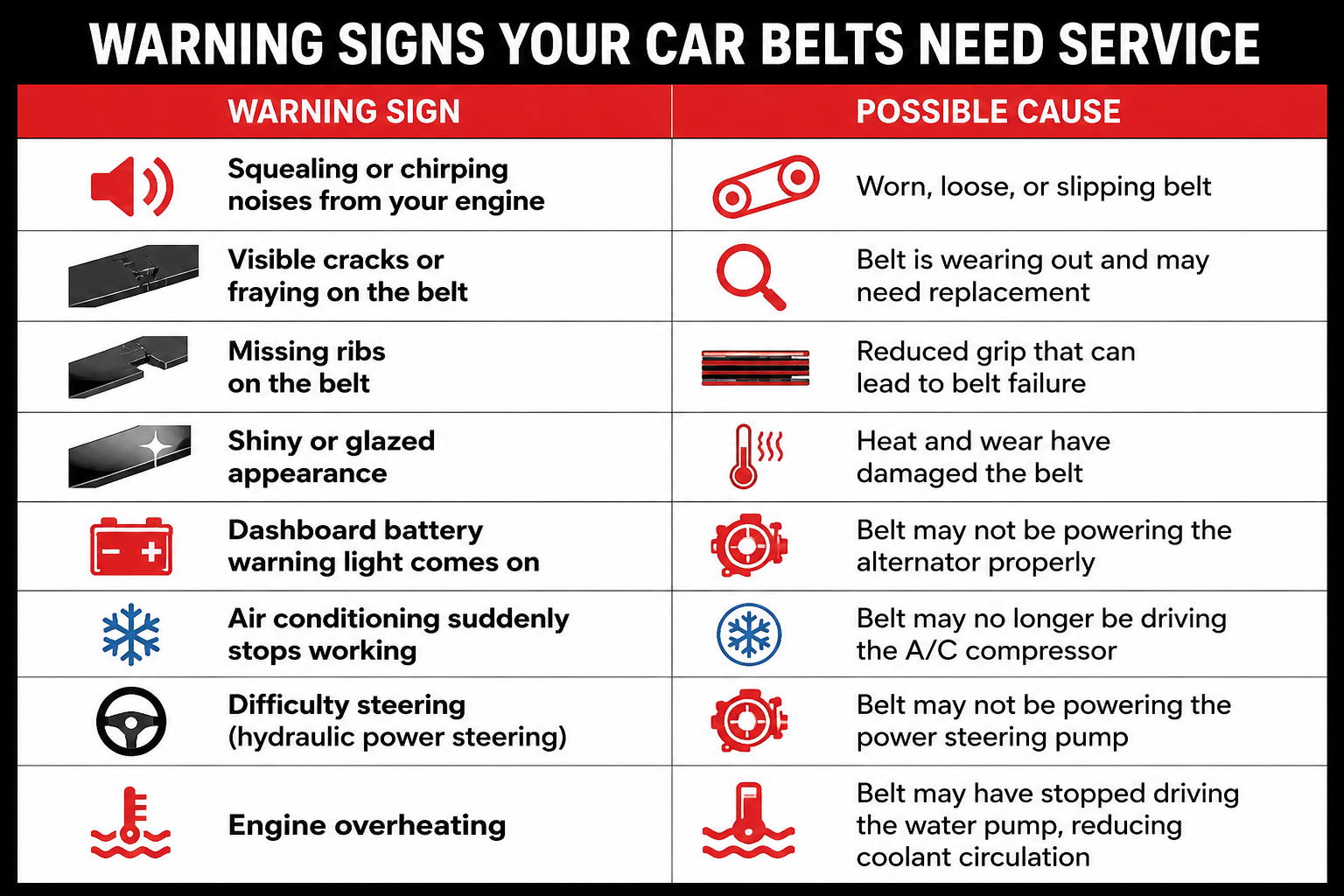
Since belts wear gradually over time, it’s important to recognize the warning signs before one fails completely.
Like we said, car belts wear out over time. It’s smart to be able to spot trouble and know when one is on the way out. Here are some common signs you may need a new car belt soon:
- Squealing or chirping noises from your engine
- Visible cracks or fraying on the belt
- Missing ribs on the belt
- A shiny or glazed appearance (this indicates wear)
- Your dashboard battery warning light comes on
- Your air conditioning suddenly stops working
- Difficulty steering (if you drive a car with hydraulic power steering)
- Your engine overheating
These symptoms are warning signs. They don’t mean the belt has completely failed, but it could be a sign of problems to come. These signs can also mean you have an issue with a pulley or a belt tensioner. That’s why we’re so big on multi-point inspections at Toyota of Orlando – we want to spot issues before they become big, expensive repairs.
How Often Should You Replace Car Belts?
There isn’t a single replacement schedule that applies to every vehicle.
There’s no single replacement schedule for every car. However, we can give you some rough guidelines on when to replace car belts. Use these, your owner’s manual, and multi-point inspections to keep your car in good shape.
- Your serpentine belt should be checked during your routine maintenance appointments (like oil changes, etc.). It should be replaced when it shows signs of excessive wear, or if you’re at the recommended service interval for replacement.
- Your timing belt should be replaced according to the guidelines in your owner’s manual. If you wait too long, you could do catastrophic engine damage.
It’s especially important to do regular inspections in Florida. The heat here can cause the rubber in the belts to age more quickly over time.
What Happens If You Don’t Replace Car Belts?
It can be tempting to ignore a squealing belt for a few days or weeks, but small problems can become much bigger ones if left unaddressed.
We know it’s tempting to ignore car belt issues for a bit – you’ll get to it when you can, right? However, ignoring a small issue can actually cause bigger issues for you down the road. A worn belt can snap and leave you with a broken car and a big bill. Replacing a belt before it fails is almost always cheaper than dealing with the aftermath of a belt breaking.
Our Toyota of Orlando Team Can Inspect Your Car Belts
Hearing a funny noise or think you might have a car belt issue? Visit Toyota of Orlando today. Our techs are trained to keep your car in the best shape possible and we’re open seven days a week to ensure we can. Call us today at (407) 298-4500 or stop by and see us at 3575 Vineland Road, just off I-4 near the Mall at Millenia.
Frequently Asked Questions
What does a serpentine belt do?
A serpentine belt powers important engine accessories like your alternator, A/C compressor, power steering pump, and water pump.
Is the drive belt the same as the serpentine belt?
In most modern Toyotas, yes. The drive belt can be used to describe the serpentine belt because it powers or “drives” multiple engine accessories.
Does every Toyota have a timing belt?
Nope. A lot of newer Toyota models use a timing chain instead of a timing belt. Your owner’s manual or your Toyota service advisor can tell you which one your car uses.
Connect with us


- September 2026
- August 2026
- July 2026
- June 2026
- May 2026
- April 2026
- March 2026
- February 2026
- January 2026
- December 2025
- November 2025
- October 2025
- September 2025
- August 2025
- July 2025
- June 2025
- May 2025
- April 2025
- March 2025
- February 2025
- January 2025
- December 2024
- November 2024
- October 2024
- September 2024
- August 2024
- July 2024
- June 2024
- May 2024
- April 2024
- March 2024
- February 2024
- January 2024
- December 2023
- November 2023
- October 2023
- September 2023
- August 2023
- July 2023
- June 2023
- May 2023
- April 2023
- March 2023
- February 2023
- January 2023
- December 2022
- November 2022
- October 2022
- September 2022
- August 2022
- July 2022
- June 2022
- May 2022
- April 2022
- March 2022
- February 2022
- January 2022
- December 2021
- November 2021
- October 2021
- September 2021
- August 2021
- July 2021
- June 2021
- May 2021
- April 2021
- March 2021
- February 2021
- January 2021
- December 2020
- November 2020
- October 2020
- September 2020
- August 2020
- July 2020
- June 2020
- May 2020
- April 2020
- March 2020
- February 2020
- January 2020
- December 2019
- November 2019
- October 2019
- September 2019
- August 2019
- July 2019
- June 2019
- May 2019
- April 2019
- March 2019
- February 2019
- January 2019
- December 2018
- November 2018
- October 2018
- September 2018
- August 2018
- July 2018
- June 2018
- May 2018
- April 2018
- March 2018
- February 2018
- January 2018
- July 2017
- June 2017
- May 2017