



Updated on June 29, 2026
An oil change is one of the most common services you’ll schedule for your car, and for good reason. Fresh oil helps lubricate your engine, reduce friction, regulate temperature, and protect important parts from wear and tear.
While sticking to your recommended maintenance schedule is important, it’s also a smart idea to check your oil between service appointments. One of the easiest ways to monitor your car’s health is by paying attention to engine oil color. The color and appearance of your oil can provide important clues about what’s happening under the hood. Our expert team here at Toyota of Orlando has a simple guide to help you understand what different engine oil colors may mean.
Executive Summary
- Engine oil color can reveal important information about your vehicle’s condition and maintenance needs.
- Amber or light brown oil is typically healthy, especially if it’s relatively fresh and free of debris.
- Dark brown or black oil often indicates it’s time for an oil change due to age, heat exposure, or contamination.
- Milky or creamy oil may signal moisture contamination, which could point to a coolant leak or head gasket issue.
- Regular oil checks between service visits can help you catch problems early and potentially avoid costly repairs.

Why Checking Engine Oil Color Matters
Your engine oil works hard every single time you drive. It circulates through your engine, lubricating moving parts, reducing wear, preventing corrosion, and carrying away debris. Over time, your oil naturally changes color as it collects dirt, carbon deposits, and metal particles.
Now, keep in mind that a change in engine oil color doesn’t always mean something is wrong. It can actually be a useful indicator that your Orlando Toyota needs attention. Taking a few minutes to check your oil level and color can help you stay ahead of maintenance issues before they become expensive repairs.
How to Check Your Engine Oil
Here’s how to properly check your Orlando Toyota’s engine level to see what’s what under the hood:
- Park your car on level ground (avoid hills – it can give you a false result)
- Turn the engine off and allow it to cool for a few minutes
- Find and remove the dipstick
- Wipe it clean with a lint-free cloth
- Reinsert the dipstick fully and remove it again
- Check both the oil level and the oil’s appearance
Make sure the oil level falls between the minimum and maximum marks on the dipstick. Once you’ve confirmed the level, take a closer look at the engine oil color.
Engine Oil Color: Amber, Caramel, or Light Brown
What it means: You have healthy oil
Fresh motor oil is usually amber, caramel, or light brown in color. This is the engine oil color you want to see, especially shortly after an oil change. It means that the oil is still able to properly lubricate your engine and protect important parts.
Keep in mind that even healthy oil will gradually get darker as it does its job. Some modern engines might make your oil darker fairly quickly, especially if they run at higher temperatures or you do a lot of stop-and-go driving.
If your oil is amber or light brown and you don’t see any debris in it, you’re probably in good shape.
Engine Oil Color: Dark Brown or Black
What it means: Your oil might be old, dirty, or due for a change
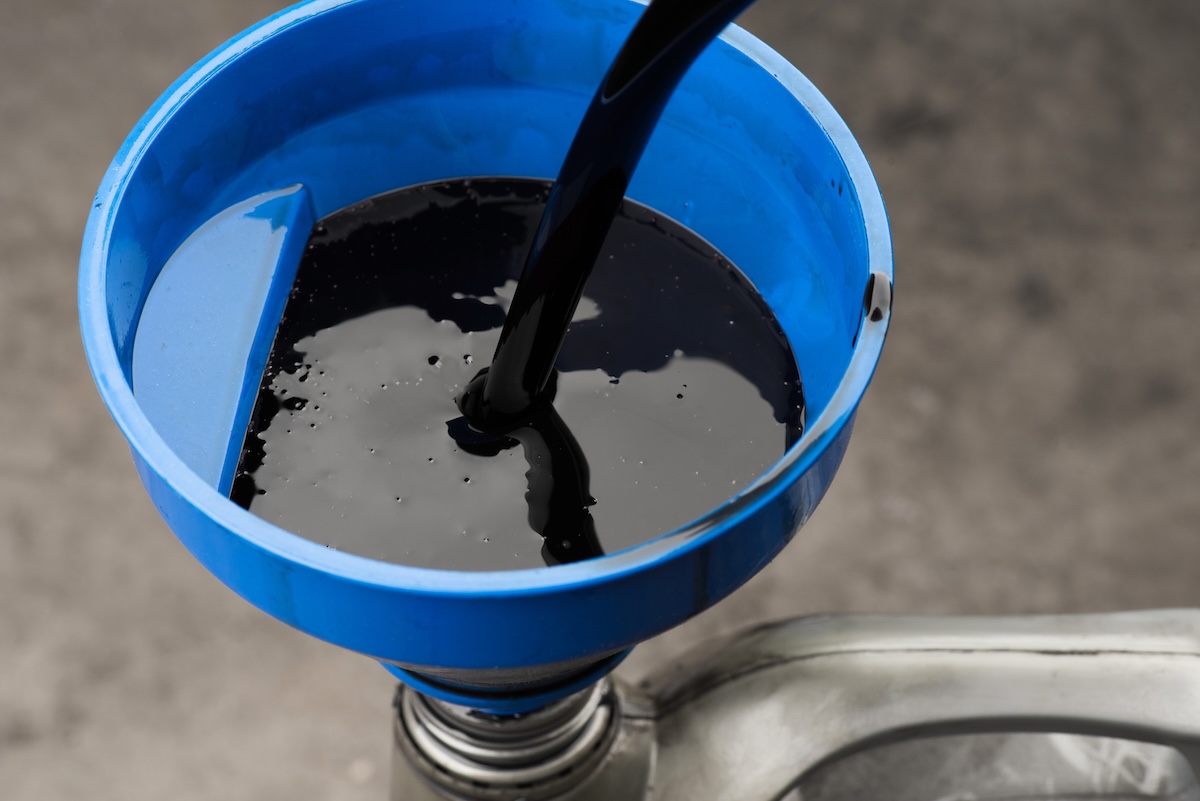
Dark brown or black oil is usually a sign that your oil has has contaminants in it and that it’s been exposed to too many heating and cooling cycles. While some darkening is normal, extremely dark oil – especially if it’s thick or has debris in it – can mean it’s time for an oil change.
Common causes of this can include:
- Extended time between oil changes
- Frequent short trips
- Heavy towing or hauling
- Driving in extreme temperatures
- Stop-and-go traffic conditions
If you notice dark oil and sluggish performance, increased engine noise, or reduced fuel economy, it’s a good idea to schedule service at Toyota of Orlando as soon as possible.
Engine Oil Color: Creamy or Milky
What it means: You might have coolant contamination
If your engine oil color looks creamy, tan, or milky, that’s not normal. This appearance typically means that coolant and oil are mixing together. In many cases, this can be caused by:
- A leaking head gasket
- A cracked engine block
- A damaged cylinder head
Other warning signs can include:
- White smoke from the exhaust
- Unexplained coolant loss
- Engine overheating
- Rough engine performance
No matter what, it’s important that you deal with this immediately. Coolant contamination can cause serious and expensive engine damage if you don’t fix it ASAP. Have your car brought into Toyota of Orland so our techs can take a look.
Engine Oil Color: Milky and Frothy
What it means: You have moisture contamination
Texture is just as important as color. If your engine oil color is milky and the oil looks frothy, foamy, or bubbly, moisture is probably in your oil system. While coolant contamination is one possibility, moisture can also accumulate through:
- Excessive condensation
- Frequent short-distance driving
- Long periods of vehicle storage
- Exposure to high humidity environments
In some cases, a car that sits for extended periods might develop small amounts of condensation in the oil. However, constant frothy oil should always be checked by a professional at Toyota of Orlando to rule out more serious issues.

What About Synthetic Oil?
Many modern Orlando Toyota models use synthetic oil, which can sometimes act differently than conventional oil. Synthetic oil can darken more quickly without necessarily losing its effectiveness. That’s why engine oil color should be considered along with:
- Mileage since your last oil change
- Manufacturer maintenance recommendations
- Oil level
- Vehicle performance
- Dashboard warning lights
Never rely only on engine oil color to determine when you need your next oil change. Follow your owner’s manual and recommended maintenance schedule for best results. Our Orlando Toyota techs can easily get you on a schedule and send you reminders.
How Often Should You Check Your Oil?
Even if your ride is running perfectly, it’s a good habit to check your oil:
- Once per month
- Before long road trips
- After towing or hauling heavy loads
- If you notice unusual engine behavior
Regular inspections can help you catch low oil levels, contamination, or other concerns before they lead to bigger problems.

Schedule an Oil Change at Toyota of Orlando Today
If your engine oil color doesn’t look right, don’t ignore it. Whether your oil is excessively dark, milky, frothy, or contaminated, our expert technicians can help diagnose the issue and find the right solution. From routine oil changes to advanced engine diagnostics, Toyota of Orlando has you covered.
Visit us at 3575 Vineland Road, conveniently located just off I-4 near the Millenia Mall, or call (407) 298-0001 to schedule service today. Don’t forget to ask about our Toyota service specials!
FAQs About Engine Oil Color
1. What is the normal engine oil color?
Fresh engine oil is typically amber, caramel, or light brown in color. As it circulates through the engine and collects contaminants, it will gradually darken over time.
2. Does black engine oil always mean I need an oil change?
Not always. Some engines and synthetic oils naturally darken more quickly. However, if the oil is extremely dark, thick, or contains debris, it’s a good idea to have it checked and potentially replaced.
3. Why does my engine oil look milky?
Milky engine oil usually indicates moisture contamination. This may be caused by condensation, but it can also signal a coolant leak, head gasket failure, or another serious engine issue that should be inspected immediately.
Connect with us


- July 2026
- June 2026
- May 2026
- April 2026
- March 2026
- February 2026
- January 2026
- December 2025
- November 2025
- October 2025
- September 2025
- August 2025
- July 2025
- June 2025
- May 2025
- April 2025
- March 2025
- February 2025
- January 2025
- December 2024
- November 2024
- October 2024
- September 2024
- August 2024
- July 2024
- June 2024
- May 2024
- April 2024
- March 2024
- February 2024
- January 2024
- December 2023
- November 2023
- October 2023
- September 2023
- August 2023
- July 2023
- June 2023
- May 2023
- April 2023
- March 2023
- February 2023
- January 2023
- December 2022
- November 2022
- October 2022
- September 2022
- August 2022
- July 2022
- June 2022
- May 2022
- April 2022
- March 2022
- February 2022
- January 2022
- December 2021
- November 2021
- October 2021
- September 2021
- August 2021
- July 2021
- June 2021
- May 2021
- April 2021
- March 2021
- February 2021
- January 2021
- December 2020
- November 2020
- October 2020
- September 2020
- August 2020
- July 2020
- June 2020
- May 2020
- April 2020
- March 2020
- February 2020
- January 2020
- December 2019
- November 2019
- October 2019
- September 2019
- August 2019
- July 2019
- June 2019
- May 2019
- April 2019
- March 2019
- February 2019
- January 2019
- December 2018
- November 2018
- October 2018
- September 2018
- August 2018
- July 2018
- June 2018
- May 2018
- April 2018
- March 2018
- February 2018
- January 2018
- July 2017
- June 2017
- May 2017