


Will the Toyota FJ40 make a comeback at Toyota of Orlando?
If you’ve been paying attention to Toyota news at all lately, you’re probably aware that they’re back on their game of teasing new Toyotas headed our way. Their latest sneak peek is at a new – albeit rumored – Land Cruiser set to hit markets in 2024. We have no idea what’s coming or what this new Toyota will bring to the table, but judging from the teaser photos we’re willing to bet that it’s a new Land Cruiser (similar to the 200 Series or the Prado found in Europe) or a reboot of the iconic and much-loved Toyota FJ40.
To celebrate the introduction of a new family member, we’re giving you a brief rundown of how Toyota started with the BJ and worked its way into the most recent iteration of the Orlando Toyota Land Cruiser family (the 200 Series, at least in America). Let’s get started!
Did the Toyota FJ40 start it all?
We’re jumping all the way back to the 1950s for our kicking-off point. The Toyota FJ40 can’t take credit for the start of this icon’s evolution – it actually started out as the Toyota BJ and was built as a military vehicle, designed to tackle extremely tough terrain and rugged conditions. In fact, the BJ successfully took on a trail through Mt. Fuji’s 12,388 ft-high peaks. However, in 1954 the Toyota BJ was rebranded and sold commercially as the Toyota Land Cruiser.
Land Cruiser FJ20 Series
In 1955, Toyota brought the Land Cruiser 20 series to market. It had a 3.9L inline-six engine, a different suspension than the BJ, and an upgraded model option with a metal top (you could also go for a canvas top). It was available in various body styles, including station wagon, fire truck, and pickup truck iterations. This particular 4×4 introduced the Land Cruiser name to the market and it’s one of the more rare models, making it difficult to find and restore.
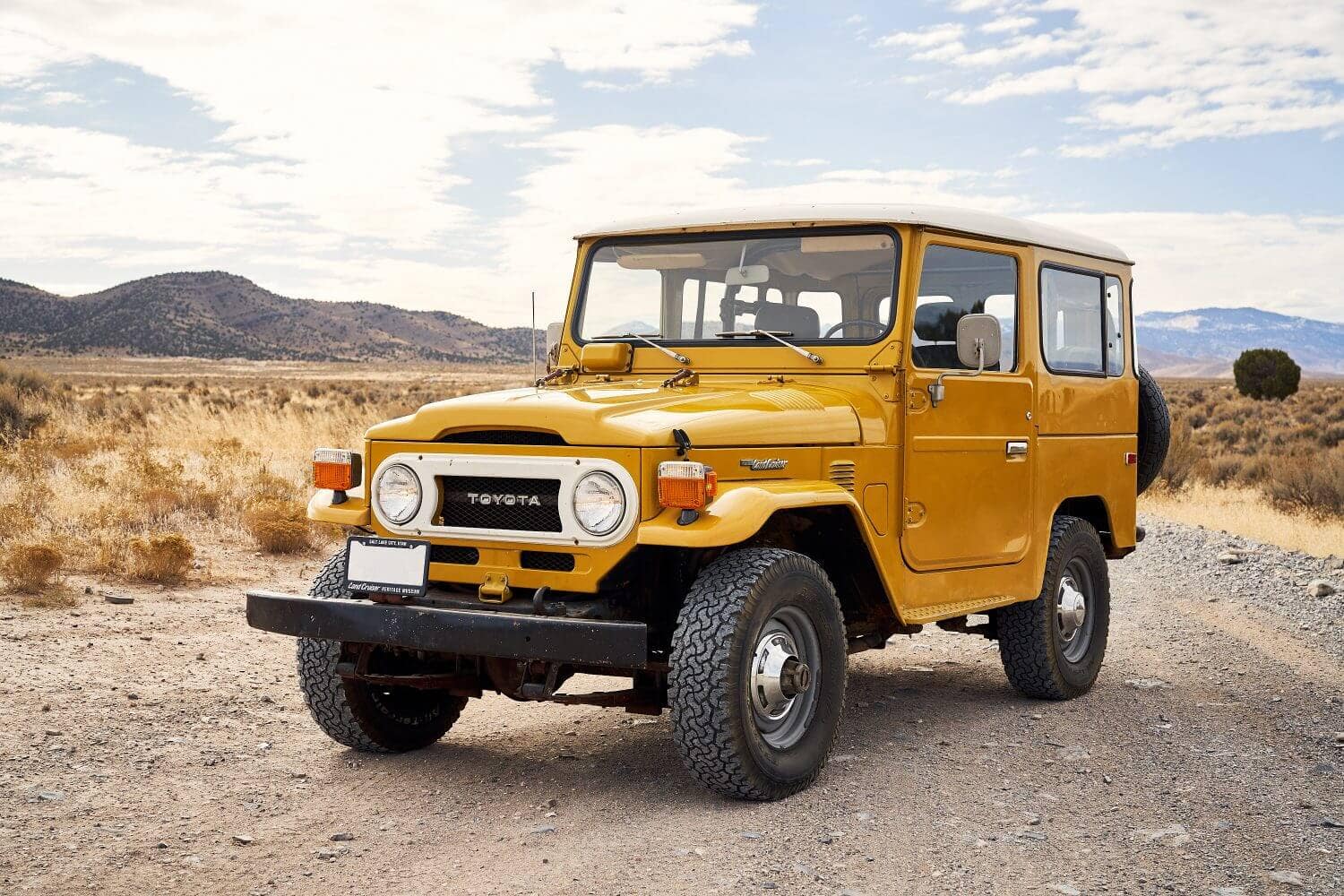
Land Cruiser FJ40
We’re biased – this is one of our favorite Toyotas of all time. The Toyota FJ40 was a step up from the 20 series with a flat, white roof for color contrast, wraparound rear windows, and an inline-six that offered 125 horsepower and 200 lb-ft of torque. It also offered a gas engine for convenience (the BJ ran on diesel fuel). It was a far cry from the current luxurious Toyota Land Cruiser, built to handle uneven terrain and tough trails, but it was still a best-seller in the US during the 1960s. In fact, it was at the top of the pack until the Toyota Corona passenger car was brought into the mix in 1965. It sold for around $6,000 (yup, you read that right) in the U.S. if you opted out of the power steering and A/C. 40-series Land Cruisers are considered to be some of the most dependable vintage 4x4s ever produced.
Land Cruiser FJ55 Series
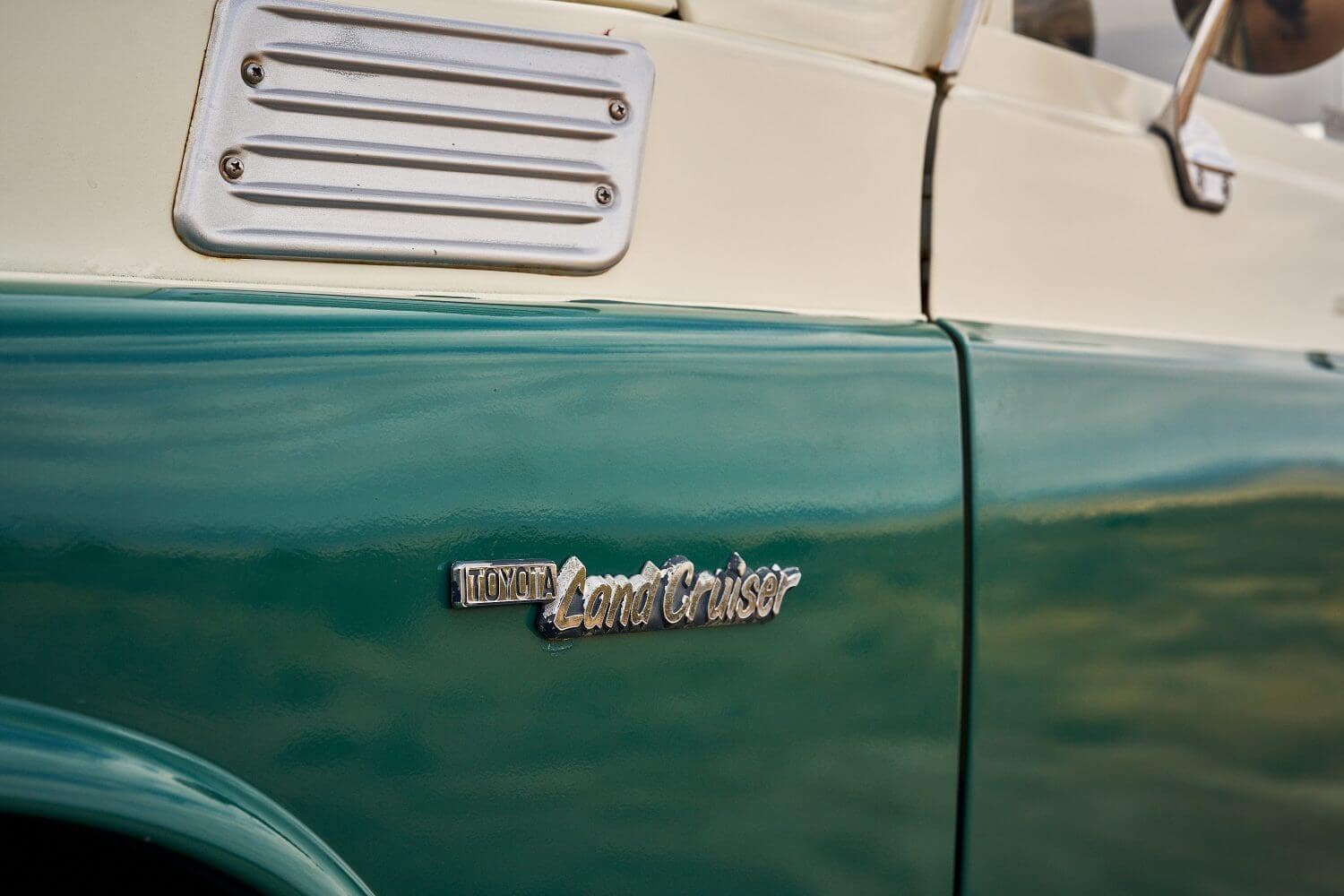
The mid-1960s brought a 55 series wagon model to market to diversify the Land Cruiser family even further. It had more modern styling with 16? wheels as well as a new and improved 3.9L inline-six engine OR 4.2L inline-six engine with a three or four-speed transmission (previous Land Cruisers only had three-speed transmissions). It sat up to seven on the interior and was perfect for overlanding thanks to its longer wheelbase. The Toyota FJ55 also sported more modern external design elements and was known as the “Iron Pig”.
Land Cruiser FJ60 Series
By the time the FJ60 series hit the market in 1981, the iconic Toyota FJ40 had been discontinued (much to everyone’s chagrin). This particular member of the Land Cruiser family was the first to have fuel injection, as well as power windows and the option of an automatic transmission. The cabins were large and comfortable (a big change from prior models) and this truck offered both gas and diesel engines. It was on the market well into 1991 and remains a popular option for vintage enthusiasts today.
Land Cruiser 80 Series
The FJ80 followed in the footsteps of the FJ60 with a spacious and comfortable cabin and offered the Toyota 3F engine as well as a 4.5L V6. It was also available in diesel models in certain markets. This Toyota Land Cruiser also had swing-out back doors that were later replaced by a tailgate and a hatch, and two special variants were available near the end of its production: the Collectors Edition and 40th Anniversary Edition. The Toyota FJ80 is easily recognized by its sleek but bubbly shape.
Land Cruiser 100 Series
The 100 Series was introduced to the market in 1998 and ran through 2007. This iteration of the Orlando Toyota Land Cruiser marked the change from a nice off-roading vehicle to a seriously upscale luxury SUV. It sported plush interior features, a new chassis, and an all-new 4.7 V8 engine that offered 230 horsepower (a number that was later increased to 275 horsepower). The 100 Series was a leap into the world of daily driving for the Land Cruiser, and US models had third-row jump seats to increase interior seating.
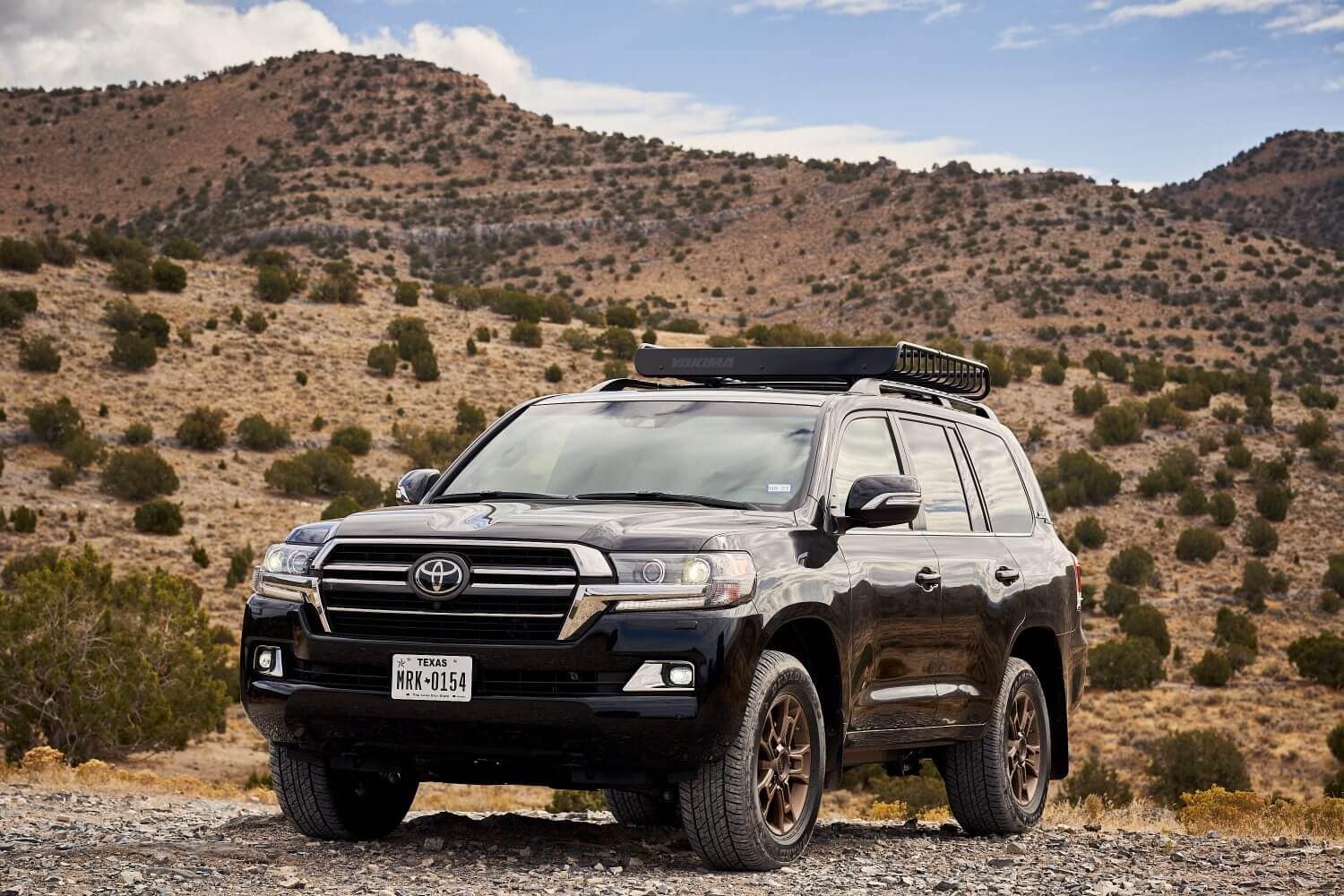
Land Cruiser 200 Series
The final model of the iconic Toyota Land Cruiser hit US markets in 2008 with an all-new 5.7L DOHC V8 engine that’s still a fan favorite for many Land Cruiser, Tundra, and Sequoia fans for its impressive horsepower and torque. When it came to luxury, the 200 Series was it. It offered a sophisticated leather interior with the latest technology, as well as performance features like an 8-speed electronically controlled automatic transmission with intelligence, CRAWL control, multi-terrain select, and more. It was a seamless mix of luxury and off-road ability, and reigned champion in its segment through 2021 when it was (sadly) discontinued in 2021.
Get the latest Land Cruiser news via Toyota of Orlando
So what’s next? Like we said, we have no idea (although we’re rooting for a new version of the much-loved Toyota FJ40 to whup the Bronco and Jeep). We’ll keep you posted! For more updates on our dream FJ40 and the latest Land Cruiser news, follow Toyota of Orlando on social media OR call us at (407) 298-4500. Also, if you’ve got a Land Cruiser you want to share to be featured on our social media, shoot us your pictures on social media or stop by 3575 Vineland Road, just off I-4 near the Millenia Mall. We’ve love to have our social media team do a photo shoot with your ride!